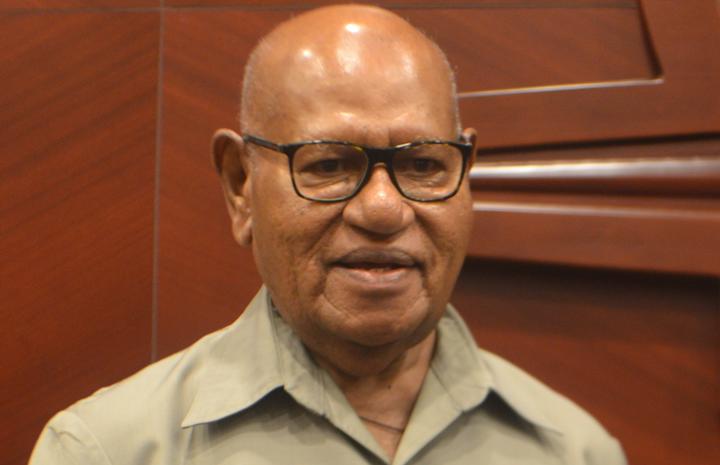
Former Bougainville president James Tanis is calling for people to vote for independence from Papua New Guinea in the referendum which begins on Saturday.
Mr Tanis said he did not want people to listen to those who said Bougainville lacked the capacity to manage as an independent nation.
Bougainville is a resourceful region with resourceful people and a lack of capacity is not a permanent order in society, he said.
“But rather it is something that changes and it grows.
“The lack of capacity should not be used as an argument to discourage people from choosing independence because, from a personal level, what I know is that, yes, we do not have the capacity at the moment, but that should not stop the people from choosing independence.”
James Tanis, who was president from 2008 to 2010, has recently been working in various roles preparing Bougainville for the vote.
Bougainville is about to enter a two week polling period for a non-binding referendum on independence from PNG.
The devastation to infrastructure from a civil war over two decades ago is still evident, but today Arawa is upbeat and a hive of activity.
Polling officers are completing their training, polling material is ready to go, and scrutineers and observers are converging on the region.
Locals say they have been waiting for this moment for a long time and they’ll grab the opportunity to place their vote with over 200,000 Bougainvilleans enrolled for polling which begins this Saturday.
Bougainville’s president has told Parliament the post-referendum period will be critical to the end of the peace process.
John Momis said whatever the outcome, the negotiations and consultations would be complex.
It would require careful and strategic thinking about what Bougainvilleans wanted the region to look like in the future.
But Mr Momis added that he was confident they were united and ready for hard negotiations.
Bougainville President John Momis Photo: supplied
He has called for the best team of negotiators for Bougainville, one that includes women, churches, business people, veterans and Bougainvilleans living outside of Bougainville.
Mr Momis has called on the people of Bougainville to ensure peace is maintained before, during, and after the referendum.
“Whatever the outcome, it must be both peaceful and mutually acceptable,” he said.
The president, who is nearing the end of his second and last term in office, said 2019 would go down in history as the year where Bougainvilleans finally got to express their views about their future political status.
It was a year where Bougainvilleans could demonstrate to the world that they were a mature and democratic people, he said.
Police in Solomon Islands have beefed up security along the shared maritime border with Papua New Guinea, ahead of the Bougainville independence referendum this weekend.
The non-binding referendum, which begins on Saturday, is the final expression of the Bougainville Peace Agreement, signed in 2001 to formally end the decade long civil conflict.
Fighting during the war often spilled into Western Solomons.
Officers from the Royal Solomon Islands Police Force have this week been visiting communities in the Shortland Islands, which are only a few hours by boat from Bougainville, to reassure them that they will be maintaining an increased presence in the region while the referendum is being conducted.
Communities on Bougainville’s atolls hope the upcoming independence referendum is an impetus for improved services to the remote islands.
A two-week polling period begins this Saturday for Bougainville’s referendum on independence from Papua New Guinea.
The non-binding referendum is a provision of 2001’s Bougainville Peace Agreement, which formally ended hostilities from a civil war which raged through the 1990s.
Sione Paasia, an aviation consultant who hails from Takuu atoll (also known as Mortlock), says all of Bougainville has suffered from neglect of public services since the civil war.
He says that for people of Bougainville’s atolls, their biggest need is for more frequent shipping services.
On average a ship comes by only about five or six times a year, he says.
“And that makes it hard for a lot of things, including economic activities, including health and education services especially.
“So as a result there’s been a huge urban drift from the atolls to Buka and a lot of other parts of PNG.”
According to Mr Paasia, he is one of about 1600 Takuus who left their atoll in search of opportunity and are now scattered around PNG and other parts of the world.
He’s been told there’s less than 400 people left on Takuu itself.
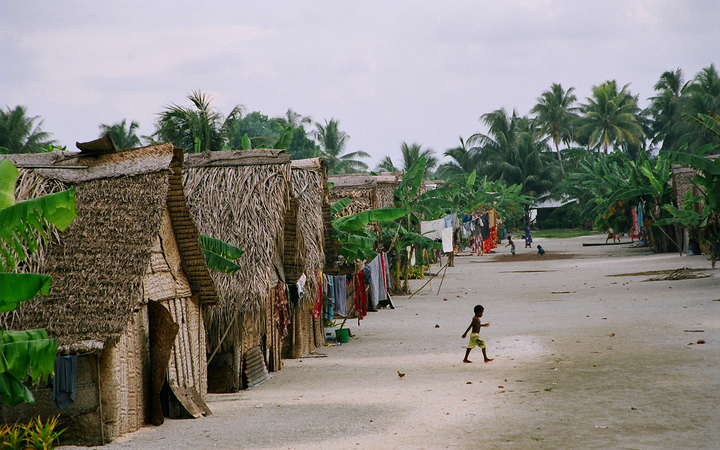
Nukutoa village, Takuu. Photo: Briar March
The Bougainville Referendum Commission has gone to significant lengths to enrol people of Bougainville’s atolls to participate in the vote.
The islanders see the referendum as a potential step towards restoring some of the cohesiveness that Bougainville’s economy and public services had before the civil war.
Apart from the Panguna copper mine, which was central to sparking the crisis, the Bougainville economy had been been under-pinned by agriculture, especially based on thriving cocoa and coconut plantations which have still not recovered.
And Mr Paasia says that Bougvainville has another valuable resource – good leaders.
“I believe the reason why we did so well back then was that we had leaders who had convictions and who were not involved in self-interest. They were focussed on what we need to do for Bougainville,” he says.
“Natural resources don’t necessarily make a country prosper, unless you have good leaders.
“Suffering tends to change people,” Mr Paasia says, adding that he feels there are now more people who seek benefit without putting in the hard work.
It didn’t help Bougainville that widespread destruction of its public infrastructure, and the lasting trauma of armed conflict, robbed multiple generations of access to education.
“Today there’s a lot of opportunists out there, and I think it’s been driven by this mindset – which we have probably borrowed from the rest of PNG of handouts,” Mr Paasia says.
In his view, the upcoming vote for independence or greater autonomy offers a chance to change this.
“PNG will be a better country if Bougainville becomes independent.”
He believes Bougainville and PNG can co-exist harmoniously and prosper in partnership.
“As long as we identify the right leaders who are progressive and have that mindset and integrity to lead Bougainville post-2020.
“There’s a lot of good Bougainvillean leaders out there who are yet to step up onto that platform of leadership. And if we can get those leaders in there, we’ll turn Bougainville around and we’ll turn the services to the atolls around as well.”
Two Melanesian Students in Wamena after being shot by Indonesian army declaring independence
A recent digital forensic investigation has revealed that multiple attempts have taken place in the digital world to manipulate the narrative about the protests and riots in the Papua and West Papua provinces in favor of the Indonesian government.
The joint investigation, launched by the British Broadcasting Corporation (BBC) and the Australian Strategic Policy Institute (ASPI), found at least two online influence campaigns had been “disseminating pro-Indonesian government material on the issue of West Papua”.
The Papua issue refers to widespread protests against the racial abuse suffered by Papuans, which eventually led to riots. The first of the recent incidents of abuse occurred in August in Surabaya, East Java, which triggered protests in some cities, including in Jakarta.
The second abuse allegedly occurred in Papua, where a non-native teacher at a local high school reportedly called a native student a “monkey”. The incident sparked protests and violence on Sept. 23 when mobs, reportedly made up of native Papuans, set buildings and vehicles on fire. Thirty-three people, mostly non-natives, were killed during the riots.
The Indonesian authorities claimed they limited internet access in Papua during the riots in the hope of curbing the spread of fake news. However, the digital forensic investigation found otherwise.
The findings about the manipulative narrative were made by BBC open source investigator Benjamin Strick and ASPI’s international cyber-policy center researcher Elise Thomas. The report was also published online by a United Kingdom-based investigative group Bellingcat on Oct. 11.
“The goal of both campaigns was to influence international opinion about the increasingly violent situation in West Papua, as Indonesian security forces crack down on the local pro-independence movement,” Strick and Thomas wrote in the report.
The team revealed the first campaign was operated by InsightID, an Indonesian communications firm. According to the report, the firm had been promoting pro-Indonesian government content on various websites and social media accounts aimed at international audiences.
During the campaign, the firm was also found to have targeted an opposition hashtag to influence its followers with pro-Indonesian and anti-independence content, as well as actively harass people who publicly supported independence or were reporting information that contradicted the government’s narrative on the situation in Papua.
“We have not found evidence to identify the client who has hired InsightID to run this information campaign,” Strick and Thomas wrote.
“However, based on the available facts we can conclude the client is a party which is able to spend hundreds of thousands of dollars to run a ‘fake news’ information operation with the goal of influencing the international community’s political perceptions in favor of the Indonesian government’s actions in West Papua,” they added.
Findings about InsightID had been separately confirmed by Facebook, which issued a statement earlier this month saying it had identified and removed dozens of accounts and pages suspected of committing coordinated inauthentic behavior in Indonesia, primarily sharing content mainly undermining the West Papuan independence movement.
Facebook eventually found links to a local media firm, InsightID, which was said to be spending about US$300,000 on Facebook ads, mostly paid in Indonesian rupiah.
A group claiming to be InsightID later responded to the statement, saying the group worked to counter what it claimed was massive amounts of biased disinformation disseminated by the Papuan separatist movement.
“Our content is focused on messages of Bhinneka Tunggal Ika [Unity in Diversity], the unity of Indonesia and the optimistic efforts of Indonesia to resolve the problems in Papua,” it said in a statement.
The team also found a separate and smaller campaign running on the similar topic of West Papua. This one includes three “brands”, each of which has its own website and social media accounts: Wawawa Journal (WJ), Tell the Truth NZ and Noken Insight.
A notable example of an action undertaken by the campaign was the promotion of a statement attributed to United Nations Secretary-General António Guterres saying he supported the Indonesian government over the brouhaha in Papua. Later, it was found that the statement had been fabricated.
Some content spread in the campaign smeared several international media outlets based in Australia and New Zealand, including the Australian Broadcasting Corporation. Moreover, it also targeted people who spoke out about the Papuan issue, including human rights lawyer Veronica Koman and United Liberation Movement for West Papua (ULMWP) chairman Benny Wenda.
One of the domains used in the second campaign was registered by Muhamad Rosyid Jazuli, who had worked since 2014 in an organization called the Jenggala Center. The organization was originally a supporter of Joko “Jokowi” Widodo and Jusuf Kalla when the pair ran in the 2014 presidential election.
Jazuli admitted to the team his responsibility for the Wawawa Journal and Tell the Truth NZ, while denying knowledge of Noken Insight despite evidence that the WJ Facebook page once used Noken Insight’s brand as its cover photo.
“Jazuli [said] that the sites and profiles were created on his own initiative by himself and friends, using personal money and were not related to his work with the Jenggala Center,” the report said.
It added that he claimed the campaigns were simply attempts to counter negative Western media coverage, rather than being propaganda or “fake news”.
Online influence campaigns are still common in Indonesia, according to a report by Oxford Internet Institute director Philip Howard and researcher Samanta Bradshaw entitled “2019 Global Inventory of Organised Social Media Manipulation”.
The report listed Indonesia as among the 70 countries it found to have organized social media manipulation for shaping public opinions, deeming it a threat to democracy.
The report said the existence of cybertroops and computational propaganda in Indonesia was aimed at spreading pro-government or pro-party propaganda, attacking opposition or mounting smear campaigns, as well as driving division and polarization.
A recent digital forensic investigation has revealed that multiple attempts have taken place in the digital world to manipulate the narrative about the protests and riots in the Papua and West Papua provinces in favor of the Indonesian government.
The joint investigation, launched by the British Broadcasting Corporation (BBC) and the Australian Strategic Policy Institute (ASPI), found at least two online influence campaigns had been “disseminating pro-Indonesian government material on the issue of West Papua”.
The Papua issue refers to widespread protests against the racial abuse suffered by Papuans, which eventually led to riots.
The findings about the manipulative narrative were made by BBC open source investigator Benjamin Strick and ASPI’s international cyberpolicy center researcher Elise Thomas. The report was also published online by a United Kingdom-based investigative group Bellingcat on Oct. 11.
“The goal of both campaigns was to influence international opinion about the increasingly violent situation in West Papua, as Indonesian security forces crack down on the local pro-independence movement,” Strick and Thomas wrote in the report.
The team revealed the first campaign was operated by InsightID, an Indonesian communications firm. According to the report, the firm had been promoting pro-Indonesian government content on various websites and social media accounts aimed at international audiences.
During the campaign, the firm was also found to have targeted an opposition hashtag to influence its followers with pro-Indonesian and anti-independence content, as well as actively harass people who publicly supported independence or were reporting information that contradicted the government’s narrative on the situation in Papua.
“We have not found evidence to identify the client who has hired InsightID to run this information campaign,” Strick and Thomas wrote.
“However, based on the available facts we can conclude the client is a party which is able to spend hundreds of thousands of dollars to run a ‘fake news’ information operation with the goal of influencing the international community’s political perceptions in favor of the Indonesian government’s actions in West Papua,” they added.
Findings about InsightID had been separately confirmed by Facebook, which issued a statement earlier this month saying it had identified and removed dozens of accounts and pages suspected of committing coordinated inauthentic behavior in Indonesia, primarily sharing content mainly undermining the West Papuan independence movement.
A group claiming to be InsightID later responded to the statement, saying the group worked to counter what it claimed was massive amounts of biased disinformation disseminated by the Papuan separatist movement.
The team also found a separate and smaller campaign running on the similar topic of West Papua. This one includes three “brands”, each of which has its own website and social media accounts: Wawawa Journal (WJ), Tell the Truth NZ and Noken Insight.
A notable example of an action undertaken by the campaign was the promotion of a statement attributed to United Nations Secretary-General António Guterres saying he supported the Indonesian government over the brouhaha in Papua. Later, it was found that the statement had been fabricated.
Some content spread in the campaign smeared several international media outlets based in Australia and New Zealand, including the Australian Broadcasting Corporation. Moreover, it also targeted people who spoke out about the Papuan issue, including human rights lawyer Veronica Koman and United Liberation Movement for West Papua (ULMWP) chairman Benny Wenda.
One of the domains used in the second campaign was registered by Muhamad Rosyid Jazuli, who had worked since 2014 in an organization called the Jenggala Center. The organization was originally a supporter of Joko “Jokowi” Widodo and Jusuf Kalla when the pair ran in the 2014 presidential election.
Jazuli admitted to the team his responsibility for the WJ and Tell the Truth NZ, while denying knowledge of Noken Insight despite evidence that the WJ Facebook page once used Noken Insight’s brand as its cover photo.
“Jazuli [said] that the sites and profiles were created on his own initiative by himself and friends, using personal money and were not related to his work with the Jenggala Center,” the report said.
It added that he claimed the campaigns were simply attempts to counter negative Western media coverage, rather than being propaganda or “fake news”.