Search This Blog

Total Pageviews

Advertisement

Labels

Blog Archive

Showing posts with label founding fathers. Show all posts

Who Is the True Father of the Independent State of Papua New Guinea?

As we approach PNG’s 50th Independence celebration, this is a question we must ask ourselves.

The political system we use today was introduced by European explorers under the authority of the British Crown. The first recorded European to set foot on our shores was Jorge de Meneses, a Portuguese navigator, in 1526. He landed in the northern part of New Guinea what we now call the New Guinea Islands.

This means the northern coast of New Guinea and the New Guinea Islands were the first places in our country to make contact with the white man. Yet it took Europeans 300 to 400 years before they finally settled here.

Why did it take so long?

History tells us that in those days, New Guinea had no army, no police, and no centralized government only small villages and close knit communities. In other countries, this would have made colonial conquest easier. But our grandparents and great-grandparents had a secret strength:

Their belief system.

Our tumbuna believed only in their own chiefs, their own land, their own ocean, their own traditions, their own resources, and their own people. That loyalty was their greatest power and protection.

By the 1800s, Europeans realized New Guinea was difficult to control. The people simply weren’t interested in foreign rulers. So, they tried a different tactic: introducing religion bringing the idea of a foreign God in heaven and distributing “cargo” in His name.

Some of our ancestors resisted fiercely. There were clashes. Some of our people were taken away to work on sugar plantations in Queensland a dark chapter known as blackbirding often through trickery or force.
By the early 1900s, the world was in turmoil. World War II erupted in 1942, with Japan and the United States fighting across our islands. The war, like many before it, was ultimately about land and resources to feed the wealth of kings and queens.

During this time, one man rose to protect his people and their way of life: Paliau Maloat of Baluan Island, Manus Province. Witnessing the injustices of both Japanese soldiers and the Australian Administration, Paliau began defending his people politically, culturally, and spiritually.

In 1942 33 years before PNG independence he founded The Paliau Movement, the first Indigenous political movement that openly rejected the white man’s governance and religion. For nine solid years, he fought for self rule.

In 1951, the Australian and British Administration finally granted him the right to establish Baluan Native Council PNG’s first form of self government.

Thirteen years later, in 1964, Paliau became the first Member of Parliament for Manus. In Parliament, he met Michael Somare whom he himself name when born in Rabaul during the war, and together with other visionary leaders, they laid the groundwork for PNG’s independence in 1975.

Today, Paliau’s movement survives as Win Nation of which I am the current Interim President. For decades, outsiders have tried to dismiss it as a “cargo cult,” but we have always been clear: we believe in a government entirely run by our own culture, traditions, and Melanesian ways.
If Papua New Guinea truly wants to be independent not just in name but in spirit and governance Win Nation Manus has the answer.

Uroh.
Ngenge Sasa
Interim President, Win Nation Manus

Photo:

Paliau Maloat OBE, KBE, Esq. with Lady Paliau, MBE at 100 years old

Baluan Native Council, 1951 – First Self-Government of PNG

Flag of Win Nation Manus – Southern Cross and Kalopeu (Nautilus)

MONUMENT UNVEILED TO HONOR PAPUA NEW GUINEA’S FOUNDING FATHER, SIR MICHAEL SOMARE

A new bronze monument honoring Sir Michael Somare, Papua New Guinea’s first Prime Minister and founding father, was unveiled on Thursday evening in front of Parliament House. 

The ceremony marked a moment of national reflection, unity, and a call to remember the values Sir Michael stood for.

Prime Minister James Marape emphasized that the monument is more than just a statue.

“We enshrine the memory of a man whose life carved into destiny our nation,” he said. 

The sculpture faces the Parliament building and symbolizes the ideals of unity, humility, service, and self-determination that Sir Michael embodied.

The event was attended by various dignitaries, including Lady Veronica Somare, members of Parliament, provincial governors, diplomats from around the world, and members of Sir Michael’s family. 

The presence of international representatives highlighted Sir Michael’s legacy of diplomacy and friendship beyond Papua New Guinea’s borders.

Prime Minister Marape also acknowledged the support of Indonesia, whose artisans and engineers crafted the bronze statue. 

“We thank the Government of Indonesia for this gift of friendship,” he said. 

The collaboration symbolizes the strong relationship between the two nations, built on shared history and ongoing partnership.

https://info.gov.pg/monument-unveiled-to-honor-papua-new-guineas-founding-father-sir-michael-somare/
@sorotan

NCD Governor Parkop on the Anniversary of the Passing of PNG Founding Father

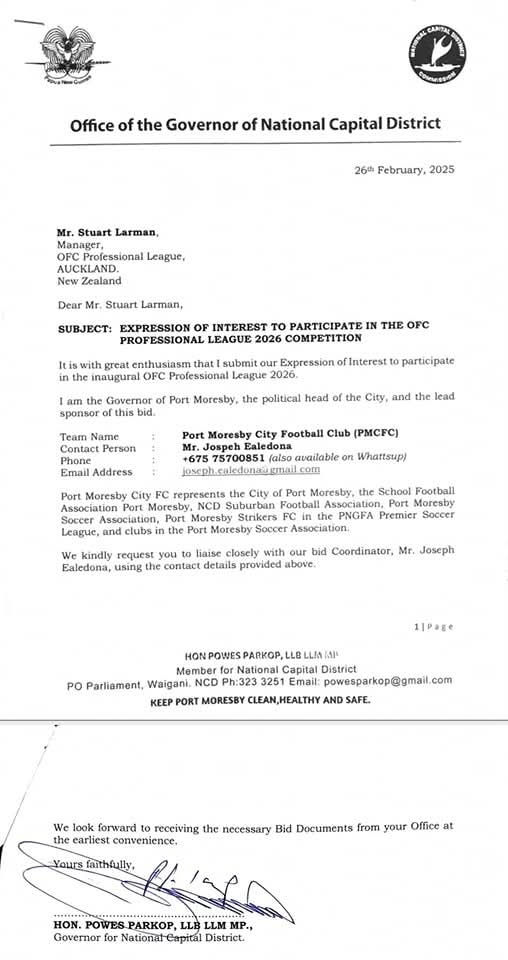
Today on the anniversary of the passing of Grand Chief Sir Michael Thomas Somare we will join the rest of the country to celebrate his life and pay him highest respects for the journey he started for our people into nationhood 50 years ago.

 Today we honour his life and conviction too for our people and our country by starting another chapter in this journey Grand Chief and his peers started by making this bid on behalf of our capital city Port Moresby to have a professional football Team in the new Oceania Professional League set up by the Oceania Football Confederation. 

It is no coincidence that we submitted the bid on this day the Anniversary of the passing of the great architect of our nation PNG.

When Grand Chief Somare was asked how will be run and managed a country at and after independence without the professional technocrats etc. 

He replied that my economists, engineers, doctors, accountants, lawyers, etc are in their mothers womb. They will be born after independence and they run and manage the country. 

We in our capital city will not just celebrate his life but truly honour him by manifesting his dreams, this time in Sports. Today we start a new chapter in the great dream Somare had in 1968, an independent state capable of being as good or better than anyone else. 

We wish to make this great dream a reality in Football or Soccer. 

OFC has given deadline for bids by Friday the 28th of February, 2025 but we have submitted today in honour of our founding father of our nation Grand Chief Sir Michael Thomas Somare.

 He had great faith and belief in our people. We are confident Port Moresby City FC will be highly competitive and successful if we are granted a license by Oceania Football Confederation. The Somare journey continues.

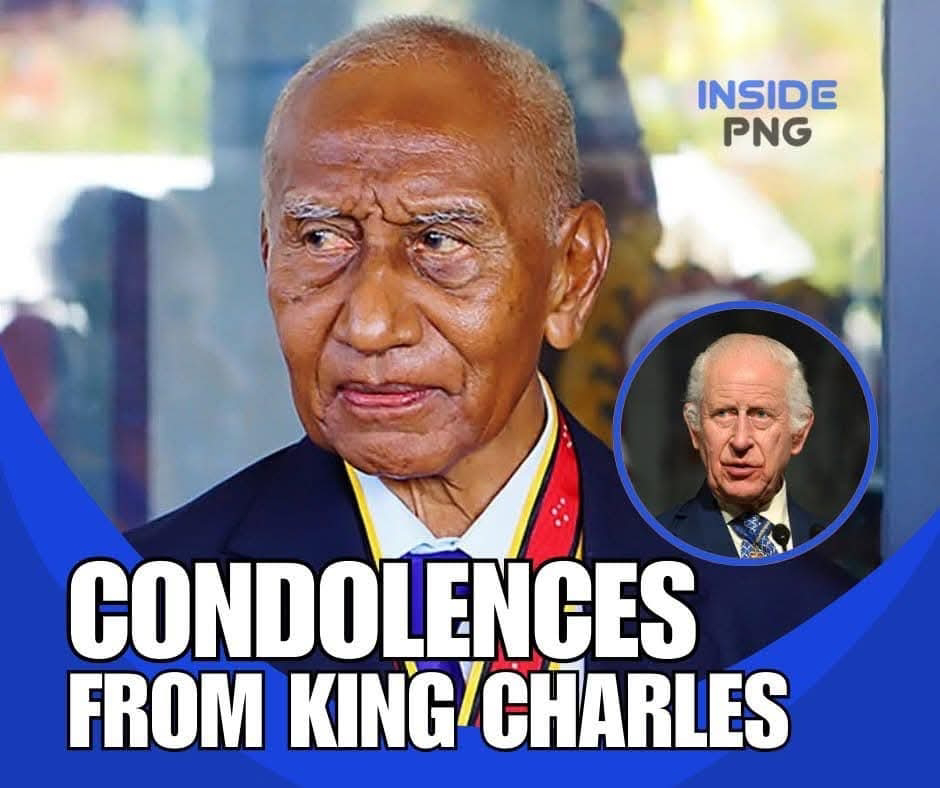
King Charles III Expresses Condolences on the Passing of Sir Julius Chan

King Charles III has joined many friends of Papua New Guinea overseas in extending his heartfelt condolences following the passing of Chief Sir Julius Chan. 

His message reflects the deep respect and admiration held for Sir Julius, who was a significant figure in Papua New Guinea’s history and development.

The loss of such a prominent leader resonates not only within the nation but also among those who knew him and appreciated his contributions on the global stage. 

King Charles’s acknowledgment serves as a reminder of the connections that exist between countries and the impact that dedicated leaders can have on their communities and beyond.

As Papua New Guinea mourns the loss of Chief Sir Julius Chan, messages of support and remembrance from international figures like King Charles III highlight the legacy he leaves behind and the respect he garnered throughout his life.

PUBLIC ANNOUNCEMENT - HAUS KRAI FOR THE LATE RT. HON. SIR JULIUS CHAN GCL, GCMG, KBE, PC, MP

PORT VILA, VANUATU (3 February 2025): To show our solidarity with the people and Government of the Independent State of Papua New Guinea, on the passing of the late Rt. Hon. Sir Julius Chan GCL, GCMG, KBE, PC, MP on Monday the 30th of January 2025, the MSG Secretariat, in collaboration with the Vanuatu Ministry of Foreign Affairs, International Cooperation & External Trade, will be hosting the signing of the condolence book at the Vanuatu Ministry of Foreign Affairs, International Cooperation & External Trade in Port Vila, Vanuatu.

The late Rt Honorable Sir Julius Chan, with late Father Walter Hadye Lini and late Sir Peter Kenilorea, contributed immensely to the collective visions that enabled the creation and transformation of the Melanesian Spearhead Group as a formidable sub-regional bloc with shared political, economic, cultural, and social visions. 

The late Rt Honourable Sir Julius Chan also contributed to Vanuatu’s independence when he deployed the PNG Kumul Forces to assist quell the Santo Rebellion. Papua New Guinea's intervention in Vanuatu, at the request of Vanuatu’s Founding Prime Minister Fr. Walter Hadye Lini, demonstrated Melanesian solidarity and capacity to assist each other in the face of neo-colonialist manipulation. This event provided the fertile grounds for the initial thoughts on regional security cooperation. 

As part of the commemoration, the official opening of the “Haus Krai” will be at 9am on Tuesday the 4th of February at the MOFA 
Farea, Independence Park, Port Vila, 
The signing of the condolence book will be held from the 4th to the 6th of February 2024 and it will be open for Government, CSOs and the general public.

During this time, the MSG Secretariat will, show visual presentations of the late Sir Julius Chan for those who may wish to know more about the history of the Founding Father of MSG, Former Prime Minister and longest serving Member of Parliament of the Independent State of Papua New Guinea. 

Below is the official program for the commemoration.

Thank you and God Bless.

Ilan Kiloe
Acting Director General

Sir Julius Chan, one of Papua New Guinea's founding fathers, dies aged 85


There has been an outpouring of grief and appreciation for the life of one of the founding fathers of Papua New Guinea - Sir Julius Chan.

Sir Julius, 85, passed away in his home province of New Ireland just after midday on Thursday, marking an end to a long political career spanning half a century. Papua New Guineans dubbed him the "Last Man Standing," as he as last of the founding members of parliament from the Independence era.

Papua New Guinea's Prime Minister James Marape informed members of cabinet of Sir Julius Chan's passing.

"It is with great sadness that I announce the passing of the Last Man Standing. While Sir Michael Somare was the father of our country, the late Sir Julius was the father of our modern economy. He conceived the Kina and Toea. He was our country's first finance minister and our second Prime Minister."

Marape has declared a week of national mourning to honour the life and legacy Sir Julius Chan, and announced plans for a state funeral and low key celebrations for the country's 50th independence anniversary in September.

In the annals of Papua New Guinea's political history, few figures loom as large - or as controversially - as Sir Julius Chan. A statesman whose career spans five decades, his legacy is etched with bold decisions that sparked both admiration and outrage.

From deploying troops to a Pacific neighbour to facing global criticism for being the Prime Minister who hired foreign mercenaries in a bid to end a civil war, his leadership tested the boundaries of convention and reshaped the nation's trajectory.

Sir Julius was seen as a tactician, weaving through the complexities of tribal and national politics and seizing opportunities when available. Photo: Supplied/ Peter Kinjap

Start of a long political career

He entered politics in the twilight of colonial rule. He was elected to the House of Assembly in 1968. By 1976, as PNG's first finance minister, he navigated the economic turbulence of independence, advocating for foreign investment and resource development.

Within PNG politics, Sir Julius was seen as a tactician, weaving through the complexities of tribal and national politics and seizing opportunities when available.

In 1980, he initiated the first-ever vote of no confidence motion against close friend and Prime Minister Michael Somare, ousting him on the floor of Parliament.

His first term as prime minister from 1980 to 1982, solidified his reputation as a pragmatist.

Facing fiscal strain, he championed austerity, infrastructure projects and devalued the PNG currency.

But it was a foreign policy move that drew regional attention.

Vanuatu 1980: A controversial intervention

In 1980, he authorised the deployment of PNG troops on its first international deployment: Vanuatu.

The mission was aimed at quelling a rebellion against Vanuatu's newly independent government.

In parliament, he argued that the deployment was necessary for regional stability and stamped PNG's role as an important player in the Pacific.

Critics called it overreach as PNG was not even past its first decade as an independent country. However, the deployment earned PNG the respect from Vanuatu and its Pacific neighbours - for the first time in a young nation's budding history, that standing up for a Pacific brother when no one else would, was enough for a new regional respect for PNG.

The operation ended swiftly, but the precedent set by PNG's military would reverberate for decades.

The Bougainville crisis and the mercenary gamble

His second term as prime minister from 1994 to 1997, collided with PNG's most protracted conflict: the Bougainville Civil War.

By 1996, the crisis had claimed 20,000 lives, crippled the economy, and exposed the PNG Defence Force's limitations.

Desperate to break the stalemate, his government signed a secretive $36 million contract with Sandline International, a UK-based private mercenary group, to crush the Bougainville Revolutionary Army (BRA).

When the deal leaked in 1997, public fury erupted.

The PNGDF, led by Brigadier General Jerry Singirok, arrested the mercenaries and demanded Chan's resignation.

Sir Julius stood defiant. Critics, however, saw betrayal with many saying hiring outsiders was an affront to sovereignty.

Under pressure, he stepped aside pending an inquiry. Though exonerated of corruption, his political capital evaporated. The Sandline Affair became a cautionary tale of desperation and overreach.

Resilience and redemption

His career, however, refused to end in scandal. After a decade in the political wilderness, he returned as New Ireland Governor in 2007, championing provincial autonomy and education reforms.

In 2015, he published his memoir, confronting the Sandline chapter head-on.

His peers acknowledged his tenacity with founding Prime Minister Sir Michael Somare, before his passing, pointing out how both men had separated politics from their personal friendship for over 50 years.

Culture as foundation

Despite rising to political leadership at the national level, and having a strong hand in the formation of our country's economic and financial stability, and using its young military force to nurture Pacific solidarity, Sir Julius will always be remembered for his respect of culture and tradition.

His elevation and acknowledgment of the MaiMai, New Ireland's Chieftan System as a recognised decision-making body within the New Ireland Provincial Government and the Provincial Assembly, was testament to Sir Julius' own devotion and respect for traditional New Ireland culture.

His creation of a pension for the wisened population of his home province, not only assured him continuous support from New Ireland's older population at every election, but it set an example of the importance of traditional systems of governance and decision-making.

To the world, he was a new country's financial whiz kid, growing up in an environment rooted in traditional culture, and navigating a young Papua New Guinea as a mixed race leader saw him become one of PNG's finest leaders.

To the country, he will always be remembered as the 'Last Man Standing'.

But to his people of New Ireland, he will, over the coming weeks, be accorded the highest of traditional and customary acknowledgements that only the people of New Ireland will be able to bestow on such a Great Man. A Great Chief. A Great Leader.

They will say for one last time: 'Lapun i go nau. Wok bilong em i pinis.' (The old man has left, his work here is done).

Source: HERE

Sir Julius Chan, Papua New Guinea’s last ‘founding father’, dies aged 85

Outpouring of grief after death of Chan, the son of a migrant Chinese father and Indigenous mother, who served as prime minister twice


Papua New Guinea is mourning the death of Sir Julius Chan, affectionately known across the country as Sir J – the last “founding father” of the country and its second ever prime minister.

The Chan family released a statement on Thursday afternoon announcing the death of Sir Julius at the age of 85. “Our father passed away peacefully this afternoon at 12.30pm at his beloved home at Manmantinut, Huris surrounded by family and friends. We thank all those who have stood by him, and those who have shared his legacy throughout his political life from pre-independence to the time of his passing.

“He was a political icon transcending generations and his legacy will remain forever in the pages of our history books and moreso in the hearts of so many.”

The office of the prime minister, James Marape, issued a statement expressing “profound sadness … His passing comes at a pivotal moment in our nation’s history, as Papua New Guinea prepares to celebrate 50 years of independence – a milestone he played a crucial role in achieving. As we reflect on our journey as a nation, we must also honour the legacy of great leaders like Sir Julius, whose vision, courage, and leadership helped shape the Papua New Guinea we know today.”

The news of his death sparked an outpouring of grief across the nation, with citizens expressing their sorrow on social media and in public gatherings. Flags were being flown at half-mast on Thursday and memorial services organised in his honour.

Born to a migrant Chinese father and an Indigenous mother, Chan overcame significant challenges to become a prominent political figure. His leadership was characterised by a commitment to national unity and development, making him a beloved figure among many Papua New Guineans.

His death will have a profound impact among Papua New Guineans who remember him as a pivotal figure in the country’s journey towards independence and development. Chan served as prime minister twice and was a key architect of Papua New Guinea’s political landscape. Across more than five decades he played a crucial role in guiding the country after it gained full independence from Australia in 1975. He served as a member of parliament for New Ireland province, and remained its governor at the time of his death.

Chan’s autobiography, Playing the Game, offers insights into his life and the complexities of his political journey, reflecting on the cultural and historical contexts that shaped his decisions. He is survived by his wife, Lady Stella Chan, and children Vanessa, Byron, Mark and Toea.

#PNGNews: One of the last surviving forefathers of PNG has passed.

#PNGNews: One of the last surviving forefathers of PNG has passed.

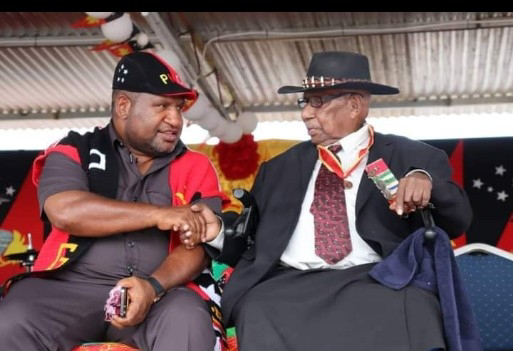
Member for Maprik and Minister for Agriculture John Simon today confirmed the passing of Sir Pita Lus. 

Sir Pita's last public appearance was at the Independence celebration in Maprik Town on September 16th. 

The occasion also celebrated his life. 

Prime Minister James Marape had personally attended the event to thank Sir Pita for his contribution to PNG. 

Sir Pita's short and simple message on that day, was for Papua New Guineans to stop all forms of violence and put God first. 

He joined the political scene in the 1960s and is famously known for encouraging Grand Chief Sir Michael Somare to join politics. 

Sir Pita was born in 1936 and shares the same birth date with PNG's Independence.