Search This Blog

Total Pageviews

Advertisement

Labels

Blog Archive

Showing posts with label Free West Papua. Show all posts

MSG 22 - 1969 'Midnight Cry' : PIF Resolution Looms! Again?


Prime Minister James Marape is in Jakarta, Indonesia's capital. Again. He pushes PNG's national interest.

The most recent MSG Leaders Summit 22 failed to resolve the West Papua issue. But, for now.
We chronicle the long road to freedom for West Papua.
The critical points:
1. MSG Leaders Summit 22 held in Port Vila, Vanuatu from 23 - 24 August 2023 resolved to give one year moratorium before a decision is made on full membership for West Papua.
2. If full membership is granted, the process of decolonization is seen to be stepped up by MSG. Indonesia is playing its card to stop the decision citing its claim to sovereignty over the former Dutch colony.
3. Any UN resolution on West Papua requires the PIF collectively to respond to human rights reports including demands for self determination by indigenous Papuans brought to its notice.
4. West Papua is already before the PIF for deliberation. In 2018, it called for a fact - finding mission. Indonesia did not respond.
5. United Liberation Movement For West Papua (ULMWP) application for membership is to push the hand of PIF to act on West Papua.
So, here is the latest story of West Papua at the time MSG 22 met in Port Vila.
Key Trends:
✓ Armed clashes between state forces and the TPNPB have risen since 2018. Clashes increased by nearly 80% in 2021 in comparison with 2020.4
✓ Since 2018, armed clashes have spread geographically outside of the traditional TPNPB stronghold in the Black Triangle regencies of Puncak Jaya, Lanny Jaya, and Mimika (IPAC, 13 July 2022), with notable increases in the regencies of Intan Jaya, Puncak, and Yahukimo. Since the beginning of 2021, armed clashes between state forces and the TPNPB have been reported in over 20 new locations across the region where they had not previously been recorded in the ACLED dataset, which begins in 2015 for Indonesia.
✓ Violence targeting Papuan civilians by state forces and violence targeting civilians by the TPNPB have continued at high levels over the past two years, with a notable increase in TPNPB civilian targeting since 2020.
✓ Indonesian state security forces have dispersed or repressed peaceful protests featuring Papuans and Papuan groups more frequently than those not featuring Papuans and Papuan groups.
MSG 22 resolution on West Papua has implications in light of the story of West Papua.
The ' low - level insurgency' seems more transformed in terms of science of armed combat aimed at the outcomes set.
For instance, TPNPB has moved from using rudimentary weapons to a growing supply of firearms, with police forces claiming that the TPNPB had purchased guns from dealers in Ambon, Papua New Guinea, and indirectly from the Philippines (Tribunnews, 23 May 2022).
On several occasions, members of state forces have been arrested for their involvement in gun trading with the TPNPB (Kompas, 24 February 2021). The increased supply of weapons has translated into more sustained battles as opposed to the hit-and-run incidents more often reported in the past (IPAC, 13 July 2022)

Read. Here:
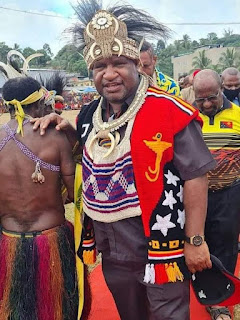
(Photo caption: PM James Marape - he steps up on PNG/ Indonesia bilateral relations; in Jakarta, today for business deals signed with Indonesia; MSG 22 - West Papua issue left on the table for PIF to address; ULMWP leaders and diplomats - diplomatic option for roadmap to freedom for West Papua through decolonization still on track?; West Papua issue - it cannot be rushed, nor wished away)

Opposition says Indonesia’s ‘futsal gift’ should not deter our stand for West Papua

OPPOSITION Leader Hon Matthew Wale says the new Futsal Stadium handed over by the Indonesian government should not deter our support for fellow Melanesians in West Papua.

Whilst acknowledging the gift from Indonesia, Hon Wale said Solomon Islands should never allow this to be the 30 pieces of silver to betray our fellow Melanesians in West Papua.

He said the new Futsal Stadium is a dream come true for the futsal code in the country, but it should never change our stand and perspective on West Papua.

The Opposition Leader said it is not right that Solomon Islands voice is silenced by this ‘gift’ from speaking for the voiceless people of West Papua who continue to suffer under the colonial oppression of Indonesia.

Hon Wale said the Prime Minister knows well because he is a strong supporter of West Papua.

“Our current Prime Minister is a strong supporter of West Papua and I urge him to raise the issue of West Papua to the visiting Indonesia delegation during their meetings,” he said.

Hon Wale also issued a call to the visiting Indonesia government delegation to facilitate Solomon Islands earlier calls to enable the UN High Commissioner for Human Rights to visit West Papua.

ENDS///

  • Opposition Press

Civil Society Organisations (CSO) offered a word of prayer for the Struggle for Self-determination in West Papua


Civil Society Organisations (CSO) offered a word of prayer for the Struggle for Self-determination in West Papua before they head over to the meet the Pacific Islands Forum Leaders at the Non State Actors Dialogue.

The delegation was led by Pacific Conference of Churches General Secretary, @Reverend James Bhagwan (Jimmy Bee) presented the PRINGO Alliance Covenant to the leaders during the morning tea.
Pacific Islands Forum Leaders at the Non State Actors Dialogue this morning.
PRNGO Alliance again urged our leaders to re-affirm their calls for the UNHCHR and Indonesia to conduct the UNHCHR Office visit to West Papua and Papua Provinces within 12 months or in 2023.
for their fight for Independence before the CSO del heads over to meet the #PIFsLeaders at the #NSAdialogue.
The Pacific is not free until West Papua, Maohi Nui and Kanaky are free!


Bonny Kaiyo: Kanaky Referendum No 3 - December, 2021: Freedom's Call.

In 2020, it was victory in defeat.
While pro-independence Kanak supporters rued another defeat in the second referendum on independence for New Caledonia, it was even narrower than the loss two years earlier.
Now there is a real prospect of a win in 2022.
“The path to independence and sovereignty is inevitable,” pledges the Front de Libération Nationale Kanak et Socialiste (FLNKS) – the umbrella group of the pro-independence parties – and the struggle will go on.
FLNKS is set to win the final vote.
West Papua. Almost.
PNG can see clearly, now. The rain has gone. Slowly, the obstacles fade away.


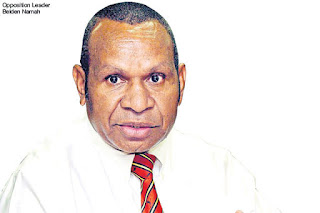
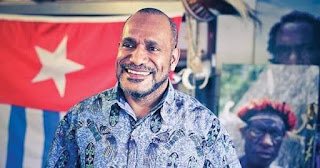
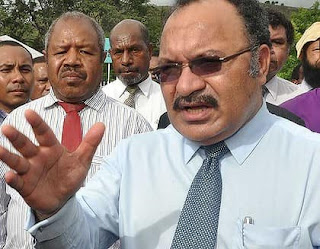
Photo caption: Decolonisation in the Pacific - vocabulary has changed; Kanaky - France offered 3 opportunities for international best practice to play out through referendum, the final chance is happening in December 2021 with FLNKS predicted to win the vote for independence; West Papua - PNG Prime Minister James Marape raised the issue of humanitarian crisis unfolding in West Papua at the 76th UN General Assembly Session; PNG foreign policy on West Papua - it is blurry, but increasingly clear since 2014 when former Prime Minister Peter O'Neill announced PNG approach to the West Papua issue was revised to give voice to the voiceless fellow Melanesians in West Papua fighting for their human rights; Opposition Leader Belden Namah - he pressed PNG Prime Minister James Marape and Peter O'Neill, his predecessor, to announce a foreign policy on West Papua including supporting demands for freedom from colonial tutelage by Indonesia; Benny Wenda - ULMWP chairman is confident MSG will grant full membership for West Papua as the only option left for the region to step up on West Papua as an international issue with a colonial context and therefore UN General Assembly resolution is on the table) 

ULMWP: Melanesians in West Papua Ready to Run Our Nation-State Now!

  𝗨𝗡𝗜𝗧𝗘𝗗 𝗟𝗜𝗕𝗘𝗥𝗔𝗧𝗜𝗢𝗡 𝗠𝗢𝗩𝗘𝗠𝗘𝗡𝗧 𝗙𝗢𝗥 𝗪𝗘𝗦𝗧 𝗣𝗔𝗣𝗨𝗔 (𝗨𝗟𝗠𝗪𝗣)

LEGISLATIVE COMMITTEE

𝑷𝒆𝒓𝒔 𝑹𝒆𝒍𝒆𝒂𝒔𝒆

“MELANESIANS IN WEST PAPUA READY TO RUN OUR NATION-STATE”


In response to current developments in West Papua such as racial discrimination that was responded by Melanesians with widespread demonstrations across Indonesia, mostly supported by Indonesians.

In response to the widespread refusal by youths, women’s groups, churches and grasroos of the extension Special Autonomy Law by Indonesian colonial government for West Papua territory.

In response to the massive and systematic Human Rights Violations escalating across the highlands region of West Papua, dropping of more troops into the region as well as bloodshed that are going on in Nduga, Intan Jaya, Star Mountains and Timika regions

Noticing the socio-political dynamic within West Papua, the provincial and local governments, provincial and local parliaments, NGOs, church groups, pro-democracy groups in Indonesia as well as in West Papua demanding immediate end to humanitarian catastrophe that have been hidden under the carpet, in the names of democracy, development and human rights.

The only demand that the people proposing is internationally supervised referendum for Melanesians in West Papua to determine their political future.


We also take note of current developments across the South Pacific:

  1. All students and Youth in West Papua are demanding referendum, and refusing the extension of Special Autonomy Package;
  2. The West Papua Council of Churches are requesting the ULMWP to hold dialogue with Indonesia to end humanitarian crises in West Papua.
  3. 57 Catholic Priests in West Papua encouraged Indonesia to allow a democratic referendum and not continue with Special Autonomy.
  4. Pacific Council of Churches expressed concern on human rights situation in West Papua and asked Indonesia to stop killing Melanesians in West Papua.
  5. Request to Indonesia and the United Nations by Pacific Islands’ Forum’s Secretary-General to allow Human Rights Commissioner of the United Nations to visit West Papua, following up requests in the past years.

The Legislative Committee of United Liberation Movement for West Papua as the legislative body of the Republic of West Papua, based on the above considerations and noting the minute of meeting of the parliament at 03:00AM of October 18, 2020 that endorsed the Provisional Constitution of the Republic of West Papua under the United Liberation Movement for West Papua, we hereby declare
[𝟏]. We support he Melanesians of West Papua refuse the continuation of the Special Autonomy Law No. 21/2001 regarding Special Autonomy for Papua Soil;

[𝟐]. We support the aspiration of the people demanding an internationally-supervised referendum for Melanesians in West Papua;

[𝟑]. The ULMWP Legislative Meeting Endorses:

𝟑.𝟏. The Upgrading of the Legal Status of the United Liberation Movement for West Papua Organisational become a semi-government body..

𝟑.𝟐. Unilaterally endorses and declares the implementation of the Provisional Constitution of the Republic of West Papua across the whole territory of West Papua, which was previously called both Papua and Papua Barat Provinces under Indonesian colonial rule, and the Netherlands New Guinea according to the Dutch colonial law.

𝙋𝙤𝙧𝙩 𝙉𝙪𝙢𝙗𝙖𝙮, 𝙒𝙚𝙨𝙩 𝙋𝙖𝙥𝙪𝙖 20 October 2020
𝗨𝗡𝗜𝗧𝗘𝗗 𝗟𝗜𝗕𝗘𝗥𝗔𝗧𝗜𝗢𝗡 𝗠𝗢𝗩𝗘𝗠𝗘𝗡𝗧
𝗙𝗢𝗥 𝗪𝗘𝗦𝗧 𝗣𝗔𝗣𝗨𝗔 (𝗨𝗟𝗠𝗪𝗣) – 𝗞𝗢𝗠𝗜𝗧𝗘 𝗟𝗘𝗚𝗜𝗦𝗟𝗔𝗧𝗜𝗙

𝗘𝗗𝗜𝗦𝗢𝗡 𝗞. 𝗪𝗔𝗥𝗢𝗠𝗜 
Chair

WestPapua #TolakUUOtsus #Referendum #PapuaMerdeka#FreeWestPapua #WP4MSG #BravoULMWP #RepublicOfWestPapua#NegaraRepublikWestPapua


The crackdown in West Papua continues before the pools

By Nithin Coca

WITH increasingly regular protests and a violent crackdown by police and the military, the contested Indonesian region of West Papua is currently seeing the highest levels of agitation it has experienced in years. Against a backdrop of Indonesia’s forthcoming general elections in April, tensions are rising over long-standing human rights violations, pro-independence agitation and lack of accountability for crimes committed by security forces.

“The situation is not improving for the better, it’s getting worse,” says Ronny Kareni, an Australian-based activist of West Papuan origin. “There is a divergence between Jakarta and locals, and that is deeply rooted in the historical status of West Papua.”

On 1 December 2018, more than 500 people were arrested in cities across Indonesia for commemorating the 57th anniversary of Papuan attempts to declare independence from Dutch colonial rule. Raising the pro-independence Morning Star flag or publicly expressing support for Papuan self-determination is considered a criminal offense against the Indonesian state.

The following day, on 2 December, pro-independence militants are reported to have killed up to 31 workers on the Trans Papua Highway construction project in the Nduga region of the Papuan highlands. Although the ongoing independence conflict in West Papua has resulted in the deaths of approximately 500,000 Papuans since 1969, this was the deadliest attack by militants in recent years.

The government response has been fierce, withactivists reporting that military action has forced thousands to flee their homes.

With the media and civil society prevented from independently visiting the region, these reports are difficult to verify, but international human rights organisations have made pleas for calm. “We call on all parties, the Indonesian army, police and the Free Papua guerrilla fighters, not to target civilians,” says Andreas Harsono, Indonesia researcher for Human Rights Watch.

West Papua, which forms about half of the island of New Guinea, was not part of Indonesia when it gained independence from the Netherlands in 1949. It was annexed in 1969 in a military-run election approved by the United Nations, in which about 1,000 hand-picked representatives were forced to vote against independence. West Papua was then ruled with the strongest of iron fists during Indonesia’s New Order era under General Suharto (1966-1998), before being granted special autonomy status in 2001 in a bid to quell the independence movement. The island’s population, estimated at around three million, are mostly Melanesian and follow either Christianity or indigenous religions, unlike the rest of Indonesia which is mostly Polynesian and Muslim.

Natural resources have played a significant role in shaping the trajectory of Papuan history. Shortly after the rigged election of 1969, Freeport McMoRan, an American mining company, began operating in the region. This marked the beginning of a long relationship which has proved prosperous for the company and the Indonesian government. However, tax revenues mostly go to the western part of Indonesia which is much more developed; West Papua, in the east of the country, is the poorest region in Indonesia and its people see few benefits from resource extraction.

Jokowi’s promises of reform

In 2014, then Jakarta Governor Joko “Jokowi” Widodo (now president of Indonesia), an outside candidate in the presidential elections with no connection to Indonesia’s elite or military, made several campaign promises to address human rights in Papua. This included addressing the ability of the military to use its own internal trial mechanism rather than civilian courts, opening up the region to the foreign media and freeing political prisoners. Papuans saw hope in Jokowi, and he won the two provinces (Papua and West Papua, formerly Papua until 2003) that make up West Papua by more than 30 percentage points each. In an election where Jokowi won nationally by only 6.3 per cent, the region provided him with some of his best results.

Even months after his inauguration, President Widodo reiterated his promises directly to Papuans after a police shooting in Paniai killed five people.

“Jokowi made bold promises in front of Papuans attending Christmas celebrations, saying that he would investigate and solve this case, and bring peace to Papua,” says Papang Hidayat, a researcher at Amnesty Indonesia.

Jokowi initially made a few attempts to improve the situation in West Papua by releasing five political prisoners in 2015 and declaring the region open to foreign journalists, for example. But his power has been limited due to the role of security forces in West Papua, including the Indonesian soldiers who have maintained their presence in the region despite the fall of Suharto’s military rule more than two decades ago. As a result, most of his promises to make reforms remain unfulfilled.

“It became clear to many people that whatever [Jokowi] says, it will not be implemented,” says Kareni. “He is only a face for democracy, but [he is] not actually in power.”

Harsono agrees: “The situation on the ground, especially the resistance from the bureaucracy, is much bigger than his presidential authority, I’m afraid.”

Attempting to address political grievances through economic development

One area in which Jokowi has been able to push forward is on development. The government is investing massively in roads, airports and agriculture, including a plan to build 1.2 million hectares of palm oil and sugar plantations.

Following decades of underdevelopment, “the government feels the need to pay more attention to Papua,” says Arie Ruhyanto, a lecturer in the Department of Politics and Government of Gadjah Mada University in Yogyakarta, Indonesia. “Given the political setting, the option is limited to the non-political issues…hence, the Papua problem is always framed in the context of development issues, such as poverty and underdevelopment.”

In the end, this has only increased tensions, as many Papuans feel that development is either aimed at extracting resources or benefitting migrant workers from other parts of Indonesia. That’s one reason why the December attack by separatists was against the construction of the centrepiece of this new development plan – the 4,300 kilometre Trans-Papua Highway.

The response to the attack also highlights a major problem – that many in the Indonesian security apparatus do not distinguish between the peaceful protests and aspirations of the vast majority of Papuans, and a small minority of militants. In response to the Nduga attack, police arrested members of the West Papua National Committee (Komite Nasional Papua Barat, KNPB), a student-run organisation that coordinates peaceful protests, and forcefully closed their offices.

With the security forces entrenched and Jokowi’s power limited, many fear that the divide between the two sides is growing. Papuans know that the April elections are unlikely to change anything.

Gaining momentum

However, instead of waiting and hoping for action from Jakarta, more West Papuans are starting to agitate on local, national and global stages. In 2014, several West Papua independence organisations unified under the banner of the United Liberation Movement for West Papua (ULMWP), headed by the renowned Papuan activist Benny Wenda. The entity has been active within the 18-nation Pacific Islands Forum, founded in 1971, and the Melanesian Spearhead Group within it, which counts the four Melanesian nations of Fiji, Papua New Guinea, Solomon Islands and Vanuatu, as members.

“In 2015, the ULMWP put in an application bid for a membership of observer status,” says Kareni. The bid was successful. “For Papuans it was a recognition of our cause. The movement has gained a lot of momentum, especially in the Pacific.”

In 2017, organisers in West Papua undertook an impressive effort, smuggling a petition across the island and collecting signatures from 1.8 million residents – 70 per cent of the population – in support of an independence referendum, as promised in the 1960s. The petition was delivered to the United Nation’s Special Committee on Decolonization, to which Indonesia responded by arresting Yanto Awerkion, a KNPB activist and organiser of the petition drive, and sentencing him to 10 months in prison.

One small opportunity to shine a light on the human rights abuses taking place in West Papua came when a UN human rights panel issued a statement condemning racism and police violence in the region, resulting in a rare apology from the Indonesian police for one incident in particular.

There is also hope in the expression by the Indonesian foreign ministry that it will allow the United Nations High Commissioner for Human Rights to visit West Papua. However, civil society are skeptical that the UN visit, if it takes place, will result in concrete changes.

“It is not new,” says Harsono, referring to previous invites that were not followed up with visas or details. “I won’t believe it until I meet them in Jayapura, until I see them in Papua.”

Meanwhile the election campaign is gathering steam, with the Nduga incident becoming a campaign issue, spurring increased nationalist sentiment against West Papuans. Unfortunately, there may be little that either Jokowi or his opponent – former military general Prabowo Subianto, who has a checkered record due to his involvement in East Timor – can do to change the plight of Papua.

“Whoever the president is, he will be in a difficult position since all political forces in Indonesia, whether the nationalist, the military or Islamic groups, seem to be reluctant to address the human rights issue,” says Ruhyanto. “It remains a marginal topic that only concerns a handful of activists and academics.” (*)

Nithin Coca is a freelance journalist who focuses on social and economic issues in developing countries, and has specific expertise in south-east Asia.


from WordPress https://ift.tt/2ulwEBI
via IFTTT March 12, 2019 at 11:31AM

West Papua: up to 15 dead as rebels and Indonesian soldiers clash

Deaths reported on both sides in firefight during work on trans-Papua highway 

As many as 15 people are believed to have been killed in a firefight between Indonesian soldiers and Papuan independence fighters, adding to more than two dozen deaths in the simmering conflict since November.

Indonesia’s military said three of its soldiers, and seven to 10 independence fighters, died on Thursday when a force of 50 to 70 rebels carrying firearms as well as spears and arrows attacked a group of 25 soldiers in a battle lasting several hours.

Sebby Sambom, a spokesman for the West Papua National Liberation Army, said five soldiers were killed and admitted no deaths for the Papuans. Both sides claimed to have captured weapons.

Muhammad Aidi, the military spokesman for Indonesia’s easternmost Papua region, said the soldiers had arrived in the area to guard work on the trans Papua highway and the attack was unprovoked. According to Sambom, the soldiers had burned traditional dwellings and interrogated villagers.

Two helicopters sent to take the bodies of the three killed soldiers to the mining town of Timika were shot at but eventually landed after Indonesian forces returned fire, Aidi said.

The highlands district was the location of a December attack by Papuan fighters on workers at a construction site for the trans Papua highway that killed 19. Large numbers of people have been displaced by military and police security operations since the attack.

At least 31 people have died since early November in an apparent escalation of attacks by the West Papua National Liberation Army. The figure doesn’t include unconfirmed civilian deaths that Papuan activists say resulted from security operations.

An insurgency has simmered in Papua, which makes up the western half of the island of New Guinea, since the early 1960s when Indonesia annexed the Dutch-controlled territory.

Discrimination against indigenous Papuans and abuses by Indonesian police and military have drawn renewed attention globally as Indonesia campaigns for membership in the UN’s human rights watchdog.

The exiled leader of the Papuan independence movement, Benny Wenda, in January presented a 1.8m-signature petition calling for self-determination to the UN human rights chief in Geneva.

Source: https://www.theguardian.com/


from WordPress https://ift.tt/2SQqFPf
via IFTTT March 08, 2019 at 02:05PM

Google Alert - Melanesia

Melanesia Weekly update ⋅ March 6, 2019 NEWS Meet The Dark-Skinned Melanesian Tribe With Natural Blond Hair Guardian (blog) Melanesia Island is located in the Solomon Islands, the sub-region of Oceania. Close to them are regions such as Australia, Papua New Guinea, Fiji, ... Flag as irrelevant See more results | Edit this alert You have received this email because you have subscribed to Google Alerts. Unsubscribe | View all your alerts Receive this alert as RSS feed Send Feedback

from Gmail
via IFTTT

Google Alert - Melanesia

Melanesia Weekly update ⋅ February 27, 2019 NEWS The Melanesian Cup could be reborn Football in Oceania The Melanesian Spearhead Group (MSG) Secretariat, a group established in 1986 which aims to “develop a stronger cultural, political, social and ... Flag as irrelevant See more results | Edit this alert You have received this email because you have subscribed to Google Alerts. Unsubscribe | View all your alerts Receive this alert as RSS feed Send Feedback

from Gmail
via IFTTT

Google Alert - Melanesia

Melanesia Weekly update ⋅ February 20, 2019 WEB Uses of literacy in New Guinea and Melanesia in Brill Uses of literacy in New Guinea and Melanesia. in Bijdragen tot de taal-, land- en volkenkunde / Journal of the Humanities and Social Sciences of ... Flag as irrelevant See more results | Edit this alert You have received this email because you have subscribed to Google Alerts. Unsubscribe | View all your alerts Receive this alert as RSS feed Send Feedback

from Gmail
via IFTTT

Google Alert - Melanesia

Melanesia Weekly update ⋅ February 13, 2019 NEWS Dark skin and blond hair: so are unusual inhabitants of Melanesia. Photo www.MICEtimes.asia (press release) Melanesia is an island group in the Pacific, which includes New Guinea, Fiji, Vanuatu and other States. On the archipelago of more than thousand ... Flag as irrelevant See more results | Edit this alert You have received this email because you have subscribed to Google Alerts. Unsubscribe | View all your alerts Receive this alert as RSS feed Send Feedback

from Gmail
via IFTTT

Google Alert - Melanesia

Melanesia Weekly update ⋅ February 6, 2019 NEWS Bad places turned good: security in Melanesia's settlement communities devpolicy.org Throughout the 1980s and into the 1990s it was rare to read anything about PNG without being confronted by warnings about the dire law and order ... Flag as irrelevant Crocs, cassowaries and kangaroos at the best zoos in the Far North The Cairns Post Cassius, the largest crocodile in captivity in the world, is being fed a turkey on his 118th birthday at Marineland Melanesia, Green Island. Flag as irrelevant Crocs, cassowaries and kangaroos at the best zoos in the Far North The Advertiser MARINELAND MELANESIA. Where: Green Island. What: a family owned and operated business on Green Island, making it the only coral cay with ... Flag as irrelevant See more results | Edit this alert You have received this email because you have subscribed to Google Alerts. Unsubscribe | View all your alerts Receive this alert as RSS feed Send Feedback

from Gmail
via IFTTT

Google Alert - Melanesia

Melanesia Weekly update ⋅ January 30, 2019 NEWS Archbishop George Takeli steps down as Primate of the Anglican Church of Melanesia Anglicannews The Primate of the Anglican Church of Melanesia, Archbishop George Takeli, will stand down in March at the age of 60 – the compulsory retirement ... Flag as irrelevant See more results | Edit this alert You have received this email because you have subscribed to Google Alerts. Unsubscribe | View all your alerts Receive this alert as RSS feed Send Feedback

from Gmail
via IFTTT

Google Alert - Melanesia

Melanesia Weekly update ⋅ January 16, 2019 NEWS PNG bishop calls for respect of Melanesian attitude to land Radio New Zealand The Catholic Archbishop of Rabaul in Papua New Guinea says people need to use land in a respectful manner, consistent with the 'group ethic' of ... Flag as irrelevant See more results | Edit this alert You have received this email because you have subscribed to Google Alerts. Unsubscribe | View all your alerts Receive this alert as RSS feed Send Feedback

from Gmail
via IFTTT

Google Alert - Melanesia

Melanesia Weekly update ⋅ December 19, 2018 NEWS Melanesian people: The world's only natural black blondes Pulse Nigeria For several years, blond hair was attributed to Caucasians but the Melanesians of Solomon Islands are one of the few groups with blonde hair outside ... Flag as irrelevant See more results | Edit this alert You have received this email because you have subscribed to Google Alerts. Unsubscribe | View all your alerts Receive this alert as RSS feed Send Feedback

from Gmail
via IFTTT

Google Alert - Melanesia

Melanesia Weekly update ⋅ December 12, 2018 NEWS Lahanis are now aiming for the Melanesian Cup POST-COURIER Representing Papua New Guinea in the Melanesian Cup early next year is going to be an honour for the 2018 Digicel Cup premiers, says Goroka ... Flag as irrelevant WEB Uses of literacy in New Guinea and Melanesia Brill Uses of literacy in New Guinea and Melanesia. in Bijdragen tot de taal-, land- en volkenkunde / Journal of the Humanities and Social Sciences of ... Flag as irrelevant See more results | Edit this alert You have received this email because you have subscribed to Google Alerts. Unsubscribe | View all your alerts Receive this alert as RSS feed Send Feedback

from Gmail
via IFTTT

Google Alert - Melanesia

Melanesia Weekly update ⋅ December 5, 2018 WEB Melanesia Research - Florida Institute of Technology Melanesia. APNet. 1999. Vanuatu CC National Communication.pdf · AUSAID. 2005. Vanuatu Climate Prediction Workshop Report.pdf · AusAID. Flag as irrelevant See more results | Edit this alert You have received this email because you have subscribed to Google Alerts. Unsubscribe | View all your alerts Receive this alert as RSS feed Send Feedback

from Gmail
via IFTTT

Google Alert - Melanesia

Melanesia Weekly update ⋅ November 28, 2018 NEWS Melanesian semi-final clash in Mare POST-COURIER Papua New Guinea will be gunning for another appearance in the final of the OFC Women's Nation Cup as they head up an all Melanesian semi-final ... Flag as irrelevant See more results | Edit this alert You have received this email because you have subscribed to Google Alerts. Unsubscribe | View all your alerts Receive this alert as RSS feed Send Feedback

from Gmail
via IFTTT