Search This Blog

Total Pageviews

Advertisement

Labels

Blog Archive

Showing posts with label Bougainville. Show all posts

JSB endorses Joint Consultation Report and Melanesian Framework

#Bougainville #News  
JSB endorses Joint Consultation Report and Melanesian Framework, Agrees to table Referendum Results in Parliament on August 27
The Joint Supervisory Body (JSB) today endorsed the jointly developed Melanesian Framework and the Joint Consultation Report (JCR). 

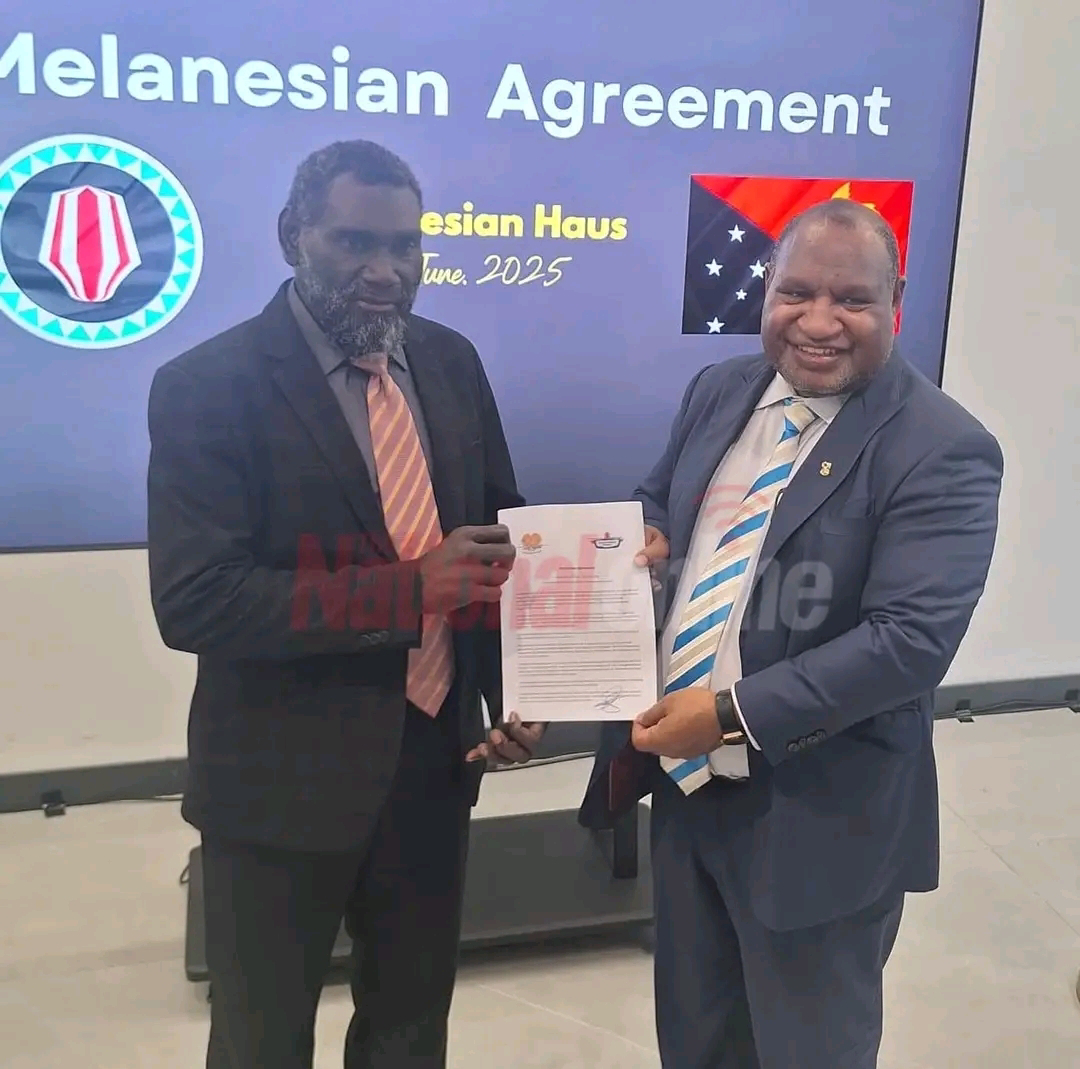
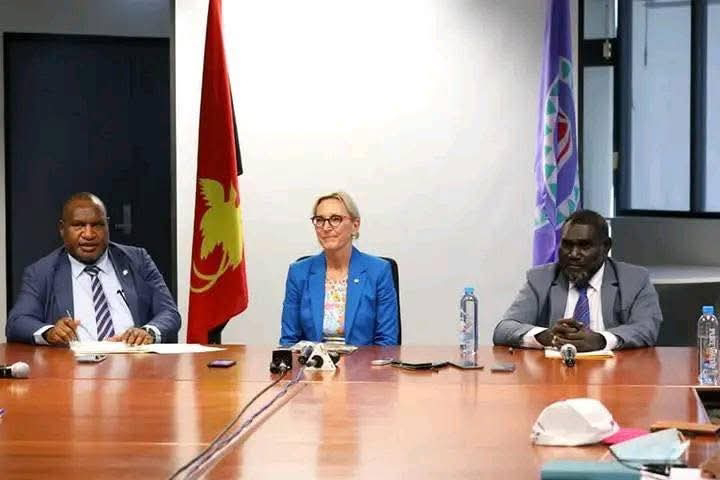
The meeting, held today at the Melanesian Haus in Port Moresby, was co-chaired by Prime Minister Hon. James Marape, MP, and Autonomous Bougainville Government President His Excellency Ishmael Toroama, MHR. 

The Melanesian Framework and the Joint Consultation Report were jointly developed by the ABG and the National Government in accordance with the resolutions of the Melanesian Agreement signed by both governments on 26 June 2025. 

Together, the two documents provide an agreed pathway for progressing Bougainville's political future through a peaceful, stable and Melanesian-led process that is consistent with the Constitution of Papua New Guinea while continuing an enduring relationship between Papua New Guinea and an independent Bougainville. 

Addressing the Joint Supervisory Body, President Toroama described the Joint Consultation Report as the culmination of years of engagement between the two governments.

"The Joint Consultation Report is a record of facts and an account of everything we have consulted over since the 2019 Referendum, culminating in the defining Melanesian Agreement. They capture jointly-agreed resolutions of both our governments." 

In its resolutions, the JSB endorsed the Melanesian Framework as the agreed pathway jointly designed by the two governments to give effect to an affirmative decision by the National Parliament should it endorse the Bougainville Referendum Results. 

The meeting resolved that the Bougainville Referendum Results, together with the Joint Consultation Report and the Melanesian Framework, will be tabled in the National Parliament on 27 August 2026 for Parliament's consideration. The Prime Minister and the President will jointly determine the date on which Parliament will consider the question arising from the Referendum Results. 

The JSB also directed the Independent Facilitator and the Joint Technical Team, supported by the Joint Ministers, to conduct awareness for Members of the National Parliament on both the Joint Consultation Report and the Melanesian Framework before the matter is debated. 
President Toroama said the two documents now provide the agreed roadmap for the next phase of the peace process.

"Combined with the Melanesian Framework, this is the institutional pathway to Bougainville's self-government and ultimately, to full sovereignty. This pathway reflects Bougainville's Final Position on our timeline for self-government and for political independence," he said.  

The Joint Consultation Report, Melanesian Framework and the Referendum Results will be tabled in the National Parliament on August 27, 2026 by the National Minister for Bougainville Affairs. 

https://abg.gov.pg/index.php?/news/read/jsb-endorses-joint-consultation-report-and-melanesian-framework-agrees-to-table-referendum-results-in-parliament-on-august-27

Bougainvillean separatism and desire for independence emerged in the early 1960s

Bougainvillean separatism and desire for independence emerged in the early 1960s, driven by cultural differences and resentment over the colonial administration's imposition of the Panguna copper mine. Despite early secessionist sentiment, the territory was incorporated into Papua New Guinea (PNG) upon its independence from Australia in 1975, leading to a long-running conflict.

If all this time you were thinking, Bougainville's independence is just a recent political agenda, you're totally wrong. It has been long way back before PNG’s independence in 1975. 

Additionally, why 1st of September is the set date in 2027 for the Bougainville's potential independence? Shortly before PNG’s independence in 1975, activists declared the "Republic of the North Solomons" on 1st of September 1975, which failed to gain international recognition and was soon subsumed by the new PNG state.

The ongoing, post-conflict push for sovereignty culminated in a 2019 referendum, with 98% voting for independence. Following this, negotiations have continued, with leaders aiming for potential independence by 2027.

Bougainville the newest country coming soon 💙🖤

Reality Check for Bougainville Independence Dreams - Bougainville Is Still PNG

Bougainville saying it will be fully independent on September 1, 2027 sounds bold, but it’s not happening. Not like this. Not now. And probably not anytime soon. Declarations don’t create countries. Power, law, and agreement do.

Here’s the cold truth, Bougainville is still part of Papua New Guinea. That’s not an opinion, that’s the legal fact. PNG is one country. One flag. One constitution. You don’t just wake up, pick a date, and walk out like it’s a bad relationship.

The Prime Minister of Papua New Guinea will not allow this to happen. Trust me. James Marape and the current government, backed by parliament and the constitution and foreign powers are not going to let Bougainville just declare independence and call it a day. No government on earth gives up territory because of speeches and emotion.

Talking about raising flags and singing anthems is symbolic, sure. But symbolism doesn’t override national law. PNG leaders are not going to hand over sovereignty because someone calls a date “sacred.” Politics doesn’t work on vibes.

This is not an attack on the people of Bougainville. The people have suffered, and their history is real. But leadership needs to stop selling dreams that can’t be delivered. False hope is worse than no hope.

Bougainville is part of Papua New Guinea and will remain part of Papua New Guinea unless the national government agrees, the constitution changes, and the process is fully legal. That’s the reality. Anything else is just noise.

We are one country. Dividing ourselves with impossible promises helps nobody. Focus on unity, development, and real progress, not independence talk that the system will shut down the moment it gets serious.

Harsh? Yes. True? Also yes.

By The Hardest Pills to Swallow

September 1st 2027: Bougainville’s Independence Day

The President of Bougainville, His Excellency Ismaël Toroama, has declared that September 1st, 2027, will be the day of full Independence for Bougainville. 

Mr. Toroama said the next three years will be a preparation period, with the aim to achieve independence by 2030.

He highlighted this as an important step for Bougainville's transition from Papua New Guinea and to determine its sovereignty. 

Member for North Bougainville, Hon. Francesca Semoso, also confirmed the date, describing the set moment as sacred to the people of Bougainville. 

"On that day, Bougainville will rise as a sovereign nation—free, proud, and standing tall among the nations of the world".

"We have walked a long road.  
We have mourned our martyrs.  
We have negotiated with dignity.  
We have voted with courage.  
And now, we proclaim with pride: Bougainville will be free".

Hon. Semoso informed that on September 1, 2027, Bougainville will raise its flag and sing its national anthem, proclaiming to the world that it is free and shall remain free.

She further reminded that the independence is not an end—it is a beginning of a call to responsibility and an invitation to build a just, transparent, and united state, rooted in customs and open to the world.

BOUGAINVILLE WILL MOVE FORWARD WITH ITS INDEPENDENCE PLAN

REGIONAL POLITICS 

21/01/2026

Autonomous Bougainville Government [ABG] President Ismael Torama has made it clear recently that Bougainville will move forward with its independence plan, even if the PNG Parliament rejects the 2019 referendum result.

The president was speaking bluntly in video recorded during the passage of its annual budget.

His strong stance on getting independence for his people immediately reflects the frustration among Bougainvilleans. This must not be taken lightly by the Papua New Guinea's National Government with its relevant ministries, including the parliamentary bodies. It is not a threat but composed of possibilities.

The statement itself reflects elements of possibilites in light of regional diplomatic 'cold war' before us.

To PNG, the island has an autonomous government but still part of its territorial integrity. To the world, the ABG is invited directly by overseas governments to attend events, forums and meetings. Donors partners are on the ground developing the island in collaboration with the local leadership layers.

We do not want anymore wars - we have had enough. Wars are definitely not the panacea to their aspirations. Everyone wants a peaceful journey, determining the political future of the island.

We have a vehicle Joint Supervisory Body [JSB] through the Melanesian Partnership Agreement between the two parties. It drives views of each party in mutual and peaceful means.

What is required urgently is an open and honest discussion based on reality, not emotion, pride, or intense political pressure.

Independence does not have to be an all-or-nothing choice. Around the world, there are workable models where regions control their own affairs while keeping some links with the main country.

Examples include Guam and Puerto Rico under the United States, Greenland under Denmark, Hong Kong under China, and the United Kingdom's devolved system. These models show that strong self-rule can exist without a total break-down.

A smart option for Bougainville would be to push for full control of their resource, revenue laws, and local governance, while PNG carries old national responsibilities. Bougainville could also use easy access to PNG markets to grow jobs and income.

For PNG, such arrangements could protect stability, reduce financial risks, and keep economic ties alive.

The real problem is not lack of choice, but lack of fresh thinking. Honest dialogue and practical solutions are now more than ever.

ABG GETS INDEPENDENCE ON SEPTEMBER 1ST 2027

REGIONAL NEWS 

20/01/2027

President Ismael Toroama confirms 1st September 2027 as the target for independence. 

Autonomous Region of Bougainville [ABG] President Ismael Torama has pledged publicly that he will declare independence for Bougainville on the 1st of September 2027. In saying that the president has drawn out an obvious timetable for the region's transition to full sovereignty from Papua New Guinea.

The bold declaration was made by the president during an address to public servants at Hutjena United Church yesterday during their Dedication Mass for the year 2026.

Read The Full Article Here: https://www.postcourier.com.pg/president-ismael-toroama-confirms-1st-september-2027-as-the-target-for-independence-urging-public-servants-to-accelerate-preparations/

Editorial|PNG SUN| - Papua New Guinea Government's Position and The Respond from the Autonomous Bougainville Government President Ishmael Toroama


#pngsun #editorial: Autonomous Bougainville Government President Ishmael Toroama has made it clear in the recent past that Bougainville will move forward with its independence plans even if the PNG Parliament rejects the 2019 referendum result.

He was bluntly speaking in a video recorded during the passage of its annual budget.
His strong stand reflects growing frustration among Bougainvilleans. This must not be taken lightly by the National Government and its relevant ministry with the Parliamentary bodies. It is not a threat but possibilities.
The statement itself reflects elements of possibilities in light of regional diplomatic ‘cold wars’ before us.
To PNG, the island has an autonomous government but still part of its territorial integrity. To the world, the ABG is invited directly by overseas governments to attend events, forums and meetings.
We do not want anymore wars-we have had enough. Wars are definitely not the panacea to their aspirations. Everyone wants a peaceful journey determining the political future of the island.
We have a vehicle Joint Supervisory Body through the Melanesian partnership agreement between the two parties. It drives views of each party in mutual and peaceful means.
What is needed urgently is an open and honest discussion based on reality, not emotion, pride, or political pressure.
Independence does not have to be an all-or-nothing choice. Around the world, there are workable models where regions control their own affairs while keeping some links with the main country.
Examples include Guam and Puerto Rico under the United States, Greenland under Denmark, Hong Kong under China, and the United Kingdom’s devolved system. These models show that strong self-rule can exist without a total breakdown.
A smart option for Bougainville would be to push for full control of resources, revenue laws, and local governance, while PNG carries old national responsibilities. Bougainville could also use easy access to PNG markets to grow jobs and income.
For PNG, such arrangements could protect stability, reduce financial risks, and keep economic ties alive.
The real problem is not lack of choices, but lack of fresh thinking. Honest dialogue and practical solutions are now more important than ever.

Island Warrior to Go for Election


By BIM Corporate Author

In the midst of the Political quest, in times of the island’s hardline stance for full sovereignty from Papua New Guinea, the democracy will once again preside as the North Solomons Archipelago’s Top leader submits himself into test by people’s power.

This week, as the writs for the 2025 Bougainville elections were issued, President Ishmael Toroama, will once again run for election. But his journey to this moment is not one written in ease or privilege, it is carved from the crucible of conflict, shaped by struggle, and inspired by an unrelenting vision of Bougainville self-determination.

Toroama was once just another young man of the island, born into a generation that witnessed the collapse of order, the suffocation of dreams, and the cry of a wounded land. In the wake of oppressive mining practices and systemic marginalization, his homeland, once dubbed the “paradise of the Pacific,” spiraled into chaos. In his youth, Toroama, alongside many others, took to the jungles. Armed with conviction, he joined the Bougainville Revolutionary Army and rose swiftly to the rank of Commander, leading a guerrilla war that cost over 20,000 lives.

But even in war, seeds of peace can grow. As the battlefields fell silent and the drums of dialogue began to beat, Toroama transformed. He became not just a commander of arms, but a commander of thought, participating in critical negotiations that would pave the path to peace. Standing alongside peace-seeking leaders like the late Joseph Kabui, Toroama chose dialogue over destruction, diplomacy over division.

When Bougainville fractured into opposing visions in 1997, between the defiant stance of Francis Ona and the peaceful advocacy of Kabui, Toroama sided with peace. It was a defining decision, one that set him on a course of statesmanship and moral leadership. He became a signatory of the 2001 Bougainville Peace Agreement, and ever since, has guarded its spirit with unwavering loyalty.

Through the creation of the Autonomous Bougainville Government, Toroama worked tirelessly, not only to maintain peace but to prepare the people for the political destiny they long dreamed of. And in 2019, when the long-awaited referendum returned an overwhelming 97.7% vote in favor of independence, it was Toroama who was entrusted by the people to carry the Bougainvilleans forward.

As President, Toroama’s leadership has been deliberate and strategic. From the Kokopo Consultation in 2021, to the Wabag and Era Kone dialogues, he steered Bougainville through complex negotiations with the Government of Papua New Guinea. When talks reached a stalemate, he supported the appointment of an independent moderator who was a New Zealand’s former Governor General, Sir Jerry Mataparae. Through difficult compromises, they crafted the Melanesian Relationship Agreement, a roadmap granting Bougainville interim sovereign powers as it builds capacity toward full independence.

Toroama’s leadership style is not just bold, it is born of lived experience. He understands both the gun and the pen, both pain and peace. His presidency has been a bridge between the island’s violent past and its hopeful future.

Now, as Bougainville stands on the threshold of another historic election, the warrior-president is once again in the arena, not by force, but by faith in the democratic process. The island that once bled now votes. The man who once fought, now governs. And the vision of independence, long held in the hearts of Bougainvilleans, stands ever closer.

Ishmael Toroama’s story is not just Bougainville’s, it is a human story of transformation, courage, and purpose. It is a reminder that even from the darkest chapters, light can emerge. As the island prepares to cast its votes, it does so not only to choose a leader but to affirm a journey that has come so far and still dares to dream farther.

#Bougainvilleindependence #Bougainvillenews #ishmaeltoroama

Marape-Rosso Government to Table Bougainville Referendum Results in National Parliament

Port Moresby, Thursday, 26th June 2025– In a landmark move toward resolving Papua New Guinea’s long-standing political issue with Bougainville, the Marape-Rosso Government has confirmed that the results of the Bougainville Referendum will be formally tabled in the National Parliament.

This critical next step follows the signing of the Melanesian Agreement today by Prime Minister James Marape and Autonomous Bougainville Government (ABG) President Ishmael Toroama which is a historic pact that outlines a clear political roadmap for Bougainville’s future.

The signing took place after high-level bilateral consultations between the two governments, held at the Burnham Military Camp in Christchurch, New Zealand.

As part of the process, a parliamentary bipartisan committee on Bougainville matters will conduct awareness and public consultation to ensure national understanding before the referendum results are presented in Parliament.

Prime Minister Marape stated: “This agreement is a breakthrough and it respects the democratic voice of the people of Bougainville while upholding the unity and sovereignty of Papua New Guinea. We are committed to a peaceful, constitutional, and transparent process.”

President Toroama echoed similar sentiments, noting that the agreement recognizes Bougainville’s aspirations while building trust between the ABG and the National Government.

The Melanesian Agreement is seen as a significant milestone in the ongoing peace and reconciliation efforts since the 2019 referendum, in which Bougainvilleans voted overwhelmingly in favor of independence.

This development marks a new chapter in Bougainville’s political journey and underscores the Marape-Rosso Government’s commitment to honoring the referendum process through democratic and legal channels.

#Bougainville #Referendum #MelanesianAgreement #PNGGovernment #UnityInDiversity

Prime Minister Marape Delivers Historic BCL Share Transfer to the People of Bougainville

Port Moresby, Thursday June 26 , 2025– In a landmark moment of reconciliation and national unity, Prime Minister James Marape has today officially transferred the National Government’s shares in Bougainville Copper Limited (BCL)—valued at approximately K14.3 million—to the people of Bougainville.

The historic transfer was sealed during a formal ceremony at Government Haus, witnessed by Governor General Sir Bob Dadae, with the signing of documents by Prime Minister Marape and Autonomous Bougainville Government (ABG) President Ishmael Toroama.

The move honours the commitment made in the 2020 Joint Supervisory Body (JSB) meeting, where the national government pledged to hand over its stake in BCL to the rightful landowners and people of Bougainville.

"This is a defining act of justice and recognition," said one supporter. “BCL built this country, and now it’s time we truly honour the people of Bougainville for their sacrifice and contribution. Prime Minister Marape has shown true leadership—delivering not just on promises, but on healing and empowerment.”

The transfer is being hailed as a powerful symbol of trust-building and progress in the ongoing peace process between Papua New Guinea and the Autonomous Region of Bougainville, as the region continues its path toward greater autonomy.

Bougainville Independence Consultation Heads to Historic Burnham, New Zealand

By BIM Corporate Author


Port Moresby, 10 April 2025— The next round of high-level political consultations between the Government of Papua New Guinea (GoPNG) and the Autonomous Bougainville Government (ABG) is set to take place at Burnham, New Zealand, a location steeped in significance for the Bougainville peace process.

Burnham played host to landmark negotiations in 1997 that paved the way for the Bougainville Peace Agreement (BPA), signed in 2001. Its symbolic role in the peacebuilding journey makes it a fitting venue for the third round of the current consultation series, which aims to determine Bougainville’s political future.

The announcement came as the second round of formal consultations concluded today in Port Moresby. Held from 7 to 10 April, the talks were moderated by Lt Gen The Rt Hon Sir Jerry Mateparae, GNZM, QSO, KtStJ, who described the dialogue as constructive and forward-looking.

This round is the second in a scheduled series of four consultations occurring between March and June 2025. It built on the outcomes of the first meeting, during which Prime Minister James Marape and ABG President Ishmael Toroama presented their visions for Bougainville’s future.

The Port Moresby meeting focused on identifying and agreeing on key issues necessary for progress toward a political settlement. Discussions were structured around four core pillars: Political, Institutional, Economic, and Parliamentary matters.

Topics covered included transitional timelines, fiscal arrangements, institutional readiness, constitutional considerations, and mechanisms for continued consultation and public awareness. Both parties emphasized the importance of mutual respect and sustained engagement throughout the process.
In the final session, Minister for Bougainville Affairs Hon. Manasseh Makiba and ABG Vice President Hon. Patrick Nisira reaffirmed their governments’ commitment to the BPA and the peaceful path it laid out.

Sir Jerry praised the efforts of both delegations, saying, “I commend both parties for their continued dedication to peaceful dialogue, and I remain honoured to support their efforts toward a lasting and meaningful resolution.”

As the process moves to Burnham, hopes remain high that the spirit of 1997 will inspire renewed progress toward a peaceful and lasting outcome.
Photos Credit: ABG Media Bureau

Opening Statement by ABG President at the Joint Consultation Moderator Meeting

Sir Jerry Mateparae, Distinguished Moderator, the Honourable James Marape, Prime Minister of Papua New Guinea, Foreign Missions, distinguished dignitaries, ladies and gentlemen. 

First I would like to thank you Sir Jerry for this most unique opportunity to present our case in this very historical meeting. It is a historical event because you are here on our invitation to broker this dialogue. It is particularly significant as this is very much, the last leg of our journey. 

Secondly, I welcome the presence of representatives of the international community especially the friends of Bougainville who stood behind us to bring about a truce and ceasefire and to pave the way for negotiations. 

Many of us present here today have personal experience of those negotiations up to and including the signing of the Bougainville Peace Agreement. 

I thank the National Government for inviting the signatories to the Peace Agreement to witness the opening ceremony of this moderation. As one of the key negotiators in those days, I still remember, we never argued to implement our part of the bargain, and I still remember I had to meet the BPA commitments as my part of the bargain. And in the same spirit, Honorable Prime Minister, I now expect your Government to take ownership and endorse independence in this 11th parliament. 

Prime Minister, I appeal to you to take the Bougainville referendum results and pass it to the National Minister for Bougainville Affairs to present to the National Parliament for endorsement through this moderation process in the same manner the National Constitution was amended to give effect to the Bougainville Peace Agreement. 

By this action of the Parliament of Papua New Guinea, to amend the Constitution in 2001, PNG was probably the first independent state anywhere to have accorded the UN Charter right and principle of self-determination of peoples to its own people under its domestic laws and regulations. 

We recognize that the sessional order is a process that will happen in the national parliament and while we appreciate the engagement in this particular subject, it has diverted our attention from the core agenda of the political settlement on independence. The referendum Independence result must be endorsed. In the spirit of the Bougainville Peace Agreement, the two governments can jointly decide as part of the consultations to reach agreement on a bilateral relationship for independence for Bougainville outside of parliament. 

Bougainville’s agenda is independence and in our post-referendum consultations we have made this clear, resulting in joint agreements such as the Wabag roadmap and the Era Kone Covenant. Therefore, it is my expectation that the moderation process will have to address the Bougainville independence issue. 

I thank the signatory countries that witnessed the Peace Agreement, for your commitment. I trust that as the witnesses to the BPA, you will respect the Bougainville people’s democratic choice for Independence, decided through a constitutionally granted referendum for independence. I am aware that some countries are already implicated in pushing their neo-colonial interests in Bougainville and I ask that you refrain from interfering. 

Sir Jerry, my people have set 1st September 2027, as the date for independence to take effect. This decision is consistent with the jointly agreed Referendum Results Implementation Roadmap, commonly known as the ‘Wabag Roadmap’, that set the window of ‘no earlier than 2025, no later than 2027’, for the declaration of independence. As President, I will uphold the decision of my people throughout these moderation consultations. 

I look forward that this moderation process will conclude with an agreement on the independence package for Bougainville. 

The Bougainville Peace Agreement is a political settlement that has three pillars; Weapons Disposal, Autonomy and Referendum. Out of the three pillars, the Referendum pillar was the key pillar that held the commitment of all Bougainvilleans to the peace process, by guaranteeing in the National Constitution, a choice of separate independence for Bougainville. 

The definition of independence was defined by the Government of PNG as, ‘An independent nation state with sovereign powers and laws, recognized under international law and by other sovereign states to be an independent state, separate from the State of Papua New Guinea.’ The people voted for independence and to propose any other option in this moderation is detrimental to the peace process.  

We all know Papua New Guinea is going to celebrate its 50 years independence anniversary. In the case of Bougainville, this marks more than 50 years of struggle for independence within Papua New Guinea. It is important to remember that Bougainville leaders have lobbied for Bougainville’s Independence well before PNG’s Independence without any recognition from international bodies.  

In conclusion, Mr Moderator, as far as I am concerned, the process of negotiating independence was concluded with the referendum. My understanding is that this moderation is about reaching agreement on implementing the referendum result of independence. Therefore, my focus in this moderation is to define the new relationship between Bougainville and Papua New Guinea as two independent sovereign states. This relationship can be captured through an independence package for Bougainville. 

Bougainville has done its part in this peace process. It is now your turn. 

May God continue to bless Bougainville and Papua New Guinea. 

His Excellency Hon. Ishmael Toroama, MHR 
President

https://abg.gov.pg/index.php?/news/read/opening-statement-by-abg-president-at-the-joint-consultation-moderator-meeting

Sir Jerry Mateparae appointed in Bougainville post-referendum moderator role

 Dated 3rd October 2024,

 Rt Hon Winston Peters, New Zealand Foreign Affairs - Port Moresby. 

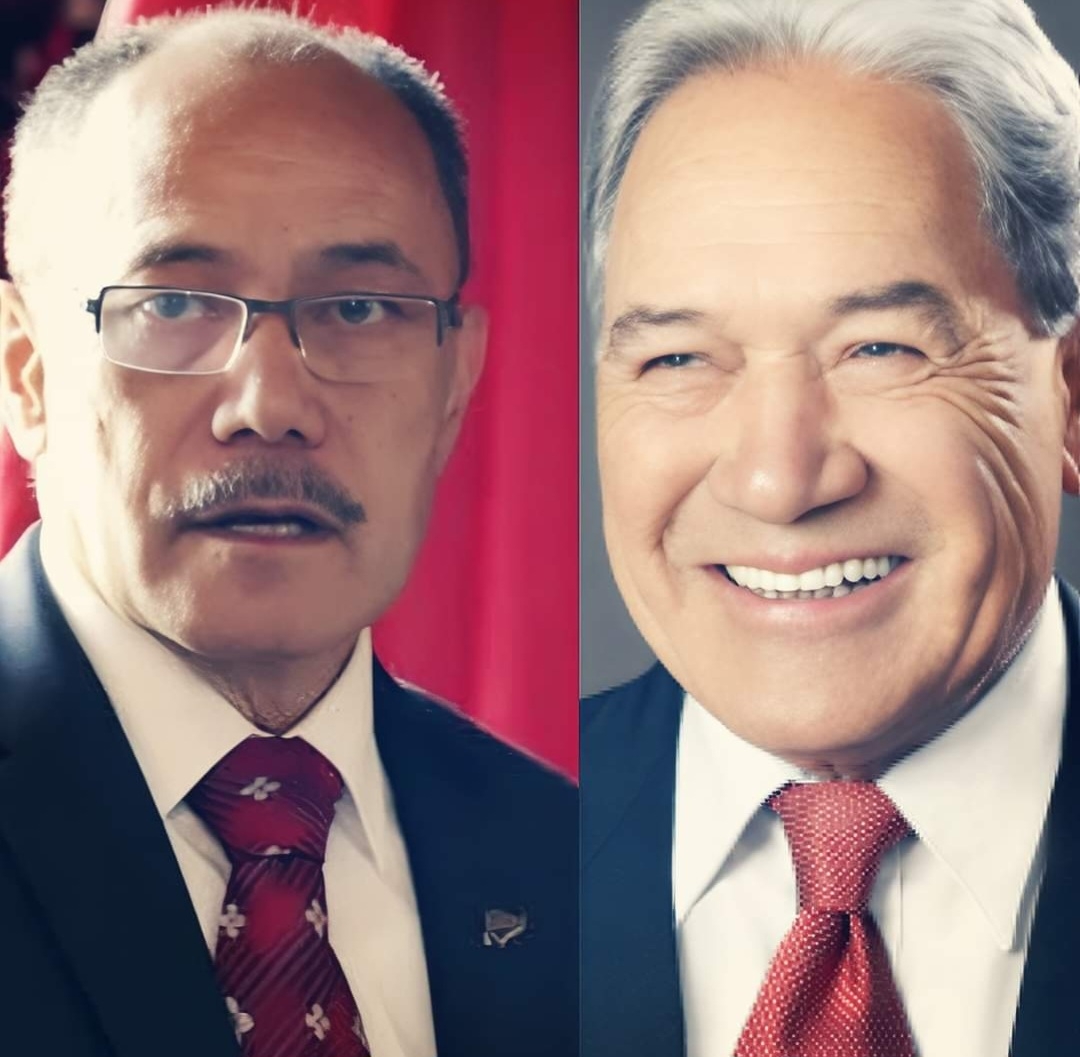
Foreign Minister Winston Peters has welcomed the announcement of Sir Jerry Mateparae as an independent moderator, to work with the Government of Papua New Guinea and the Autonomous Bougainville Government in resolving outstanding issues on Bougainville’s future.

“New Zealand is an enduring friend to Papua New Guinea and the Autonomous Region of Bougainville and has provided long-running support to the Bougainville peace process,” Mr Peters says.

“Sir Jerry is eminently qualified for the role of moderator, having served as the Governor-General of New Zealand, Chief of Defence Force, and Commander of the Truce Monitoring Group in Bougainville during Operation Belisi.”

Sir Jerry has been in Port Moresby this week engaging in initial conversations with leaders about the moderator role. The announcement of Sir Jerry’s appointment was made following a joint meeting with Papua New Guinea Prime Minister Marape and Autonomous Bougainville Government President Toroama after their consideration of several high-profile candidates.

“We hope that Sir Jerry’s engagement will assist Papua New Guinea and Bougainville to progress post-referendum consultations and decisions on Bougainville’s future, in a way that that sustains the peace and progress of the last 25 years,” Mr Peters says.

Source: New Zealand High Commission, POM - PNG

POPE CALLS ON PNG TO FIND POLITICAL SOLUTION FOR BOUGAINVILLE

By Gorethy Kenneth 
Post Courier 

September 9, 2024.

HIS Holiness Pope Francis’ appeal to Papua New Guinea to find common ground for a lasting political solution for the people of Bougainville is one of compromise that recognises the desires of the people.

And Regional Member for Bougainville, who is also Police Minister, Peter Tsiamalili Jr said
he was heartened and emotional by this.

Mr Tsiamalili welcomed Pope Francis on behalf of the people of Bougainville and was on
hand to welcome His Excellency, Pope Francis at Jackson’s International Airport in Port
Moresby last Friday.

The Regional Member also attended an address by Pope Francis in Port Moresby at APEC Haus on Saturday where the Holy Father spoke about the need for unity, hope and love in advancing the interests of the nation.

During his address, the Pope also appealed to the nation to find common ground for a lasting
political solution for the people of Bougainville.

“The Pope’s message is one of compromise that recognises the desires of the Bougainville
people. I was heartened by his words, and as Regional Member remain steadfast in my belief
that we must deliver on the will and expectations of the Bougainville people,” Mr Tsiamalili said.

Speaking shortly after the Pope’s arrival, the Regional Member said that it was an honor to
be able to greet the Pope and to pass on the well wishes of all Bougainvilleans.

“Pope Francis is an inspiration to many Bougainvilleans. In a time of increasing global
uncertainty, his presence offers a beacon of hope,” he said.

Mr Tsiamalili said that the Pope’s visit, the first papal visit since Saint John Paul II who
visited PNG in 1995, offered a message of hope and forgiveness. 

“The fact that Pope Francis has chosen to visit Papua New Guinea reflects his mission to spread hope and forgiveness across the world,” he said.

“To hear Pope Francis speak on these issues was inspirational. As the leader of the Catholic
Church his words have deep meaning.”

Pope Francis also reinforced the role and importance of women in society, noting their
critical contribution to nation building,
“The Pope’s vision and affirmation of the role that women play in all societies is a timely
reminder for all of us in Bougainville and Papua New Guinea of the role that our mothers,
daughters, sisters and spouses play in promoting a stronger and more vibrant nation.”

BOUGAINVILLE TO 'RAISE THE FLAG' IN INTERNATIONAL PUSH OF INDEPENDENCE PLANS

5th September 2024

By Benarnews
Establishing ties with the Melanesian Spearhead Group will be the first priority for the Autonomous Government of Bougainville’s newly created “external relations” office, as it prepares for independence from Papua New Guinea.

The province voted 97.7% in favor of independence in a 2019 referendum that is yet to be ratified by PNG’s parliament, but Bougainville’s President Ishmael Toroama told BenarNews it would happen regardless in 2027.

Unlike Indonesia’s Papuan provinces, New Caledonia, French Polynesia, Guam and American Samoa - which were or are part of the U.N. decolonization process - Bougainville’s self-determination is mandated through the PNG constitution.

Under the 2001 Bougainville Peace Agreement – after a brutal civil war triggered by Rio Tinto’s Panguna mine – PNG retains responsibility for foreign affairs but allows for the ABG to engage externally, for trade and with “regional organizations.”

“To raise, to put a flag at the MSG is one step forward into reality,” Toroama told BenarNews in Brisbane. “I think we start with the MSG first, we are looking to become an observer,.” 

“We need countries to support us, we need to talk to those countries (ahead of independence),” said the former Bougainville Revolutionary Army commander who will face elections in 2025 after five-years in office.

The MSG was formalized as a sub-regional grouping in 2007 – comprising Fiji, PNG, Solomon Islands and Vanuatu and pro-independence Kanak and Socialist National Liberation Front (FLNKS) of New Caledonia – primarily to promote economic growth in the Melanesian region. 

An ABG approach has not yet been made to the MSG but in the meantime, Toroama is looking to foster international economic ties. 

In July, the ABG created the External Relations Directorate under the office of the president, with former politician Albert Punghau as acting director and former Bougainville president James Tanis as an “international legate”.

The move was welcomed in a letter from the PNG prime minister’s department as an “important step.”

“Given this, my expectation is that the Directorate will liaise closely with the Department of Foreign Affairs on any foreign relations activities. This will ensure alignment on foreign relation matters with national government policies,” chief secretary of the PNG government Ivan Pomaleu wrote to the ABG on July 22, copying Prime Minister James Marape.

Written advice provided to Pomaleu, seen by BenarNews, states, “Under the BPA, the ABG has every right to establish the Directorate to enable the ABG to better engage in foreign relation activities and it could be argued that this is long overdue.”

Last September, Bougainville’s government called on the U.S., Japan, Australia, New Zealand and China for foreign direct investment, adding “these are the very nations we will establish diplomatic relations with as an independent sovereign nation.”

Toroama says the ABG has respected the peace agreement on the foreign affairs front, by not engaging directly with foreign governments, but it does allow “economically starting to engage with whatever nations that will be available.”

Papua New Guinea, the most populous Pacific island country with an estimated 12 million people, is a focus of intensifying U.S.-China rivalry for influence in the Pacific. The easternmost islands of Bougainville, home to about 350,000 people and ethnically closer to Solomon Islands, is the site of the long-inactive Panguna mine.

One of the most resource-rich areas of PNG, Bougainville has the world’s largest copper reserves, gold and tuna. Toroama sees the resources as the basis for its future economy, where there is currently almost none.

There is little reliable available data on the Bougainville’s mainly agricultural, fisheries and alluvial mining based economy. Restarting the Panguna mine would take many years and cost billions of dollars.

The former BRA officer during the civil war said he is inspired by the vision of his late former commander Francis Ona of creating a Pacific economic powerhouse.

“It’s just testing the waters. What I’m saying here is we have colonial partners, if you cannot come in, then we have the last card, the Chinese card, that I will be playing. So I’m very frank and honest,” Toroama said.

“The (Chinese) corporations, they’ve been to visit Bougainville. They have spoken but not in real terms, into signing an agreement. Not yet.”

Toroama said there’s little interest from the U.S. - despite a visit to meet investors in Washington last year - or Japan. Most engagement is from the Australian government and investors, but he said there are legacy issues to deal with.

“They’re putting money in, but it’s a piecemeal package if you compare Panguna mine and what resources have been taken out. It’s just nothing,” he said. 

“You have dug that hole, you have been benefitting out of the Panguna mine.”

The environmental and social impacts of the giant Rio Tinto Panguna mine and inequitable distribution of revenues sparked the Bougainville ‘crisis’. 

An estimated 10,000-15,000 people died in a decade-long civil war between Bougainville and PNG that ended with a peace agreement in 2001, leading to the referendum in 2019.

Papua New Guinea’s Marape government missed the agreed 2023 deadline for parliament to debate the referendum result and decide on the semi-autonomous region’s independence aspirations. 

While recognizing the different circumstances, Toroama fears “the window of opportunity” for independence is almost closed for West Papua, closing for New Caledonia, and that could also happen to Bougainville. 

“What I’m saying to my fellow Bougainvilleans, if we cannot make this happen within this given timeframe, I think Bougainville will be lost forever,” he said.

“We are not going to compromise the legal basis we are setting. If the national government will not ratify our independence, whether Pacific islands like it or not, Bougainville sovereignty is there.”

Establishing ties with the Melanesian Spearhead Group will be the first priority for the Autonomous Government of Bougainville’s newly created “external relations” office, as it prepares for independence from Papua New Guinea.

The province voted 97.7% in favor of independence in a 2019 referendum that is yet to be ratified by PNG’s parliament, but Bougainville’s President Ishmael Toroama told BenarNews it would happen regardless in 2027.

Unlike Indonesia’s Papuan provinces, New Caledonia, French Polynesia, Guam and American Samoa - which were or are part of the U.N. decolonization process - Bougainville’s self-determination is mandated through the PNG constitution.

Under the 2001 Bougainville Peace Agreement – after a brutal civil war triggered by Rio Tinto’s Panguna mine – PNG retains responsibility for foreign affairs but allows for the ABG to engage externally, for trade and with “regional organizations.”

“To raise, to put a flag at the MSG is one step forward into reality,” Toroama told BenarNews in Brisbane. “I think we start with the MSG first, we are looking to become an observer,.” 

“We need countries to support us, we need to talk to those countries (ahead of independence),” said the former Bougainville Revolutionary Army commander who will face elections in 2025 after five-years in office.

The MSG was formalized as a sub-regional grouping in 2007 – comprising Fiji, PNG, Solomon Islands and Vanuatu and pro-independence Kanak and Socialist National Liberation Front (FLNKS) of New Caledonia – primarily to promote economic growth in the Melanesian region. 

An ABG approach has not yet been made to the MSG but in the meantime, Toroama is looking to foster international economic ties. 

In July, the ABG created the External Relations Directorate under the office of the president, with former politician Albert Punghau as acting director and former Bougainville president James Tanis as an “international legate”.

The move was welcomed in a letter from the PNG prime minister’s department as an “important step.”

“Given this, my expectation is that the Directorate will liaise closely with the Department of Foreign Affairs on any foreign relations activities. This will ensure alignment on foreign relation matters with national government policies,” chief secretary of the PNG government Ivan Pomaleu wrote to the ABG on July 22, copying Prime Minister James Marape.

Written advice provided to Pomaleu, seen by BenarNews, states, “Under the BPA, the ABG has every right to establish the Directorate to enable the ABG to better engage in foreign relation activities and it could be argued that this is long overdue.”

Last September, Bougainville’s government called on the U.S., Japan, Australia, New Zealand and China for foreign direct investment, adding “these are the very nations we will establish diplomatic relations with as an independent sovereign nation.”

Toroama says the ABG has respected the peace agreement on the foreign affairs front, by not engaging directly with foreign governments, but it does allow “economically starting to engage with whatever nations that will be available.”

Papua New Guinea, the most populous Pacific island country with an estimated 12 million people, is a focus of intensifying U.S.-China rivalry for influence in the Pacific. The easternmost islands of Bougainville, home to about 350,000 people and ethnically closer to Solomon Islands, is the site of the long-inactive Panguna mine.

One of the most resource-rich areas of PNG, Bougainville has the world’s largest copper reserves, gold and tuna. Toroama sees the resources as the basis for its future economy, where there is currently almost none.

There is little reliable available data on the Bougainville’s mainly agricultural, fisheries and alluvial mining based economy. Restarting the Panguna mine would take many years and cost billions of dollars.

The former BRA officer during the civil war said he is inspired by the vision of his late former commander Francis Ona of creating a Pacific economic powerhouse.

“It’s just testing the waters. What I’m saying here is we have colonial partners, if you cannot come in, then we have the last card, the Chinese card, that I will be playing. So I’m very frank and honest,” Toroama said.

“The (Chinese) corporations, they’ve been to visit Bougainville. They have spoken but not in real terms, into signing an agreement. Not yet".

Toroama said there’s little interest from the U.S. - despite a visit to meet investors in Washington last year - or Japan. Most engagement is from the Australian government and investors, but he said there are legacy issues to deal with.

“They’re putting money in, but it’s a piecemeal package if you compare Panguna mine and what resources have been taken out. It’s just nothing,” he said. 

“You have dug that hole, you have been benefitting out of the Panguna mine.”

The environmental and social impacts of the giant Rio Tinto Panguna mine and inequitable distribution of revenues sparked the Bougainville ‘crisis’. 

An estimated 10,000-15,000 people died in a decade-long civil war between Bougainville and PNG that ended with a peace agreement in 2001, leading to the referendum in 2019.

Papua New Guinea’s Marape government missed the agreed 2023 deadline for parliament to debate the referendum result and decide on the semi-autonomous region’s independence aspirations. 

While recognizing the different circumstances, Toroama fears “the window of opportunity” for independence is almost closed for West Papua, closing for New Caledonia, and that could also happen to Bougainville. 

“What I’m saying to my fellow Bougainvilleans, if we cannot make this happen within this given timeframe, I think Bougainville will be lost forever,” he said.

“We are not going to compromise the legal basis we are setting. If the national government will not ratify our independence, whether Pacific islands like it or not, Bougainville sovereignty is there.”

At the Pacific Islands Forum leaders meeting in Tonga last month, Marape told BenarNews that Bougainville’s independence is an internal matter to be decided by PNG’s parliament. 

Bougainville’s government wants to achieve independence by 2027 but has faced opposition from PNG’s leaders, who fear it could encourage secessionist movements in other regions of the volatile Pacific island country. 

The two sides are far apart and have just appointed a moderator over whether a parliamentary vote is by simple or two-thirds majority to approve or reject independence.

“That is the point of argument and if that (two-thirds) goes into place, it would be a disaster for Bougainville,” Toroama said.

In Brisbane for diaspora consultations on the draft Bougainville constitution last weekend, Toroama said there’s “still a lot of work to do” and “time is against us” for meeting a tentative December deadline for completion.

Issues still being considered range from the design of the flag and name of the currency to landowner rights and definition of citizenship.

“The whole process for getting the constitution, that it is a platform that we will be using to declare Bougainville independence,” he said.

“Bougainville has been known for unilateral declarations,” he added, referring to two previous independence bids. 
At the Pacific Islands Forum leaders meeting in Tonga last month, Marape told BenarNews that Bougainville’s independence is an internal matter to be decided by PNG’s parliament. 

Bougainville’s government wants to achieve independence by 2027 but has faced opposition from PNG’s leaders, who fear it could encourage secessionist movements in other regions of the volatile Pacific island country. 

The two sides are far apart and have just appointed a moderator over whether a parliamentary vote is by simple or two-thirds majority to approve or reject independence.

“That is the point of argument and if that (two-thirds) goes into place, it would be a disaster for Bougainville,” Toroama said.

In Brisbane for diaspora consultations on the draft Bougainville constitution last weekend, Toroama said there’s “still a lot of work to do” and “time is against us” for meeting a tentative December deadline for completion.

Issues still being considered range from the design of the flag and name of the currency to landowner rights and definition of citizenship.

“The whole process for getting the constitution, that it is a platform that we will be using to declare Bougainville independence,” he said.

“Bougainville has been known for unilateral declarations,” he added, referring to two previous independence bids.

Bougainville President Toroama and Prime Minister Marape Pledge Transparent Dialogue for Peaceful Resolution at Joint Supervisory Body Meeting

FOR IMMEDIATE RELEASE

Port Moresby, Tuesday, August 1, 2023 

Bougainville President H.E. Ishmael Toroama and Prime Minister Hon. James Marape have jointly resolved to uphold the authentic Melanesian tradition of resolving disputes through transparent dialogue and consultation, aiming to achieve a lasting and peaceful solution. This resolution was reached during the Joint Supervisory Body (JSB) meeting held in Port Moresby on Monday, July 31, 2023.

Acknowledging the complexity of the Independence choice made by the people of Bougainville in the 2019 referendum, both President Toroama and Prime Minister Marape expressed their unwavering commitment to collectively address shared issues.

Key resolutions and endorsements made during the JSB meeting include:

a). The pathway to parliament will be through a Sessional Order.

b). The Sessional Order will only be moved after the content of the motion is agreed upon by the National Minister for Bougainville Affairs and Autonomous Bougainville Government (ABG) Minister for Bougainville Independence Mission Implementation.

c). The motion will be adopted by a simple majority.

d). The proposal to invite the ABG President and his leaders to provide awareness to Members of the National Parliament has been accepted.

e). Other aspects of the Post Referendum matters will be dealt with under the Constitutional Regulation.

In addition, the JSB directed the National Minister for Bougainville Affairs and ABG Minister for Bougainville Independence Mission Implementation to collaborate on the content of the Sessional Order, focusing on:

(i) The formulation of the question to be presented before Parliament.

(ii) The determination of the number of sessions required for deliberating on these matters.

(iii) The specification of the voting majority needed to endorse the referendum results.

(iv) The procedure for introducing the referendum results into Parliament.

Furthermore, the JSB mandated the National Minister for Bougainville Affairs and ABG Minister for Bougainville Independence Mission Implementation to explore the possibility of seeking mediation support from Moderators in case of any impasses encountered during their consultation.

######