Search This Blog

Total Pageviews

Advertisement

Labels

Blog Archive

Showing posts with label extractive industry. Show all posts

Fifty years after independence, Papua New Guinea (PNG) remains one of the world’s poorest countries

Persistent poverty, weak infrastructure, and limited access to essential services continue to undermine development progress.

The IMF projects PNG’s nominal GDP to reach $31 billion in 2025. “Papua New Guinea’s economic outlook remains positive. Growth is expected to increase to 4.7 percent in 2025 from an estimated 3.8 percent in 2024 Nir Klein, IMF mission chief for PNG supported by the resumption of activities at the Porgera gold mine and improvements in access to foreign exchange.

However, these gains have yet to improve living standards for most citizens.

Poverty is widespread according to UNICEF report, with over 34 percent of the population living below the international poverty line of $2.15 per day. Rural poverty exceeds 40 percent, compared to 27 percent in urban areas. Most Papua New Guineans depend on subsistence agriculture, which suffers from low productivity due to inadequate training and poor infrastructure.

Access to electricity covers only about 20 percent of the population, and just 19 percent have safe drinking water. World Bank reported worsening education outcomes, with 72 percent of Grade 5 students unable to read age-appropriate texts. Health infrastructure is underdeveloped, contributing to malnutrition where nearly half of children under five are stunted. Youth unemployment remains high, with many young people neither in education nor employment.

PNG’s economy heavily relies on extractive industries, which account for over 70 percent of export earnings but employ only a small fraction of the workforce. The reopening of the Porgera gold mine and progress on major projects like Papua LNG and P’nyang gas developments offer growth potential but remain vulnerable to commodity price swings and infrastructure bottlenecks.

Foreign exchange shortages, power disruptions, and civil unrest, including the January 2024 riots in Port Moresby, have dampened business confidence as reported by local media. Inflation remains elevated at around 5.5 percent, driven by exchange rate depreciation and rising food and fuel costs.

Inequality persists, with wealth concentrated among political elites and urban centers while rural communities remain marginalized. The government’s Medium-Term Development Plan IV aims to improve infrastructure, social services, and stimulate private sector growth, but implementation challenges remain.

Despite these challenges, Prime Minister James Marape remains optimistic: “Our country’s challenges remain significant, but we can overcome them if we work together.”

PNG’s journey over 50 years has seen modest growth overshadowed by deep social challenges. Recent developments offer cautious hope, but turning economic gains into broad social progress remains the nation’s greatest challenge.

Slipway permit to lapse soon

 The Acting Director of the Department of Environment, Trinison Tarivonda, said the environment permit for the slipway development in Port Vila will lapse this month.

He said the permit was issued last year for nine months, after a Preliminary Environment Assessment (PEA). He said the developer may request the department for extension if work is yet to be completed.

Located in the centre of Port Vila and at the coast, the slipway has caused concerns for environment pollution. A petition calling on the government to stop the development has reached Prime Minister (PM) Charlot Salwai.

The Acting Director said they are in the process of discussing the way forward.

Asked to confirm the possibility of the development causing chemical pollution to the coast as raised by the public, Tarivonda said they need to make more monitoring at the site.

“Environment permits when issued include conditions for companies to follow when carryout activities to safeguard the environment. One of the conditions is to make sure the waste generated must be disposed properly.

“Any water pollution must be managed in a sustainable way. The department will continue monitoring and assessment during operation. Officers have went to the site for follow-ups, but we need to do more monitoring.

“Not only us (DoEPC) but we have to team up with the Department of Water to make water quality test, get results and analyse them,” he said.

As the 2024 year begins, Tarivonda and the Minister of Environment, Ralph Regenvanu, reminded developers about the application process for obtaining a permit for any new development under the Environment Protection and Conservation Act No.6 of 2019.


They explained that any development projects that are likely to cause impact on the environment, society or traditional custom, based on its type, size or location, must comply with the Act and apply for an Environmental Impact Assessment (EIA) permit.

“An application form for the permit must be filled and submitted to the DoEPC. DoEPC officers will then visit the development site and undertake environment assessment to develop a PEA from which a decision is made on whether or not a full EIA is required,” they explained.

“If the DoEPC determines that the development must undergo a full EIA, then the developer will engage a local consultant to do this work.

“Once the EIA report is completed, an environment permit is issued if the report meets and satisfies the required process.

“Any activity carried out without being subjected to the EIA provisions under law or prior to receiving written approval or any such activity where approval has been refused under the provisions of this part, carries a hefty penalty of imprisonment or fine not exceeding VT5 million for an individual and fine not exceeding VT100 million for a corporate body.”

All importers and developers are urged to adhere to permit requirements, as non-compliance will result in issuance of a penalty.

PNG did not to learn from mìstake on BCL. Foreign ownership of Gold Refinery is wrong


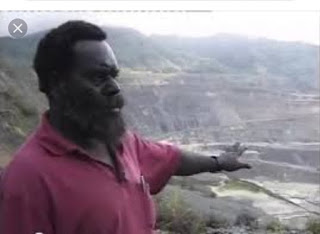
Bougainville crises erupted due to failure by PNG government to give priority to rightful resouce owners by nature but landowners by cut and paste foreign laws.

Provicial governments and landowners were made spectators in their own land without participating in the development and benefit sharing of their own gold and copper. 

PNG government adapted a foreign law to deal with our gold and copper mining which favours the foreigners and citizens were made to suffer from the sideline.

Gold Refinery does not need a rocket scientist to develop a refinery. There was partly a state own gold refinery company known as MRO in operations, other PNGians have already been into the business. 

We commend the Marape government's vision to set up a refinery and save our gold bullion. Refinery should be owned by state in partners with nationals who are already into the refinery business. 

We already have gold refinery in PNG, the only new thing is saving gold bullion as reserve at Central Bank of PNG. 


Politicians should not be misleading PNG for their personal interest making side deals. Citizens wake up and say no to foreign ownership of Gold Refinery. We cannot sell our country cheaply to foreigners and be slaves to them in our own country.

If government is not careful in her dealings to do something with our resources and businesses with foreigners, other Provinces will follow the precedent set by Bougainville. PNG will be divided nation, creating many small nations out of PNG.