Search This Blog

Total Pageviews

Advertisement

Labels

Blog Archive

Showing posts with label West Papua. Show all posts

MSG Presses UN Human Rights Council to Advance Long-Standing Call for West Papua Visit


Geneva| 25 July 2026: The Melanesian Spearhead Group (MSG) Secretariat has formally presented Pacific and MSG leaders' call for a United Nations human rights mission to West Papua and Indonesia's Papuan provinces during the 19th session of the Expert Mechanism on the Rights of Indigenous Peoples (EMRIP) in Geneva.

The presentation sought to advance a long-standing request by Pacific leaders for the UN High Commissioner for Human Rights to visit the region. The call was first endorsed by Pacific Islands Forum leaders in 2019, reaffirmed by MSG leaders at their 2023 summit in Port Vila, and repeated by both the Pacific Islands Forum and MSG during leaders' meetings in 2025.
EMRIP is an advisory body of the UN Human Rights Council that provides expert guidance on the implementation of the UN Declaration on the Rights of Indigenous Peoples.
Acting Director General Ilan Kiloe said the Geneva engagement marked an important step in implementing decisions made by Pacific and Melanesian leaders.
"It is a small but significant step towards the implementation of the leaders' decision to advance the voices of Melanesian peoples on the international stage and demonstrates the organisation's strong commitment to promoting justice, human rights and the rights of Indigenous Peoples," Kiloe said.
He added that the Secretariat would continue building on its advocacy for Indigenous rights following its engagement in the International Court of Justice's advisory opinion process on states' obligations relating to climate change.
During the Geneva mission, the MSG delegation also held meetings with senior UN officials and experts, including representatives of EMRIP, the UN Special Rapporteur on the Rights of Indigenous Peoples, the Committee on the Elimination of Racial Discrimination (CERD), UN treaty bodies, the UN Voluntary Fund for Indigenous Peoples and the UN Youth Office.
The visit concluded with a briefing for MSG ambassadors and permanent representatives to the United Nations in Geneva, hosted by Vanuatu's Ambassador, Sylvain Kalsakau, at the Pacific Islands Forum Permanent Mission.
Indonesia maintains that Papua is an integral part of the country and has consistently stated that it is committed to development and protecting the rights of all its citizens. Calls by Pacific leaders for a UN human rights visit remain under discussion within UN human rights mechanisms.
📍📸: Acting Director General Ilan Kiloe, MSG Secretariat team, and MSG Ambassadors during the Geneva briefing hosted at the PIF Permanent Mission. MSG Secretariat

Can Tonga do more for decolonisation?

  WORLD Human Rights Day passed with little fanfare on December 10. One of the Pacific’s human rights champions was Akilisi Pohiva – teacher, journalist, advocate, and Prime Minister of Tonga. MELE TUUAKITAU looks at Pohiva’s legacy

AS a small island state in the Pacific, Tonga is the only remaining Kingdom that has never been colonized in the region, valuing sovereignty and self-determination which are principles that could shape a moral stance for West Papua.

Unified under King George Tupou I in the mid-19th century, Tonga has been governed by a constitution that was established in 1875. This legacy has long been a source of Tongan pride.

This Tongan expression of sovereignty and self-determination is a key link that could support Pacific struggles such as West Papua. The Late Samiuela Akilisi Pohiva (1941–2019) rose from a modest upbringing to become the defining figure of Tonga’s pro-democracy movement and one of the Pacific’s most influential political voices.

A former teacher turned activist, he used radio and his newspaper Kele’a in the 1980s to expose corruption, challenge entrenched power, and champion transparency and accountability, values he argued were rooted in Tonga’s own moral traditions.

Despite being dismissed from his job and even jailed for his activism, Pohiva remained unwavering. His decades-long struggle culminated in 2014 when he became Tonga’s first commoner elected Prime Minister, marking a historic victory for the people’s movement over hereditary privilege.

As Prime Minister, he extended his moral leadership across the region, urging unity grounded in compassion, justice, and moral courage. He championed human rights across Oceania, most notably the plight of West Papua, insisting that Pacific leaders uphold the principle of leaving no one behind.

West Papua’s long-standing cry for help has echoed across Pacific regional meetings and spaces for years, yet the issue remains unresolved. Among the strongest voices was that of  Pohiva, who consistently used his platform to highlight the suffering of the West Papuan people.

“Tonga does not condone the injustice, cruel violation of human rights, dignity and brutal treatments around the world especially in West Papua in the Pacific,” he declared at the UN General Assembly in 2015.

Throughout Forum meetings, he stood firm, unafraid to speak when others remained silent, earning him the reputation of a “true leader.”

Even as Indonesia’s political and economic influence in the region grew, Pohiva never wavered. During the 2016 Pacific Islands Forum, he urged regional leaders: “We should not let others control us. We should stand together in solidarity in support of the people of West Papua.”

He called for UN investigations into human rights abuses and backed the United Liberation Movement for West Papua (ULMWP)’s bid for recognition. Pohiva refused to abandon what he saw as his moral duty to his “brothers and sisters” in West Papua, grounding his stance in principle rather than politics. Since his passing in 2019, questions have lingered over whether Tonga or its future leaders will continue his firm stand for Pacific solidarity on this issue.

While an equally vocal advocate has yet to emerge, Pohiva’s legacy continues to inspire Tongan youth and civil society.

“Pohiva taught us that even a small nation can have a loud voice when it speaks the truth,” youth leader Vika Taufa reflected.

A just and peaceful Pacific cannot be built on silence and selected solidarity, instead we must try to stand up for those who cannot and be the voice for the voiceless.

While Pohiva remained an advocate for West Papua, he also reminded us that true leadership means standing up for those who cannot speak freely, especially if it is within your capabilities. He reminded us that the problems of  West Papua were not  distant issues but  Pacific wounds.

If we consider the future of the Pacific, justice must remain as the foundation of our vision, the challenges we face, whether it is climate change or our culture slowly fading, we must consider those who are around us. This future also requires the empowerment of Pacific Youths, so that they can continue the legacies of leaders like Pohiva.

They must be filled with history and knowledge of issues that are happening around them and not just limit them to their own countries. For Pohiva, justice was not something to be negotiated or to turn a blind eye to, it was a moral imperative. His constant stance on West Papua was noticeable.

He also urged the other leaders to put truth over diplomacy even if that put him in a difficult position. In standing with West Papua, we are not merely defending the rights of certain people or that particular land but we are standing together with them to support the people of the Pacific, our very own people. Pacific youth, churches, civil societies and regional leaders now have to carry Pohiva’s legacy and his responsibilities forward. They must continue this advocacy through actions rather than words, by ensuring that the Pacific is aware of the struggles of West Papua and that they lend a helping hand if they are able to. In the future, there are hopes of a better life built on justice where West Papua is free of their struggles.

Most of the Pacific – especially the younger generation – are not aware of the struggles that the West Papuans face. Ronny Kareni is a musician and activist for West Papua and even though he was born in the territory he states that you don’t have to be from West Papua to be able to speak on their situation.

“Growing up in exile has taught me that identity is about memory, connection, and purpose,’’ Kareni said.

“It began when I witnessed the strengths of the elders, the songs of longing and hope, and the communal spirit that refused to be broken in refugee camps.’’

 Ronny believes that identity is one of the things that shape them as West Papuans and that it has allowed him to share their stories through a personal lens with the world. That way the world can view what they are dealing with through his experiences. He also confirms that there are ongoing human rights violations and brutal military occupations that have effectively rendered West Papua as a non-international armed conflict zone, under humanitarian law.

 “This silence is both political and historical avoidance,” he said.

Ronny believes that being silent about these issues are politically related but are also historical. Although West Papua is a land of many tribes and rich biodiversity, we must be able to look beyond the headlines and listen closely to what the people need.

“It is a fight for the right to exist fully: to sing our songs, to speak our languages, and celebrate who we are,” he said.

It is important that the Pacific Islanders are well informed of these situations, so that we are able to make sure that we are helping the right people rather than encouraging what is currently happening or turning a blind eye to the people who are our brothers and sisters.

Neomai Pohiva, Akilisi Pohiva’s granddaughter said: “West Papua’s cry for freedom is the unfinished struggle of our Pacific, their voices, long silenced by repression, calls us to stand together because until West Papua is free, the Pacific cannot truly be whole.”

When speaking about regionalism, West Papua and the spirit of leaving no one behind, Pohiva, challenged the Pacific leaders.

“We should not let others control us. We should stand together in solidarity in support of the people of West Papua,” he said.

The life of the late Akilisi Pohiva is an example of true leadership, and not one rooted in privilege or politics, but in the moral responsibility to stand firmly for truth, even when the path is difficult. This is a genuine calling for Tongan youth to embrace his spirit of justice as a moral obligation.

Let us be the loud, clear voice for accountability and transparency and extend that spirit of Pacific solidarity to all our Pasifika family across the ocean.

Our nation holds a mighty legacy of sovereignty, we continue Pohiva’s legacies to transform moral principle into meaningful actions, safeguarding the future of the Pacific, which is built on freedom and the commitment of leaving absolutely no one behind.

Mele Tuaakitau is a journalism student at the University of the South Pacific serving an internship with the Pacific Network on Globalisation
----
https://islandsbusiness.com/news-break/can-tonga-do-more-for-decolonisation/ 

#westpapua #mining #genocide #ecocide #deforestation #humanrights #tonga #southpacific #pacific

MARAPE: PAPUA NEW GUINEA IS NEVER SILENT ON WEST PAPUA HUMAN RIGHTS ISSUES


Prime Minister Hon. James Marape says his government will not remain silent on human rights concerns affecting Melanesians, including the people of West Papua,  and has consistently raised these matters with Indonesia.

Mr Marape said PNG’s foreign policy “is not being overshadowed or manipulated by Indonesia” and that concerns over alleged human rights abuses in West Papua have been communicated in multiple bilateral and regional meetings over the years.

He made the remarks in Parliament in response to questions from North Fly MP Hon. James Donald, who asked why the government was quick to comment on conflicts abroad but had not taken stronger public positions on West Papua, despite reports of killings, displacement and refugees crossing into PNG’s Western and East West Sepik provinces that share common land border with Indonesia’s West Papua region.

Mr Donald said more than 15,000 West Papuan refugees have entered PNG over the years, describing the situation as breaches of the UN Declaration on the Rights of Indigenous Peoples and international law. He questioned whether PNG’s “silence” could be interpreted as fear or submission to Jakarta.

Prime Minister Marape Rejects Claims PNG Is Afraid to Speak

PM Marape firmly rejected suggestions that PNG was outsourcing its foreign policy to Indonesia or reluctant to raise West Papua issues.

“There is no element of fear on our part,” he said.

Marape reflected on spending part of his childhood in the Telefomin area and in refugee camps, saying he personally understood the West Papuan struggle.

“When it comes to Melanesian human rights, James Marape or a Pangu-led government — or anyone for that matter — will always advocate for Melanesian human rights,” he said.

He stressed that PNG’s respect for Indonesia’s national sovereignty is separate from its duty to raise human rights matters.

“Sovereignty issues are different from human rights issues. We respect the full sovereign integrity of the Republic of Indonesia. But if atrocities happen in West Papua, we have every right to speak,” he said.

PNG Consistently Raises West Papua Concerns

Mr Marape said PNG had communicated its concerns at all major forums — the  United  Nations, the  Pacific  Islands  Forum,  the  Melanesian  Spearhead Group, and in private bilateral meetings.

He noted that both former Indonesian President Joko Widodo and current Pres- ident Prabowo Subianto had been briefed directly by PNG on Melanesian hu- man rights matters.

“In all diplomatic channels — whether at the United Nations, at PIF, through the MSG, or in bilateral meetings — human rights issues affecting Melanesian people are always relayed,” he said.

Marape said President Prabowo had assured him that human rights concerns “would be looked at”.

He added that PNG played a significant role in shaping the Pacific Islands Forum resolution on West Papua during the 2019 leaders’ meeting, which called for Indonesia to allow the UN Human Rights Commissioner access to the region.

Government Policy Remains Unchanged Since Independence

Marape emphasised that PNG’s foreign policy on Indonesia has remained consistent since 1975.

“We have maintained the same policy since Independence — respecting Indonesia’s sovereignty while raising concerns about human rights on the other side,” he said.

He assured Parliament that human rights issues in West Papua are “never ignored” and said PNG will continue to advocate respectfully but firmly.

Source: HERE

THE TOPIC OF COMMENTS BETWEEN KRISTIAN GRIAPON AND AUSTRALIAN WEST PAPUAN OBSERVER ANDREW JOHNSON ON MARCH 9 AND 10, 2024

Andrew Johnson, March 9, 2024

To:Kristian Griapon

Respect 

Welcome, and thank you for accepting my request.
I really appreciate that you are publishing your current understanding of 1962 and 1969. It is very important for people to understand, so that they can fix the international problems that have been created by Indonesia and the United Nations.

You are right to remember that the dispute between Indonesia and the Netherlands was after 1945; But the more important issue is after both are members of the United Nations. As members of the United Nations, they are subject to international law written in the UN charter.

Article 103 of the UN Charter says the Charter's legal obligations take precedence over other treaties.

Article 73 says that if a nation recognizes that it is an administration of the colony, that the purpose of the administration is to help the colony achieve full self-control of its own affairs (e.g. Independence).

Article 73 (e) says that every year members must submit data on colonies to the United Nations; But if chapters XII and XIII come into force, members must stop submitting data.

During the 1950s and 1960s Indonesia could not support a successful invasion of West Papua, it could only dump troops in Papua without the ability to provide more food, water, and ammunition.

Therefore, Indonesia wants to use Chapter XII for the UN to invade and appoint Indonesia as the administrator. But Indonesia does not want the UN to be able to use Chapter XIII or to implement Article 76 which says all UN members must help the colony for independence. 
And Chapter XIII created a special section of the United Nations, contacting the Trusteeship Council which was to make an annual report on the colony and progress towards independence.

So in 1961 the Dutch wanted proper guardianship (Chapters XII and XIII) for West Papua, but Indonesia did not; Indonesia wanted a special guardianship that would conquer West Papua and then ignore West Papua.

Therefore, Indonesia wants an honest UN Secretary-General to die and be replaced by Indonesia's friend U-Thant. Then the Secretary-General was killed and U-Thant became the new Secretary-General who supported the wishes of India and India, India wanted the lands of Goa and Deman and Diu; and Indonesia wants West Papua.

So Indonesia began the Trikora operation sending troops to West Papua as a pretext for U-Thant to get the U.S. to get the Netherlands to sign a special document – the 1962 treaty.

Chapter XII requires a treaty to be signed by the two countries claiming the colony, the treaty must also say who the administrator will be, must also say additional things that one of the members thinks are necessary, and then must be approved by the United Nations. If people say the colony is a security risk (Article 86), the Security Council must approve the agreement; But if the colony is not a security risk (Article 85), the General Assembly must approve the treaty.

The 'New York Agreement' that the Dutch wanted to sign, asking the General Assembly to ratify the UN conquest of West Papua, said the UN would be the administrator, and then suggested that the UN could appoint Indonesia as administrator.

The 1962 treaty is not between Indonesia and the Netherlands, it is a Chapter XII agreement, it is a joint agreement by Indonesia and the Netherlands jointly asking the General Assembly to ratify U-Thant to conquer West Papua and possibly then appoint Indonesia as administrator.

Kristian Griapon, March 9, 2024

By: Andrew Johnson

I agree with the understanding of international law conveyed by Andrew Johnson, because the New York Agreement, August 15, 1962 has become the legal basis of international agreements, which must be obeyed and binding on Indonesia and the Netherlands. The treaty can be concluded based on the principle of international law 'Erga Omnes' (ethnic, cultural & geographical area), regardless of Indonesia's claim to the Dutch East Indies territory which is included in Malay ethnicity and culture.

West Papua outside the UN Decolonization Committee is related to UN General Assembly resolution 1752. If West Papuan independence fighters are oriented towards the UN Decolonization Committee, it is a futile struggle and will benefit Indonesia for the status quo over the geographical area of Western New Guinea (West Papua).

Andrew Johnson, March 10, 2024

By: Andrew Johnson

I agree with the understanding of international law conveyed by Andrew Johnson, because the New York Agreement, August 15, 1962 has become the legal basis of international agreements, which must be obeyed and binding on Indonesia and the Netherlands. The treaty can be concluded based on the principle of international law 'Erga Omnes' (ethnic, cultural & geographical area), regardless of Indonesia's claim to the Dutch East Indies territory which is included in Malay ethnicity and culture.

West Papua outside the UN Decolonization Committee is related to UN General Assembly resolution 1752. If West Papuan independence fighters are oriented towards the UN Decolonization Committee, it is a futile struggle and will benefit Indonesia for the status quo over the geographical area of Western New Guinea (West Papua).

Andrew Johnson, March 10, 2024

To:Kristian Griapon-

In 2013 Ralph in Vanuatu sent an email and said he had parliamentary support to include res. 1752 was on the agenda of the Board of Trustees, but after Benny Wenda's friend held a secret talk with Ralph, he refused. 

This is the reason why in 2014 John Ondawame and I will be calling for a meeting in Vanuatu to support a public request for the UN Secretary-General to put resolution 1752 on the agenda of the UN Trustee Council; unfortunately, within hours of John trying to make arrangements, he had a 'heart attack'.

I keep explaining why res. 1752 on the right agenda would lead to West Papuan independence, but people seemed distracted by the ULMWP's different promises.

I can only hope and pray that West Papua will soon decide to make this demand to the UN Secretary-General, Free Papua. (***)

Note:

WEST PAPUA REVEALED: 
Non-Self-Governing Territories, or Abandoned Trust Territories*.
Paper Introduction By:
JULIAN MCKINLAY KING** WITH ANDREW JOHNSON***

This paper examines the supposed shift in legal status, under the Charter of the United Nations ('UN'), with the transfer of West Papua from the Netherlands to the United Nations in 1962 through the 'Indonesia Agreement and the Treaty'.
The Netherlands (with an appendix) regarding West New Guinea (West Irian)'. 

This paper argues that this treaty should be a Guardianship Agreement that transfers the legal status of West Papua from the Dutch Non-Self-Governing Territory to a United Nations Guardianship Territory. Thus, the United Nations through the Guardianship Council is responsible, and remains responsible, for ensuring that the people of West Papua achieve self-government or independence
as required in Article 76 (b) of the UN Charter.

This argument is based on Chapters XI, XII, and XIII of the UN Charter which govern decolonization and is further supported by the recognition contained in the secret documents of the United States, Australia, and the United Nations that have now been declassified
of that period. 

A legal pathway to help the people of West Papua achieve their legitimate independence was also developed by utilizing the Rules of Conduct of the Trustee Council under which any UN Member can add an agenda, and residents of the Territory or other parties can petition, to draw the Council's attention to violations of the International Trust System. This will allow the Trustee Board to solicit the opinion of the advisor. (***)

Papua New Guinea calls for 'buffer zone' with Indonesia amid concerns over West Papua conflict


Australia, Papua New Guinea and Indonesia have started annual defence ministers meetings to build trust and boost military cooperation after a new defence treaty between Canberra and Port Moresby stirred anxieties in Jakarta.

Papua New Guinea has also raised concerns over its border with Indonesia, calling for the establishment of a new 10-kilometre "buffer zone" between the two countries, which military and government forces would be banned from entering.

It comes after Australia and Papua New Guinea inked a landmark mutual defence treaty in October, committing to defending each other in an armed attack.

Just over a month later, Australia and Indonesia announced they had concluded negotiations on their own security treaty, which is set to be signed in Jakarta by Prime Minister Anthony Albanese and President Prabowo Subianto in January.

But Papua New Guinean Defence Minister Billy Joseph told the ABC that Indonesia had "raised concerns" about the Australia-PNG pact.

Under the deal, known as the Pukpuk Treaty, Australia has promised to help bolster Papua New Guinea's defence force by supplying weapons, military equipment, holding joint exercises and training.

The treaty will also allow Australia to recruit Papua New Guinean citizens into its defence force and vice versa.

It is Australia's third military alliance and the first in more than 70 years since Australia forged the ANZUS pact with the United States and New Zealand in 1951.

Dr Joseph said Indonesia, which shares an 820-kilometre land border with Papua New Guinea, was worried about the potential implications of the treaty.

"They have raised a few concerns, especially with regards to their sovereignty," he said.

Dr Joseph said the idea for an annual trilateral defence meeting between the three nations came about when PNG was consulting with Indonesia over the new agreement.

"It's something that we all thought was a good idea because we are good neighbours," he said.

"Transparency has been the name of the game for us and we have nothing to hide."

First Australia-PNG-Indonesia defence meeting taking place tomorrow

Indonesia's foreign ministry spokesperson sounded a note of concern when the treaty was inked, saying while "Indonesia respects the right of every country to reinforce its defence system", no treaty should escalate "geopolitical competition" in the region.

"Indonesia also expects Australia and PNG to consistently uphold transparency in the process of forming this co-operation agreement, as well as to honour their commitment to respect the sovereignty and territorial integrity of neighbouring countries, including Indonesia," they said.

But Jakarta has since struck a much less wary tone, with top commander Agus Subiyanto declaring later in October that "Indonesia and Australia stand side-by-side in maintaining stability, security and peace across the Indo-Pacific region".

One Indonesian government source told the ABC that while there were still reservoirs of distrust in the Indonesian system when it came to the treaty, Australia had done a "good job" explaining what the Pukpuk Treaty was about and allaying those concerns.

The first meeting of defence ministers — featuring Dr Joseph, Australia's Defence Minister Richard Marles and Indonesia's Defence Minister Sjafrie Sjamsoeddin — will be held tomorrow morning in PNG's capital, Port Moresby.

One federal government source said the meeting could represent a "huge step" for Australia as it tries to build strategic trust between all three countries, although they cautioned that building trilateral military cooperation would take time.

The Indonesian government has been contacted for comment.

Papua New Guinea and Indonesia share an 820km land border


PNG proposes 'close collaboration' with Indonesia at border

Dr Joseph said PNG also held concerns about its border with Indonesia and the potential for tensions within West Papua to spill over into Papua New Guinean territory.

Indigenous groups in West Papua have been engaged in a decades-long struggle for independence from Indonesia, with reports of increasing violence and human rights violations within the territory.

Donald Presses PNG Government on West Papua Stance


Member for North Fly, James Donald today expressed significant concerns in Parliament about the situation in West Papua.


He directed his questions to Prime Minister James Marape, seeking clarity on how the Papua New Guinea government is helping to advocate for West Papua amidst its ongoing statements to countries around the world involved in conflicts.

“Almost 5,000 people of West Papua have been killed fighting for their freedom.

“Mr Speaker, these are our brothers and we share the same land borders.
“What is the Government's stand on the issue of West Papua?” Donald asked.

In his response, Prime Minister Marape reassured the Parliament that Papua New Guinea has not forgotten the plight of the people in West Papua.

He emphasized the government’s commitment to upholding human rights and acknowledged PNG’s obligations to international treatirs, particularly the United Nations.

“PNG’s commitment to United Nations on human rights stands and we have never forgotten the issue of West Papua.”

The Prime Minister further highlighted the importance of maintaining a principled stance on human rights issues and highlighted the government's ongoing engagement with the topic at both national and international levels.

Source: here

Marape: PNG Will Not Stay Quiet on West Papua Rights Issues

The Government of Papua New Guinea (PNG) insists it will not remain silent on human-rights concerns affecting Melanesian peoples — including those in West Papua — said Prime Minister James Marape. 

Mr Marape affirmed that PNG’s foreign-policy stance is clear: its position is not influenced or overshadowed by external pressure, including from Indonesia. He told citizens that concerns over alleged abuses in West Papua have been raised by PNG through multiple bilateral and regional engagements over the years. 

While emphasizing respect for Indonesia’s sovereignty, the Prime Minister reiterated that the regional community — particularly Melanesian Spearhead Group (MSG) — retains the right to speak up on issues of human rights, cultural identity and the welfare of Melanesian peoples wherever they live. 

Mr Marape urged accurate and responsible media reporting, stressing that PNG’s advocacy is about human dignity and Melanesian solidarity — not political provocation. 

As discussions continue at regional forums, PNG under the Marape government signals that it will press quietly but firmly for accountability and justice for West Papuans — and will not remain indifferent in the face of alleged human-rights abuses.

#EMTVOnline #WestPapua #postcourierpng #ParliamentSession #Tvwannews #thenationalonline #pngnewsupdates

James Donald MP vs James Marape on West Papua

By STEVEN KENDA| PNG SUN|

#pngsun #news #regional: The PNG Government is so silent on West Papua despite killings, displacement, and a minimum of 15,000 refugees crossing over to the country, especially in Western and Sandaun Provinces, Deputy Opposition Leader James Donald told Parliament yesterday. 

​Mr Donald said that the situation in West Papua constitutes a clear breach of the UN Declaration of Rights of Indigenous People, the UN Charter, and the Fiduciary Discipline of International Law.

​He stressed that the government refused to say even a single word to take the lead: 

"That is not a neutral position; that is a fear, and it undermines our dignity as Melanesians."

​Mr. Donald claimed that no government actions are a blatant neglect of human rights cases and regional security issues.

During Question Time in Parliament yesterday (Wednesday), Mr Donald took Prime Minister James Marape to task over the plights of the Melanesian people on the Western side of the greater New Guinea Island.

 ●Why is the PNG government unwilling to issue statements, address regions, and the refugees concerning the issues of West Papua?

​●​What actually is the government afraid of?

●Why can we not establish a Parliamentary Committee for inquiry into what matters?

●​Is this a highlight of Foreign Policy, or is it submission to Indonesia?

​●​Can the Prime Minister confirm where the PNG Foreign Policy is effectively applied to West Papua?

​In response, PM Marape says Papua New Guinea respects Indonesia’s sovereignty but stands firm on Melanesian Human Rights advocacy.

​Mr Marape assured Parliament that while PNG maintains its policy of respecting the sovereignty and integrity of the Republic of Indonesia, his government remains committed to advocating for Melanesian human rights.

​The Prime Minister clarified the distinction, stressing that sovereignty and human rights are separate matters that PNG addresses through proper diplomatic channels.

​“James Marape, and the Pangu-led Government, on that matter, we must always advocate for Melanesian Human Rights."

​"I want to offer counsel to all of us: Sovereignty is different from human rights. Sovereignty is a different matter, so we must fully respect the sovereignty and integrity of the Republic of Indonesia,” said PM Marape.

​ "However, when it comes to human rights matters, there is no element of fear toward Indonesia and no element of control by the foreign policy of Indonesia."

​PM Marape confirmed that PNG has maintained a bilateral relationship with the Indonesian President since 1975.

​"There is no change in foreign policy regarding respect for the sovereignty and integrity of Indonesia."

​He compared the situation to the domestic challenge: "We have a test of sovereignty running as I speak today on the Bougainville Referendum issue.

​“Therefore, we have no moral right to talk about other nations' sovereignty issues."

​Governor Allan Bird raised a point of order, stating the question related to "government policy, not Marape’s feelings on the matter."

​PM Marape responded that his personal views and government views are held "together in the office I hold."

​The government's view is related to two perspectives:

●​Foreign Policy has no changes regarding respect for sovereignty.
●​Commitment to human rights is maintained.

​PM Marape confirmed he advocates for human rights in Melanesia at every forum, including the Pacific Islands Forum, MSG Forum, and UN forums.

​"I want to tell this house that Marape is not silent on human rights issues in all diplomatic channels."

​“The Member for North-Fly and the Member for Tari stand with you on this issue."

Member of Parliament for North Fly, James Donald on West Papua in Parliament House

Member of Parliament for North Fly, James Donald, today expressed serious concerns in Parliament regarding the situation in West Papua.

He directed his questions to Prime Minister James Marape, asking for clarity on how the Papua New Guinea government is helping voice support for West Papua amid various statements that continue to be made to countries around the world caught in the conflict.

“Nearly 5,000 West Papuans have died in their fight for freedom.

"Mr. Chairman, they are our brothers and we share the same territory."
"What exactly is the position of the Government on the West Papua issue? " asks Donald.

In his response, Prime Minister Marape reaffirmed before Parliament that Papua New Guinea has never forgotten the suffering of the people of West Papua.

He stressed the government's commitment to uphold human rights and acknowledged PNG's obligation to various international agreements, particularly the United Nations (UN).

“PNG's commitment to the United Nations on human rights remains intact, and we have never forgotten the issue of West Papua. ”

The Prime Minister also highlighted the importance of upholding a principled attitude on human rights issues and emphasized the government's continued involvement in these topics both at the national and international levels.

#Politics Member for North Fly, James Donald today expressed significant concerns in Parliament about the situation in West Papua.

He directed his questions to Prime Minister James Marape, seeking clarity on how the Papua New Guinea government is helping to advocate for West Papua amidst its ongoing statements to countries around the world involved in conflicts.

Read more: https://tvwan.com.pg/news/7020

Date 26-11-2025

#PrimeMinisterJamesMarape #MPJamesDonald #WestPapua #Indonesia #PapuaNewGuinea #TVWANNews #papua #semuaorang #freewestpapua 

Phoenix (USA), 7 May, 2019 Victor Mambor and Richard Adkerson

I still remember when this guy (Richard Adkerson, Chairman of the Board at Freeport-McMoRan) said that no matter how many shares Indonesia asked for, they would give them as long as PT. Freeport Indonesia's technology remained under their control. The negotiations were just window dressing. I'm sure their stance is still the same today. Whether it's 10%, 12%, or even 51%, it doesn't matter. They know the key is still in their hands. Shares are just numbers. They can be taken anywhere without issue. But technology is the key. Take it away, and the world's largest gold mine will die. Besides, we also know the nature of this nation. Numbers will become a source of contention for the greedy. Not for the prosperity of the people
-----------------------------------------------------
Saya masih ingat ketika pace satu ini (Richard Adkerson, Chairman of the Board at Freeport-McMoRan) bilang berapapun saham yg diminta Indonesia mereka akan berikan selama teknologi yang digunakan PT. Freeport Indonesia tetap dikuasai mereka. Negosiasi hanyalah bunga2 sj. Pasti masih sama sikap mereka sekarang. Mau 10%, 12% bahkan 51% pun tdk ada masalah. Mereka tahu, kuncinya ada di mereka. Saham hanyalah angka. Dibawa kemanapun tdk masalah. Tapi teknologi adalah kunci. Dibawa pergi, matilah tambang emas terbesar di dunia itu. Lagipula, kita tau juga tabiat bangsa ini. Angka akan jadi bancakan bagi mereka2 yang tamak. Bukan untuk kemakmuran rakyatnya!

SOLOMON ISLANDS STRENGTHENS BILATERAL TIES WITH INDONESIA

The Acting Prime Minister, Honourable Bradley Tovosia, last week received a courtesy call from the non- resident Ambassador of Indonesia to Solomon Islands, His Excellency Andriana Supandy, at the Office of the Prime Minister and Cabinet.
Ambassador Supandy conveyed the congratulations of the President of Indonesia to the Government and people of Solomon Islands for the successful hosting of the 54th Pacific Islands Forum Leaders Meeting. He highlighted the growing friendship between the two countries, noting that more Solomon Islanders are now pursuing studies in Indonesia, particularly in agriculture and technology, which remain areas of strength in Indonesia’s leading universities.
The Ambassador encouraged more Solomon Islanders to take advantage of the educational opportunities available in Indonesia. He further outlined several areas of cooperation, including a scoping mission to explore new opportunities, and the possibility of expanding the existing visa exemption arrangement to cover ordinary passport holders. Ambassador Supandy also extended an invitation to Prime Minister Hon. Jeremiah Manele to deliver a keynote address at the Indonesia Sustainability Forum in October this year.
In response, Acting Prime Minister Tovosia conveyed the Solomon Islands Government’s appreciation for Indonesia’s support, including the construction of the Friendship Hall, which was a key venue during the 2023 Pacific Games, and the provision of uniforms for the recent Pacific Islands Forum. He further expressed interest in strengthening cooperation in fisheries, particularly in tilapia farming and seaweed development, and welcomed the prospect of Indonesian telecommunications companies investing in Solomon Islands.
Ambassador Supandy informed the Acting Prime Minister that three Memoranda of Understanding (MOUs) are currently under discussion for future signing, covering education and health, policing and security, and women and youth empowerment.
Both sides reaffirmed their commitment to deepen bilateral cooperation across key sectors, strengthening the bonds of friendship between Solomon Islands and Indonesia.
End

𝐔𝐍 𝐂𝐡𝐢𝐞𝐟’𝐬 𝐒𝐢𝐥𝐞𝐧𝐜𝐞 𝐨𝐧 𝐖𝐞𝐬𝐭 𝐏𝐚𝐩𝐮𝐚: 𝐀𝐧 𝐔𝐧𝐟𝐢𝐧𝐢𝐬𝐡𝐞𝐝 𝐒𝐭𝐨𝐫𝐲 𝐒𝐢𝐧𝐜𝐞 𝟏𝟗𝟔𝟗


EDITORIAL| PNG SUN|

United Nations Secretary-General António Guterres’s visit to to the Eastern Half of New Guinea Island, Papua New Guinea this week has been hailed as historic for the country. Yet, for many in the Pacific and around the world, his presence on the island of New Guinea also stirs an unresolved question: West Papua.

West Papua, the western half of this island, became part of Indonesia following the controversial 1969 “Act of Free Choice.” That referendum, conducted under UN supervision, remains widely criticized. Instead of a free and fair vote, just over 1,000 handpicked representatives were pressured to declare for integration with Indonesia, effectively silencing the voices of hundreds of thousands of Papuans.The UN General Assembly endorsed the process, but controversy has never faded.

Today, Pacific nations like Vanuatu and Solomon Islands continue to press the UN to revisit West Papua’s plight, citing human rights abuses and calls for self-determination. Yet the Secretary-General remains tight-lipped. His silence underscores the UN’s own dilemma: bound by its past decisions, constrained by member state politics, and caught between justice and diplomacy.

As the Pacific marks 50 years of independence movements and regional solidarity, West Papua remains an unfinished chapter. For Papuans, the question from 1969 still lingers: when will their voice truly be heard?

The Pacific must bring back West Papua to the Oceania family

"The Pacific must bring back West Papua to the Oceania family", these were the words of West Papuan veteran journalist, Victor Mambor, who is part of the Jubi Media team currently on a media tour of Fiji. 
 
At a public lecture this week at the University of the South Pacific, Mambor, highlighted the ongoing struggles for press freedom and human rights in West Papua, adding that indigenous West Papuans continue to face extreme acts of violence and human rights abuses by the Indonesian Government.

He said over the past decade, West Papua has become a heavily militarised area with military personnel continuing acts of intimidation and suppression on West Papuan activists and human rights defenders.   

Mambor stressed that the Pacific must stand in solidarity with West Papua, as it is its closest neighbour and Melanesian relative. ✊🏿

The team from West Papua's Jubi Media consists of independent journalists and filmmakers who have visited non-governmental organisations, universities and media outlets in Fiji, 

#WestPapuanLivesMatter #FreeWestPapua #WeBleedBlackandRed #MediaFreedom #HumanRights 

USP Journalism Students' Association 
JUBI
Social Empowerment and Education Program- SEEP
Fiji Women's Crisis Centre
Pacific Conference of Churches
Pacific Network on Globalisation

Media Release: Forum Foreign Ministers United on Regional Priorities

19 August 2025

Suva, Fiji – Pacific Islands Forum Foreign Ministers met in Suva last week for the 2025 Forum Foreign Ministers Meeting (FFMM). Chaired by HRH Crown Prince Tupoutoʻa ʻUlukalala, Minister for Foreign Affairs of the Kingdom of Tonga, the one-day meeting brought together Forum Foreign Ministers and Senior Officials of the 18 Forum member countries to consider key regional priorities, and emerging issues and challenges. 

Ministers held robust exchanges on the political developments in the region, including ongoing developments in New Caledonia and West Papua (Papua). Ministers also discussed the ongoing reforms under the Review of the Regional Architecture, including the Partnership and Engagement Mechanism, and heard a presentation on the High-Level Political Talanoa Report developed by the High-Level Political Group. Recognising the 40th anniversary of the signing of the Rarotonga Treaty, Ministers welcomed the Republic of the Marshall Islands as a new signatory to the Treaty and encouraged ratification by all Forum Members. 
Read full release here: https://bit.ly/474H9x6 

#Regionalism #OneBluePacific #54PIFLM

PACIFIC STORY PLATFORM EMPOWERS SME VENDORS

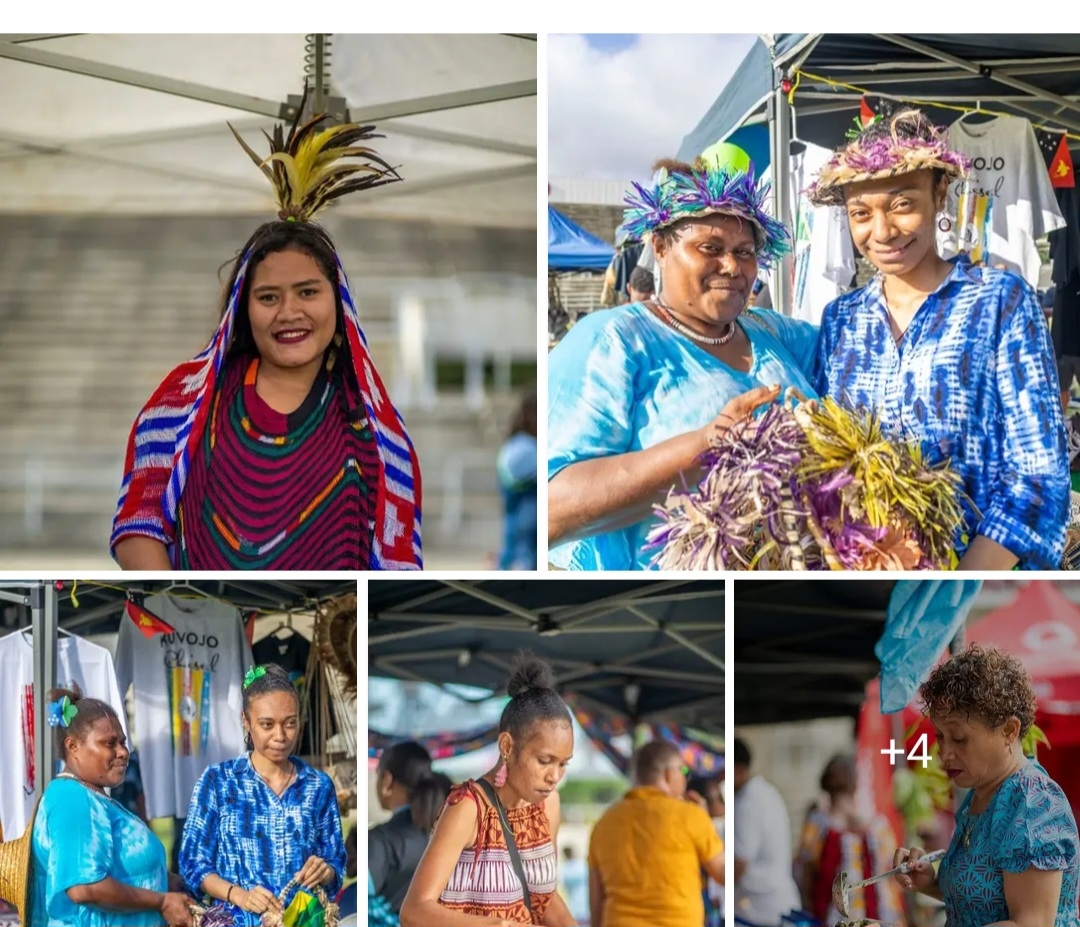
Small business owners and vendors participating in the final day of the Amazing 50th Celebrations - Pacific Story at Sir Hubert Murray Stadium have expressed deep appreciation to NCD Governor Powes Parkop for providing a valuable platform that empowered local and regional SMEs.

Among the many vendors was Daisy Magrick Orelly, a first-time visitor from the Solomon Islands, who showcased her vibrant collection of handmade fans, hats, baskets, and purses. 

“It’s my first time traveling outside my country, and I’m glad to be here. I thank Governor Parkop for organizing this event,” she said, highlighting strong sales and the welcoming atmosphere.

Brenda Kumbia, also from the Solomon Islands and married to a Papua New Guinean, sold out her traditional tapioca 
and cassava dishes. 

“I made good sales, made friends, and had many visitors. This was a great opportunity,” she shared.

Melinda Ton from Kairuku, married to a West Papuan, echoed the praise after selling out her hot dogs. 

“This platform is empowering for SMEs, especially for mothers like us. We need more of these,” she said.

West Papuan vendor Yanti Marteshop also spoke highly of the event. 

“My sales are going well. It’s nice to be part of this big event,” she said, looking forward to participating in future celebrations because she really enjoyed the safe and friendly environment and meeting other West Papuans and friendly Pacific Islanders from other Melanesian countries.

The owner of Lulu’s Arts and Crafts, Lucy K. Areke, earned a good income from selling crafts, bilums, Meri Kolos, drinks, and home-baked cakes during the Asia-Pacific Stories event, she told City Sivarai.

“It’s a wonderful opportunity for SMEs with unique products to sell to the people of the Pacific. For me, it has been a thriving opportunity, and I’ve doubled my usual monthly sales,” Areke said.

She added that most of her items sold out for the first time, and she is truly grateful for such an amazing opportunity and the platform that the NCD Governor and his team from NCDC have created for mothers like her.

On the same note, she expressed her appreciation for the coordination team from Amazing Port Moresby, including Melissa Brabar and her team, for consistently involving SME stalls in flagship events across the city.

“It’s not just about making money—it’s about showing other cities that Port Moresby is safe for women and girls to come out at night and sell our products.”

The Pacific Story not only celebrated cultural unity but also opened economic opportunities for small-scale entrepreneurs across the region.