Search This Blog

Total Pageviews

Advertisement

Labels

Blog Archive

Showing posts with label UN Human Rights Council. Show all posts

Historic win: UN human rights committee report raises France’s human rights violations in Kanaky


Pacific solidarity has driven historic UN recognition of France’s human rights violations in the struggle for self-determination and decolonisation in New Caledonia, a leading human rights activist says.Viro Xulue, a human rights and Indigenous law officer for Drehu customary council of New Caledonia attended the 42nd session of the UN Human Rights Committee in October, which examined reports of violations of human rights by France, including the self-determination of Māohi Nui and Kanaky.The committee’s subsequent report was concerned about the lack of progress made on the self-determination of the people of French Polynesia and made some recommendations.

Xule said the HRC confirmed all the concerns raised and he was grateful that José Manuel Santos Pais, the vice-chair was impartial and neutral in discussion.He said it was amazing to be acknowledged as an indigenous people for the first time.“The French don’t recognise the indigenous people, they talk about the ethnic minority. They don’t want to recognise us as indigenous.”

‘Big and historic’

“It’s really big and historic for us. It’s a big surprise and we’re really proud,” Xule said.“It was really amazing because it was the first time for Kanak indigenous people to be there for the Human Rights Committee.”The appearance before the Human Rights Committee came months after riots in New Caledonia as Framce tried to alter the Noumea Accords to allow more French residents to vote on an independence referendum. In October France announced that the electoral reform proposal would not go ahead.After a successful report to the Human Rights Committee Xulue said the next step was the UN General Assembly at which he will help Fiji and PNG include the Human Rights Committee recommendations in a resolution, as Fiji and Papua New Guinea had proposed a resolution to the UN Decolonisation Committee in June regarding a mission to Kanaky on the question of New Caledonia.Asked if that Fiji and Papua New Guinea support showed Pacific solidarity, he agreed.“Yeah, we have big Pacific solidarity but, specifically, it started with all the Indigenous people in the Pacific. All of us, we really stand together, we help each other.”

Thanked te iwi Māori

He also thanked the Pacific Conference of Churches as it had helped fund travel to New York and Geneva. And he also thanked te iwi Māori.“Māori people have sent their warriors to help me, that’s why I’m really thankful. In our legend, the water is coming from Aotearoa. It’s your role to help Kanak people, it’s the role of Māori people because it’s our legend coming from our ancestors.“When we want to have water, we ask the god who lives on Aotearoa, the long white cloud, to bring water to our people. And if we want to connect with our ancestors and gods, we asked the Aboriginal people with the big snake, the rainbow serpent, to help us connect with our god.“It’s really powerful and it was the rule for Māori people to help Kanak people and we need to connect again, our spirit.”

Committee told France to respect constitutional irreversibility

The Human Rights Committee report raised several areas of concern.The third referendum on independence during Covid-19 while Kanaks were in customary Indigenous mourning was shown through high abstention - 56.13 per cent did not vote.The Human Rights Committee said France did not respect the right of indigenous Kanak to be consulted to obtain their free, prior and informed consent.It recommended France respect the principle of constitutional irreversibility set out in article 5 of the Noumea Accord, which guarantees the integrity of the decolonisation process.It also raised the issue of prison conditions, the over-representation of Kanaks incarcerated, and the need to take alternative measures for Indigenous convicts to serve sentences i communities rather than overcrowded prisons.France is required to submit its response by November 2027 to the committee’s 14 recommendations on the excessive use of force by law enforcement officers, freedom of expression and the right to peaceful assembly.Eleven Kanaks were killed in the uprising earlier this year and two French gendarmes.

Freedom of expression concerns

There were some concerns over freedom of expression with journalists being subject to arbitrary arrests and excessive use of force when covering demonstrations. The report said the state must ensure journalists could cover protests without undue restriction or risk to personal safety.The committee was concerned by what it said was a significant increase in the number of defamation proceedings aimed at intimidating, silencing and financially exhausting journalists, human rights defenders and trade unionists.It said since the Hamas terrorist attack on Israel last October 7 several political, trade union and community leaders had been prosecuted for “condoning terrorism” when they pointed out the context in which the acts were committed.Finally, the committee was also concerned about the temporary closure of a major social media platform in response to unrest in New Caledonia in May.On the right to peaceful assembly the committee discussed peaceful demonstrators being arbitrarily arrested, and their demonstrations banned by authorities on basis of an alleged threat to public order. This included demonstrations supporting Palestinians.

Where to next?

Xulue said it was a historical step for Kanaky as the Human Rights Committee’s recommendations enabled a request for a UN special rapporteur (human rights expert) investigation in New Caledonia, which could be used for support at the UN Decolonisation Committee.The next step was to implement the recommendations proposed for indigenous groups, integrating them into their institutions, particularly within customary councils but he said the French government must do the same.Last week the president of the French parliament, the National Assembly, and the president of the French Senate were in Kanaky. Xulue said he didn’t know the aim of the mission but was worried they were preparing the next step in an attempt to bury the Noumea Accord.“The indigenous people, we don’t want to bury the Noumea accord because the Noumea Accord is the process of the decolonisation, for the sovereignty of Kanaky.”Indigenous representatives will participate in the 2025 Indigenous Forum and Decolonisation Committee, and the UN Committee Against Torture in May 2025, addressing what he called the first and second civil wars in New Caledonia (which were in the 1980s and earlier this year). The French refer to them as “the events” and civil unrest.Xulue emphasised, “The struggle is not finished.”The Human Rights Committee said the next constructive dialogue with France was planned for 2032 in Geneva.

In Dialogue with Indonesia, Experts of the Human Rights Committee Commend Measures Promoting Women’s Political Participation, Raise Questions on Air and Water Pollution, and on Excessive Use of Force against Indigenous Papuans

United Nations logo
OHCHR Logo OHCHR
Latest Media Center
NEWS TREATY BODIES

In Dialogue with Indonesia, Experts of the Human Rights Committee Commend Measures Promoting Women’s Political Participation, Raise Questions on Air and Water Pollution, and on Excessive Use of Force against Indigenous Papuans
12 March 2024

High Commissioner’s global update of human rights concerns
PRESS RELEASES

SUBCOMMISSION ON PROMOTION AND
PROTECTION OF HUMAN RIGHTS CONTINUES REVIEW OF ALLEGATIONS OF ABUSES AROUND THE WORLD
PRESS RELEASES

WORKING GROUP ON ENFORCED OR INVOLUNTARY DISAPPEARANCES
CONCLUDES SIXTY-NINTH SESSION
The Human Rights Committee today concluded its consideration of the second periodic report of Indonesia on how it implements the provisions of the International Covenant on Civil and Political Rights, with Committee Experts commending measures promoting women’s political participation, and raising questions on air and water pollution, and on extrajudicial killings of and excessive use of force against indigenous Papuans.

A Committee Expert noted that the State party had continued to adopt measures for women. The recent elections showed progress in efforts to promote the representation of women in political life. What temporary special measures had been implemented to strengthen women’s participation in political, economic, social and cultural life?

Another Expert said Indonesia was one of the world’s top 10 polluters. There were high levels of air pollution in Indonesia. What initiatives were being taken to reduce air pollution and its consequences? The Committee was also concerned about mining activities leading to water pollution. Reportedly, more than half of Indonesia’s rivers were polluted. How was the State party addressing this?

Several Experts expressed concern about numerous reports of extrajudicial killings of and excessive use of force against indigenous Papuans. Why had the State party not conducted public investigations into the killings, or released the findings of internal investigations?

Tri Tharyat, Deputy Minister for Multilateral Affairs of Indonesia and head of the delegation, said Indonesia, the world's third-largest democracy, had recently conducted a free and fair general election. There had been a sharp increase in elected women parliamentarians, from 8.8 per cent in 1999 to 37.07 per cent in 2024. The delegation added that there had been an increase in Indonesia’s gender empowerment index over the reporting period. Until 2024, the Government had implemented the gender development plan, promoting women’s increased participation in private companies.

Indonesia prioritised sustainable agriculture and forestry practices, the delegation said. The State party had published a long-term strategy for climate resilience and was implementing policies to achieve net-zero emissions by 2060. The Government was promoting the right to safe drinking water, investing in the development of drinking water facilities and water quality monitoring mechanisms across the State. There were also policies in place to improve air quality in the greater Jakarta area, including planting trees to absorb carbon dioxide and imposing administrative sanctions on polluters.

The delegation said the Government worked to hold all officials accountable for human rights violations, including extrajudicial killings. The Government’s accountability mechanism had recently investigated an incident involving deaths in Papua in 2022. All six soldiers involved in this incident had been convicted of premeditated murder and charged in civilian courts. All ministries were obliged to convey information publicly, except for dossiers on cases of gross human rights violations.

In concluding remarks, Dhahana Putra, Deputy Minister for Human Rights, Ministry of Law and Human Rights of Indonesia, said engagement with the Committee was pivotal for identifying areas of improvement and means of addressing challenges. The State party would consider the Committee’s recommendations in formulating its next national action plan on human rights. Indonesia was committed to enhancing the protection of human rights domestically.

Tania María Abdo Rocholl, Committee Chairperson, in concluding remarks, expressed appreciation for the professionalism and dedication of the Indonesian delegation. Concerns had been raised regarding the independence of the judiciary; abortion rights; the death penalty; the rights of migrants, asylum seekers and refugees; prohibition of torture; freedom of religious belief; the right to peaceful assembly; and the rights of children and indigenous peoples, among others. The Committee was determined to ensure the highest possible level of implementation of the Covenant in Indonesia

The delegation of Indonesia was made up of representatives of the Office of the Vice President; Executive Office of the President; National Police of Indonesia; Ministry of Communication and Informatics; Ministry of Law and Human Rights; Cabinet Secretariat; Ministry of Foreign Affairs; and the Permanent Mission of Indonesia to the United Nations Office at Geneva.

The Human Rights Committee’s one hundred and fortieth session is being held from 4 to 28 March 2024. All the documents relating to the Committee’s work, including reports submitted by States parties, can be found on the session’s webpage. Meeting summary releases can be found here. The webcast of the Committee’s public meetings can be accessed via the UN Web TV webpage.

The Committee will next meet in public at 3 p.m. this afternoon to begin its consideration of the eighth periodic report of the United Kingdom (CCPR/C/GBR/8).

Read full Story here

MSG LEADERS CAUCUS MEETING, A SUCCESS AT 52nd PIFLM

RAROTONGA, COOK ISLANDS (15 November 2023): A Melanesian Spearhead Group (MSG) Leaders’ caucus was held at the Nautilus Resort in Rarotonga, Cook Islands, on Monday 6 November 2023, as part of the Group’s preparations for the 52nd Pacific Islands Forum Leaders Meeting (PIFLM).

The MSG Caucus meeting was Chaired by the Hon. Ralph Regenvanu, Minister for Environment and Climate Change on behalf of the Prime Minister of Vanuatu and Chair of the MSG.

In attendance at the MSG Caucus meeting was Hon. Sitiveni Rabuka, Prime Minister of Fiji; Hon. John Rosso, Deputy Prime Minister of Papua New Guinea; and Hon. Jeremiah Manele, Foreign Minister of Solomon Islands, all deputizing for their respective Heads of Government. 

The caucus expressed appreciation to the Cook Islands Government Organising Committee and the PIF Secretariat for providing the space in the 52nd PIF Leaders Meeting Programme for the MSG to meet.

The Director General of the MSG Secretariat, Leonard Louma, noted that this was the first time for PIF to formally assign a timing within the PIF Leaders Meeting for MSG to caucus and urged MSG to take advantage of this opportunity. He expressed hope that this gesture be regularized and mainstreamed into the format of PIF Leaders Meetings.

The Chairman, Hon. Ralph Regenvanu, emphasized the importance for MSG Members to caucus as MSG before PIF Leaders Meetings, as well as at other international meetings, to develop and agree on common positions and strategies. 

On the issue of West Papua and the visit of the UN High Commissioner on Human Rights to West Papua and the Papuan Provinces, the proposal by Prime Minister Hon. Sitiveni Rabuka for a “Special Envoy or Emissary” was agreed to and on the suggestion of Papua New Guinea, approved for PM Rabuka and Prime Minister, Hon. James Marape to be the MSG designated representatives to meet with President Widodo on the margins of the APEC Leaders Meeting in San Fransisco.

It was agreed that a letter be written to President Widodo asking for a dialogue meeting with Prime Ministers Rabuka and Marape in San Fransisco. 

With regards to the ICJ Advisory Opinion on the responsibility of States regarding Climate Change, the MSG Caucus meeting was informed that the ICJ has granted the MSG Secretariat standing to make a Submission on the Question of the Obligations of States in Respect of Climate Change to the Court and that the MSG can make written comments on other written Submissions by other countries and organisations by 22 April 2024.

The MSG Caucus meeting however noted that the PIF Secretariat’s own participation in the advisory proceedings of the ICJ is yet to be formalized.

In relation to the Port Vila Call For A Just Transition To A Fossil Fuel Free Pacific, it was noted that the Udaune Declaration on Climate Change embodies the general position of the MSG Members with respect to Climate Change. The Port Vila Call for a Just Transition to a Fossil fuel Free Pacific (Port Vila Call) was acknowledged to be consistent with the Pacific countries calls for more ambitious actions and targets in the NDC’s and is aimed at limiting temperature rise to 1.5 degrees Celsius below the pre-industrial levels.   

It was noted that MSG sought support for this Port Vila Call at the FOC meeting in September and received support in a very carefully worded decision that does not explicitly endorse the Port Vila Call but welcomes the aspirations of the Port Vila Call for a Just Transition to a Fossil Fuel Free Pacific.

Leaders agreed to raise this at the Retreat for an explicit endorsement by PIF Leaders of the Port Vila Call for a Just transition to a Fossil Fuel Free Pacific. 

In relation to the Security Environment in the Region, it was noted that while regional traditional powers have made concerted efforts to have countries in the region choose sides in the big power contestation for influence in our region, the Efate Declaration on Mutual Respect, Responsibility, Cooperation and Amity or Efate Security Declaration clearly and appropriately outlines the position of MSG countries. 

Prime Minister Rabuka announced his intention to introduce a proposal for a Zone of Peace to enhance peace and security in the region. In support of this, the MSG Caucus meeting noted that this was consistent with principles espoused in the Efate Security Declaration, which basically reaffirms that climate change and the security of the environment remain our existential threat and focus of attention by Pacific countries should be on this. It affirms the sovereign rights of MSG Members to choose to engage with whoever they consider is appropriate on the basis of their respective security needs and concerns. Furthermore, the Efate Declaration defines principles of conduct that stakeholders must abide by when operating in the MSG area and MSG national jurisdictions.  

As well, the MSG Caucus meeting was reminded that the MSG has an MSG Security Strategy (MSGSS), whose key features relate to the advancement of MSG home-grown and self-help security initiatives such as the Memorandum on Police Cooperation, the Humanitarian and Emergency Response Coordinating Centre (HERCC) concept, and the Formed Police Unit (FPU). It was suggested that the PIF be encouraged to formally call on all powers to refrain from trying to engage in a proxy competition in the region.

On the Fukushima Advanced Liquid Processing System (ALPS) Nuclear Treated Waste Water Discharge into the Pacific Ocean, it was decided that MSG would advocate for the PIF to ensure that the proposed elevated dialogue mechanism with the PIF and the IAEA be established quickly, and a permanent monitoring presence of IAEA at Fukushima be activated soonest.

There was also agreement to ensure that the Fukushima issue is embedded as a standing item of the PALM agenda and that MSG would advocate for IAEA and the Japanese Authorities to help build national scientific capacities to effectively monitor the safety and effects of the ALPS discharge into the Pacific Ocean.

The acceptance and recognition of the principle of respect for the sovereignty of MSG individual members to determine their own National Government positions on this matter, was further affirmed by the MSG Caucus meeting.    

With respect to the MSG Secretariat Membership of the Council of Regional Organisations of the Pacific (CROP), the MSG Caucus meeting again acknowledged that there was a real need for PIF to resolve the request by the MSG Secretariat to become a member of CROP given the importance of better coordinating efforts, and optimizing synergies, amongst regional organisations, in supporting PIF’s activities in prosecuting Pacific Regionalism and the implementation of the 2050 Strategy of the Blue Pacific Continent.    

With regards to Vanuatu’s Bid to Host the PIFLM in 2030, the MSG Caucus Meeting noted that while MSG Leaders at their August Summit approved to support Vanuatu’s bid, the PIF FOC, on the other hand, simply noted Vanuatu’s interest to host the PIF Leaders Meeting in 2030.

The MSG Caucus Meeting noted that Vanuatu was deprived of the opportunity to host the PIFLM due to COVID-19 and reaffirmed approval for MSG to support Vanuatu’s bid to host the PIF Leaders Meeting in 2030, to coincide with Vanuatu’s Golden Jubilee and mark the ending of the National Sustainable Development Plan (People’s Plan). 

All the issues covered and agreed upon at the MSG caucus meeting would better place MSG to influence decisions on shared interests on meetings such as the 52nd PIFLM.

Vanuatu PM calls for UN action on West Papua

Charlot Salwai Photo: UNGA

Vanuatu's prime minister has again pressed the United Nations General Assembly over human rights abuses in West Papua.

During his speech in New York, Charlot Salwai lamented how some Pacific territories are yet to break the shackles of colonialism.

Mr Salwai cited France's territories of New Caledonia and French Polynesia, as well as Indonesian-ruled West Papua.

He called on the administering powers to respect UN processes and ensure people in these territories can have their self-determination views heard.

Mr Salwai called for use of the UN system to find solutions to violations of West Papuans' human rights.

"The resolution of the leaders of the Pacific Islands Forum calls on the office of the High Commissioner for Human Rights to visit West Papua to conduct an assessment based on concrete proof regarding the human rights situation."

Rayyanul Sangadji, a junior Indonesian diplomat from Ambon, Maluku, exercised the country's right of reply to Vanuatu's statement.

"As an Indonesian with Melanesian roots, I can tell you we do not like to be clustered, categorised, or worse, divided by another, faraway country," he said.

"Papua is, has [been] and will always be, part of Indonesia."

Source: RNZ


from WordPress https://ift.tt/2o5yIOS
via IFTTT September 30, 2019 at 04:56PM

Pacific leaders call for action from industrial nations

Pacific Island Forum leaders have urged the United Nations Secretary General to persuade the world’s industrial powers to take urgent action to reduce their carbon emissions.

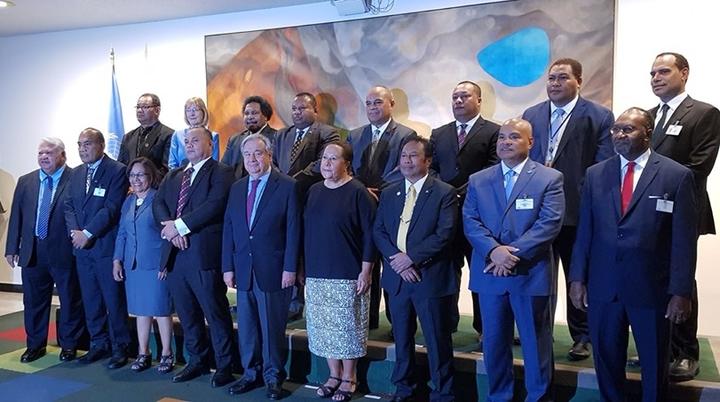
Pacific leaders meet in New York with UN Secretary General Antonio Guterres.
Pacific leaders meet in New York with UN Secretary General Antonio Guterres. Photo: Aupito William Sio

Forum leaders met with António Guterres on Saturday ahead of the UN supremo’s special Climate Action Summit and UN General Assembly.Listen to more on Dateline Pacific duration4′ :22″Add to playlistDownload

Listen to more on Dateline Pacific

They highlighted critical priorities to securing the future of the Pacific region.

New Zealand’s Minister for Pacific People’s represented the country ahead of Prime Minister Jacinda Ardern’s arrival.

Aupito William Sio says beyond the plea for action, Pacific leaders urge industrial nations to then stay on course to achieve net-zero carbon emissions by 2050 in order to limit temperature rise.

“One-point-five degrees as agreed to in the Paris Agreement and I was quite proud of the way the Pacific Island Forum leaders co-ordinated and raised all the valid issues that were raised at the Tuvalu PIF conference.”

The 21 September meeting at UN Headquarters in New York gave Forum leaders the opportunity to formally table issues, including those discussed at the 50th Pacific Islands Forum (PIF) Leaders Meeting in Tuvalu last month, before the 74th session of the UN General Assembly.

Leaders also raised issues previously discussed with Antonio Guterres during his visit to Fiji, New Zealand, Tuvalu and Vanuatu in May.

“The Blue Pacific is the frontline of the fight against climate change which represents the single greatest threat to the future of our region,” said Nauru’s new president, Lionel Aingimea, who chaired the meeting on behalf of the Forum Chair, Tuvalu.

Forum Leaders briefed the UN Secretary-General on the Kainaki II Declaration for Urgent Climate Change Action Now as agreed in Tuvalu. The Declaration sets out ten actions for urgent and effective climate action by all countries at the Climate Action Summit and at COP 25 in Chile in December.

Leaders also discussed the development of a new 2050 Strategy for the Blue Pacific Continent to drive and lead the collective future of the Pacific region including the importance of securing and protecting ocean and marine resources for the future.

“Including our commitment to conclude all outstanding maritime boundaries claims in order to safeguard our maritime zones in the face of sea level rise and climate change.

“Our resolve to accelerate collective action to address the legacies of nuclear testing including on fisheries was also discussed,” said President Aingimea.

Pacific Leaders also raised the situation in West Papua at the meeting.

“Leaders reiterated their calls from the Forum Communique agreed in Tuvalu – for all parties to protect and uphold the human rights of all residents and to address the root causes of the conflict by peaceful means. The urgency around the Leaders’ request for the parties to finalise the timing for a mission of the UN High Commissioner for Human Rights to West Papua (Papua) was also conveyed,” said Pacific Islands Forum Secretary General, Dame Meg Taylor.

Pacific to seek easier access to climate finance

Easing access to climate finance will be a focus for the Pacific at the Climate Action Summit.

The Pacific Regional Environment Programme’s principal climate change advisor said Pacific countries were making these firm commitments despite their own very low carbon emissions.

However, these countries were highly vulnerable to the climate crisis, and Espen Ronneberg said access to climate finance for adaptation was a priority for them.

“The resources are available, it’s just that it’s complicated to access them and doing so requires quite a bit of human capacity and expertise that sometimes is lacking or is simply too over-worked with other responsibilities.”

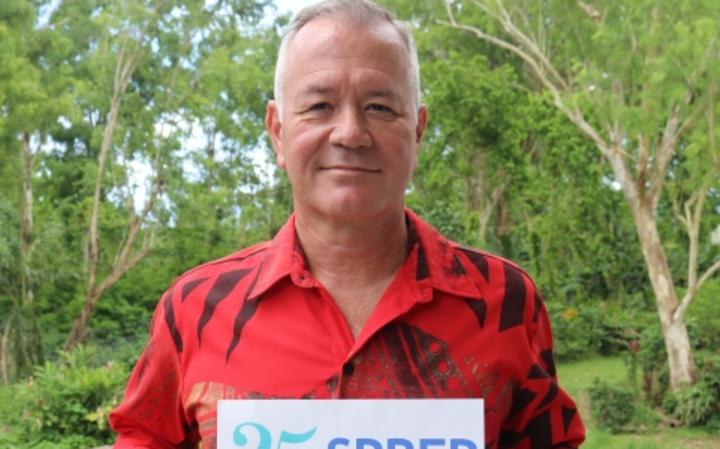
Espen Ronneberg
Espen Ronneberg Photo: SPREP

The Climate Action Summit takes place on 23 September at the United Nations in New York.


from WordPress https://ift.tt/2mQQfsV
via IFTTT September 26, 2019 at 11:15AM

UN rights chief unable to secure West Papua visit

The UN Human Rights Commissioner Michelle Bachelet says her office has so far been unable to secure a trip to Indonesia’s West Papua.

In January, Indonesia agreed in principle to allow a visit by the rights chief, but this has not yet eventuated, despite international backing for it.

Amid violent unrest which has rocked Papua since mid-August, Ms Bachelet last week urged Jakarta to enter a dialogue with Papuans.

Her statement on Wednesday didn’t directly address a visit by her office to the region.

But in previously unreported comments made after a public talk in Geneva, Ms Bachelet said it hadn’t moved forward.

“We have been working with the authorities, but we haven’t been able to progress it. But we will continue to talk to them because they promised to my predecessor the visit to West Papua but afterward we try to make it work and it hasn’t worked yet but I hope it will work.”

“The [Indonesian government] have told me that they’re looking forward to it,” she added.

West Papuans involved in deadly clash named

Meanwhile, Indonesian police have reportedly named more than a dozen West Papuans as suspects in a deadly clash in the central highlands.

Authorities said at least five people and a soldier were killed when security forces were attacked during a riot in Deiyai regency on 28 August.

But rights groups, activists and witnesses said eight civilians were shot dead by soldiers during a peaceful demonstration.

A police spokesperson, Ahmad Mustofa Kamal, said 14 people have been named suspects in connection with the riot in Deiyai.

He told local media the people are suspected of unlawfully possessing firearms, opposing authorities and incitement.

News outlet Suara Papua reported the Papuan suspects are still undergoing treatment at a local hospital after they were injured in the clash.

Source: RNZ


from WordPress https://ift.tt/34B0Mdw
via IFTTT September 09, 2019 at 10:54AM

West Papuan campaigners welcome UN call to halt Indonesian torture

Pacific Media Watch Newsdesk

The Free West Papua Campaign has welcomed the call by the United Nation’s human rights experts for “Prompt and impartial investigations … into numerous cases of alleged killings, unlawful arrests, and cruel, inhuman and degrading treatment of indigenous Papuans by the Indonesian police and military”.

Benny Wenda, chair of the United Movement for the Liberation of West Papua (ULMWP), said: “The West Papuan people are crying out for their freedom and self-determination.

“In January, we handed the UN High Commissioner for Human Rights a petition of 1.8 million signatures – 70 percent of the Indigenous West Papuan population – for an internationally supervised vote, a referendum, on independence from Indonesia. Finally, the Indonesian State’s brutal repression and genocidal killing is being recognised by the United Nations.”

READ MORE: UN human rights experts condemn human rights abuse and racism in West Papua

The statement from UN experts was sparked by the torture of a political prisoner with a snake.

The UN recognised that this incident is “symptomatic of the deeply entrenched discrimination and racism that indigenous Papuans face, including by Indonesian military and police”.

The ongoing genocide in West Papua by Indonesia is estimated to have killed 500,000 West Papuans since 1969.

The UN statement continued:

“We urge the Government to take urgent measures to prevent the excessive use of force by police and military officials involved in law enforcement in Papua. This includes ensuring those, who have committed human rights violations against the indigenous population of Papua are held to account.

“We are also deeply concerned about what appears to be a culture of impunity and general lack of investigations into allegations of human rights violations in Papua.”

The Office of the High Commissioner for Human Rights (UN Human Rights) is the leading UN entity on human rights. The General Assembly entrusted both the High Commissioner and her Office with a unique mandate to promote and protect all human rights for all people.


from WordPress https://ift.tt/2H0pCd9
via IFTTT February 25, 2019 at 01:39AM

Indonesia: UN experts condemn racism and police violence against Papuans, and use of snake against arrested boy

GENEVA (21 February 2019) – Prompt and impartial investigations must be carried out into numerous cases of alleged killings, unlawful arrests, and cruel, inhuman and degrading treatment of indigenous Papuans by the Indonesian police and military in West Papua and Papua provinces, say a group of UN human rights experts*.

In the latest reported case, a video was circulated online of a handcuffed indigenous Papuan boy being interrogated by Indonesian police with a snake wrapped around his body. The boy, who was arrested on 6 February for allegedly having stolen a mobile phone, is heard screaming in fear while the laughing police officers push the snake’s head towards his face.

“This case reflects a widespread pattern of violence, alleged arbitrary arrests and detention as well as methods amounting to torture used by the Indonesian police and military in Papua,” the experts said.

“These tactics are often used against indigenous Papuans and human rights defenders. This latest incident is symptomatic of the deeply entrenched discrimination and racism that indigenous Papuans face, including by Indonesian military and police,” they added.

Representatives of the Indonesian police have publicly acknowledged the incident, and apologised for it. However, the UN experts say that prompt and impartial investigations must be carried out.

“We urge the Government to take urgent measures to prevent the excessive use of force by police and military officials involved in law enforcement in Papua. This includes ensuring those, who have committed human rights violations against the indigenous population of Papua are held to account,” the experts said.

“We are also deeply concerned about what appears to be a culture of impunity and general lack of investigations into allegations of human rights violations in Papua,” the experts stressed.

The incident in which the boy was mistreated comes amid an ongoing military operation in Papua, which became part of Indonesia in 1969 and which has seen the growth of an increasingly vocal pro-independence movement in the past decades.

ENDS

(*) The UN experts: MsVictoria Tauli Corpuz, Special Rapporteur on the rights of indigenous peoplesMr. Seong -Phil Hong (Republic of Korea),Chair -Rapporteur, Working Group on Arbitrary DetentionMr.Michel Forst (France), Special Rapporteur on the situation of human rights defenders;Mr. Nils Melzer (Switzerland), Special Rapporteur on torture and cruel, inhuman or degrading treatment or punishmentMs E. Tendayi Achiume, Special Rapporteur on contemporary forms of racism, racial discrimination, xenophobia and related intolerance

The Working Groups and Special Rapporteurs are part of what is known as the Special Proceduresof the Human Rights Council. Special Procedures, the largest body of independent experts in the UN Human Rights system, is the general name of the Council’s independent fact-finding and monitoring mechanisms that address either specific country situations or thematic issues in all parts of the world. Special Procedures experts work on a voluntary basis; they are not UN staff and do not receive a salary for their work. They are independent from any government or organization and serve in their individual capacity.

UN Human Rights, Country Page — Indonesia

For more information and media requests please contact: Ms Julia Raavad (+41 22 917 9288 /jraavad@ohchr.org)

For media inquiries related to other UN independent experts: Mr. Jeremy Laurence, UN Human Rights – Media Unit (+ 41 22 917 9383 / jlaurence@ohchr.org)

Follow news related to the UN’s independent human rights experts on Twitter @UN_SPExperts.

Concerned about the world we live in? Then STAND UP for someone’s rights today.  #Standup4humanrights and visit the web page at http://www.standup4humanrights.org


from WordPress https://ift.tt/2ShYwQH
via IFTTT February 22, 2019 at 09:30AM