Search This Blog

Total Pageviews

Advertisement

Labels

Blog Archive

Demanding the Enga Governor, Grand Chief Sir Peter Ipatas to leave Government immediately

THURSDAY 12.09.2024 - ENGA PROVINCE STOP WORK.
____________________________________________

On behalf of the silent and voiceless majority of Enga Province raised concern towards the eve of VONC by demanding the Enga Governor, Grand Chief Sir Peter Ipatas to leave Government immediately and join the Opposition to form New Government.

Sitting Protest will be hosted at Wabag Town on the date mentioned above. It will be started as early as 6am until 2pm. Take note in advance to avoid inconvenience:

1. Greeen house closed
2. Business houses closed
3. No transportation 
4. All government agents closed 
5. All access roads shut down.

Awareness for sitting protest will be conducted tomorrow. Six (6) Land cruisers will be disbursed to each district, making sure Entire people must participate.

It is come to a light that, in political history of Enga Provincial, our good action governor PI, has been becoming a barrier for our Engan potienal servantful leaders who would have become Prime Minister as listed below;

1. SAMUEL Tie Abol - Form Wabga MP
2. John T Pundari - Kombiam Ambun MP
3. Don P Polye - Kandep MP

However, now as 99% of people of Enga Province are at back of APMRP and demanding the change of Government, why not you put your political differences and jealous at Irelya and Join Team opposition for the change.

My final and courtesy warning: If you're still inact with Government and There's "NO CHANGE," Irelya will be in Flame in seconds.

Leave local and provincial political and go for the National, and let's celebrate together.

Thanks, GCSPI, and I hope this piece reaches your attention.

Papal Visit, Vanimo - 8 September 2024.by Bonny Kaiyo

The theological basis for West Papuan sovereignty and nationhood is underpinned by the inalienable right to self determination for all nations that were formed by a Creator - God.

In the aftermath of UNHCR assignment in PNG on refugees fleeing Indonesian control of West Papua the PNG government granted permissive residence to thousands of 'terrorists', border crossers, and 'trouble - makers' from across the border. Later, K10,000 fee for those who chose citizenship in the country was waived so the option was on the table for all.

PNG could do much more for West Papua. It is a Christian country. US President Ronald Reagan stood on the West German side of the Bundaberg Wall and called for the wall and iron curtain to be torn down. 

USSR President Mickail Gorbachev heard. The Cold War already ended. A nation was divided. Germany was united. Christian heritage that issued from Europe could better deliver a conclusion to the decades of uncertainty and unrest in West Papua since 1960s. 

The demand for freedom from Indonesian colonial control is an international issue. It is also a Christian hope. The Blessed Hope. West Papua is a Christian country due to a past history under Dutch colonial tutelage.

Pope Francis has only to say a few words. Germany was united following the collapse of the iron curtain. For New Guinea, the critical threshold escapes definition by the international community.

The world's top moral leader visited Vanimo. Here, refugees from West Papua also integrated into the community because of the permissive residency status granted by the government.

It is a tough call to make. Pope Francis knows. West Papuan refugees had the only chance to tell him. The plight of West Papua as a refugee nation is about Christianity.

We thank Pope Francis for visiting Vanimo. The international community response to West Papua can begin with the refugee issue. But, there is a theological basis for self - determination.

May God Bless West Papua.

{Photo caption: writer, refugee settlement, forest of Vanimo)

POPE CALLS ON PNG TO FIND POLITICAL SOLUTION FOR BOUGAINVILLE

By Gorethy Kenneth 
Post Courier 

September 9, 2024.

HIS Holiness Pope Francis’ appeal to Papua New Guinea to find common ground for a lasting political solution for the people of Bougainville is one of compromise that recognises the desires of the people.

And Regional Member for Bougainville, who is also Police Minister, Peter Tsiamalili Jr said
he was heartened and emotional by this.

Mr Tsiamalili welcomed Pope Francis on behalf of the people of Bougainville and was on
hand to welcome His Excellency, Pope Francis at Jackson’s International Airport in Port
Moresby last Friday.

The Regional Member also attended an address by Pope Francis in Port Moresby at APEC Haus on Saturday where the Holy Father spoke about the need for unity, hope and love in advancing the interests of the nation.

During his address, the Pope also appealed to the nation to find common ground for a lasting
political solution for the people of Bougainville.

“The Pope’s message is one of compromise that recognises the desires of the Bougainville
people. I was heartened by his words, and as Regional Member remain steadfast in my belief
that we must deliver on the will and expectations of the Bougainville people,” Mr Tsiamalili said.

Speaking shortly after the Pope’s arrival, the Regional Member said that it was an honor to
be able to greet the Pope and to pass on the well wishes of all Bougainvilleans.

“Pope Francis is an inspiration to many Bougainvilleans. In a time of increasing global
uncertainty, his presence offers a beacon of hope,” he said.

Mr Tsiamalili said that the Pope’s visit, the first papal visit since Saint John Paul II who
visited PNG in 1995, offered a message of hope and forgiveness. 

“The fact that Pope Francis has chosen to visit Papua New Guinea reflects his mission to spread hope and forgiveness across the world,” he said.

“To hear Pope Francis speak on these issues was inspirational. As the leader of the Catholic
Church his words have deep meaning.”

Pope Francis also reinforced the role and importance of women in society, noting their
critical contribution to nation building,
“The Pope’s vision and affirmation of the role that women play in all societies is a timely
reminder for all of us in Bougainville and Papua New Guinea of the role that our mothers,
daughters, sisters and spouses play in promoting a stronger and more vibrant nation.”

New Accent Series: A Low-Cost, Durable Housing Solution for Ni-Vanuatuans

MODULEX Vanuatu has announced the release of its new ACCENT SERIES of homes, designed to provide sustainable, affordable, and insurable housing for Ni-Vanuatuans. The ACCENT 2 model is priced at VT4,972,768 (excluding VAT), making it a practical choice for those seeking a low-cost, high-quality home.

The company’s directors emphasise the importance of building homes that meet Vanuatu’s specific needs, particularly in terms of cyclonic durability. Too often, homes sold in Vanuatu are not designed to withstand the region’s harsh weather conditions, leaving buyers with properties that are neither insurable nor safe during cyclonic events. MODULEX seeks to change this narrative by offering homes that are built to Australian cyclone standards, ensuring they can survive the toughest conditions.

news@dailypost.vu

𝐒𝐨𝐥𝐨𝐦𝐨𝐧 𝐈𝐬𝐥𝐚𝐧𝐝𝐬 𝐍𝐚𝐭𝐢𝐨𝐧𝐚𝐥 𝐔𝐧𝐢𝐯𝐞𝐫𝐬𝐢𝐭𝐲 (𝐒𝐈𝐍𝐔) 𝐒𝐮𝐬𝐩𝐞𝐧𝐝𝐬 𝐒𝐭𝐚𝐟𝐟 𝐌𝐞𝐦𝐛𝐞𝐫 𝐎𝐯𝐞𝐫 𝐅𝐨𝐫𝐠𝐞𝐝 𝐂𝐞𝐫𝐭𝐢𝐟𝐢𝐜𝐚𝐭𝐞𝐬 𝐚𝐧𝐝 𝐓𝐫𝐚𝐧𝐬𝐜𝐫𝐢𝐩𝐭𝐬

𝐏𝐫𝐞𝐬𝐬 𝐑𝐞𝐥𝐞𝐚𝐬𝐞

𝟗-𝟎𝟗-𝟐𝟒

𝐒𝐨𝐥𝐨𝐦𝐨𝐧 𝐈𝐬𝐥𝐚𝐧𝐝𝐬 𝐍𝐚𝐭𝐢𝐨𝐧𝐚𝐥 𝐔𝐧𝐢𝐯𝐞𝐫𝐬𝐢𝐭𝐲 (𝐒𝐈𝐍𝐔) 𝐒𝐮𝐬𝐩𝐞𝐧𝐝𝐬 𝐒𝐭𝐚𝐟𝐟 𝐌𝐞𝐦𝐛𝐞𝐫 𝐎𝐯𝐞𝐫 𝐅𝐨𝐫𝐠𝐞𝐝 𝐂𝐞𝐫𝐭𝐢𝐟𝐢𝐜𝐚𝐭𝐞𝐬 𝐚𝐧𝐝 𝐓𝐫𝐚𝐧𝐬𝐜𝐫𝐢𝐩𝐭𝐬

Solomon Islands National University (SINU) has suspended Mr. Salexon Tosi, Admission and Enrolment Officer at the Student Administration Services (SAS), following an internal investigation that uncovered his involvement in the forgery and unlawful issuance of academic certificates and transcripts. The investigation, conducted by the University’s Internal Audit Office, has revealed that Mr. Tosi had accepted payments from students with outstanding fees in exchange for unauthorised certificates and academic transcripts, which is in direct violation of SINU's policies and ethical standards.

The fraudulent actions came to light after reports were received from both internal and external sources, including the Ministry of Education and Human Resources (MEHRD), which identified discrepancies in the academic records. The investigation confirmed that the certificates and transcripts issued to certain students had been falsified, with forged signatures and fabricated details.

In response to the findings, SINU Vice Chancellor, Dr. Transform Aqorau, emphasised the seriousness of the issue and reaffirmed the University's commitment to practicing good governance.

"It is deeply concerning when a member of our staff misuses their position to engage in corrupt practices that not only harm our institution but also undermine the trust placed in us by the wider community. SINU is committed to upholding the highest standards of integrity, and we will continue to take firm action against any abuse of office," said Dr. Aqorau.

Dr. Aqorau added that the University takes its role in shaping the future leaders of the Solomon Islands very seriously, and any actions that compromise the credibility of its academic processes will not be tolerated.

The fraudulent issuance of academic certificates and transcripts poses significant risks to both the University and the community at large. These practices can lead to unqualified individuals entering the workforce, potentially diminishing the value of SINU's qualifications and eroding the public’s trust in the institution. Additionally, such acts undermine the hard work of students who earn their credentials legitimately and may contribute to broader systemic corruption within the education sector.

Following Mr. Tosi’s suspension, a number of members of the public have come forward with further allegations involving other staff. SINU assures the public that all reports will be investigated thoroughly, and appropriate actions will be taken where necessary.

Dr. Aqorau concluded, “We will not hesitate to hold those accountable who engage in unethical behaviour. SINU is committed to maintaining an environment of integrity, transparency, and accountability in all aspects of its operations. We urge all staff and students to adhere to the highest ethical standards and help us protect the reputation and mission of the University.”

The University calls on anyone with information related to these matters to come forward and assist in ensuring that SINU remains a respected institution of learning, free from corruption and malpractice.

For media inquiries, please contact:

Marketing and Public Relations Office on pro@sinu.edu.sb

Australian Big Dtick Approach to Pacific Islands Countries

https://www.greenleft.org.au/content/pacific-activist-says-hot-mic-incident-exposes-australias-big-stick-approach-African People's Socialist Party - Africa Region
5 September 2024

During the Pacific Island Forum (PIF) in Tonga, August 26-30, Prime Minister Anthony Albanese and United States Deputy Secretary of State Kurt Campbell were caught out by a New Zealand journalist’s “hot mic” joking about Australia’s new deal to meddle in the police forces of Pacific Island states.

Anyone watching this saw the PM arrogantly acting as an imperial deputy sheriff to the US.

Albanese told Campbell it was “so important” and “It’ll make such a difference”. The US official replied that the US had been considering a similar move until Kevin Rudd, Australia’s ambassador to the US, asked it not to.

He then joked with Campbell that he could “go halvies [sic] on the cost if you like”, followed by them both breaking into laughter.

Earlier, Vanuatu PM Charlot Salwai had tagged the program as a possible Australian-US “strategic denial” move against China.

“We’ve given you the lane, so take the lane!” Campbell told Albanese, who looked like a poodle that had been given a treat.

Epeli Lesuma, Nuclear Justice Campaigner with the Fiji-based Pacific Network on Globalisation, who observed the forum, along with other civil society activists, told Green Left how people of the region saw the exchange.

“An incident like this reinforces the fact that there is a member of the [Pacific] family who has a stick held over our heads, ready to smack us.

“This member of the family gets Australia to get us all into line with what they are now calling a ‘free and fair Indo-Pacific’”, Lesuma said.

Australia had the biggest delegation — about 70 people — at the PIF, he said. Many Tongans he spoke to joked about Australia’s over-the-top efforts to have a bigger delegation than China.

But is there a serious problem of China asserting its power in the Pacific?

“I don’t think it is as much of a problem as some people say,” Lesuma replied. “If you are talking to people in Tonga and Fiji, they see that what the Australians and the Americans say that China is doing in the Pacific is what they are doing as well.

“So, for Pacific states, the challenge becomes: who can they get the most out of to benefit our people?”

Around Tonga there are small villages which have signs declaring “sister relationships” with Chinese villages that have helped them build footpaths and community halls, he said. “But you don’t see similar signs with the kangaroo emblem”.

“Tonga now has a big, brand new and state-of-the-art stadium … built by the Chinese, not the Australians”. Australia has pressured Pacific Island states to give its police a greater role in their police forces.

While Pacific people have strong links with Australia and the US, Lesuma said “it’s China that seems to be coming through for [Pacific people]”.

He added that there was great concern in the Pacific about Australia’s AUKUS deal with the British and the US to acquire nuclear-powered submarines.

“It is a slap in our face. We have the Treaty of Raratonga [the South Pacific Nuclear Free Zone Treaty] in place and Australia is a signatory… It cannot say to us ‘You don’t need to know’ about these submarines.

“This treaty was birthed out of the trauma and legacy of nuclear testing in the Pacific by Britain, France and the US,” Lesuma said.

“We would never want the Pacific to be a waterway for nuclear weapons or nuclear-powered submarines”.

“France’s last nuclear test in the Pacific was in 1996. I was three years old then. There are many young people, like me, who were born when the last nuclear tests were still being done in our sacred Pacific blue ocean.

“Australia’s sneaky AUKUS deal makes us question if they are really our vuvale which, in Fijian, means ‘family’.

“Vuvale is a word that runs really deep for Fijians. And there are words in other Pacific languages that have the same meaning.”

The Australian delegation to the PIF also pushed hard for Pacific states to back Australia’s bid to host the COP31 climate summit in 2026, but this was met with a polite but critical response.

“The message was: You can’t host COP and rubber stamp it as ‘a Pacific COP’ if Australia is not prepared to translate that into action. Any country that truly stands with the Pacific islanders [needs to recognise that] climate change really is the greatest threat in the region and that, in solidarity, you have to take a strong stance against fossil fuels…

“They can’t just use the Pacific, put on some flowers, wear a couple of leis and bula shirts while [not taking] the hard, but moral, decision to halt any future expansion of fossil fuels exploration, extraction and use.”

The New Zealand government announced, during the forum, that it was lifting a ban on offshore gas exploration that Labour had been put in place.

Eight years ago, Opposition Leader Peter Dutton (then immigration minister) was caught with Scott Morrison and then Coalition PM Tony Abbott on another “hot mic” mocking the impact of climate change on Pacific islanders with the jibe: “Time doesn’t mean anything when you’re about to have water lapping at your door”.

If New Zealand and Australia really want to be friends of the Pacific, Lesuma said, they need to act against the real security threat to the region — the climate emergency.

“I don’t think our [Pacific island] leaders came out as strong as they should have been at the forum,” Lesuma said.

“While we acknowledge that larger countries like Australia and the US provide us with a lot of aid money, we should not let them off the hook so easily.

“The communiqué from the PIF leaders’ meeting had only one line about the Treaty of Raratonga, only noted the update [on the climate crisis] by the UN Secretary General and, I think, also only noted the Australian update on AUKUS. It is not good enough just to note these things.

“I don’t recall seeing the Fukushima nuclear waste dumping even getting a mention in the communiqué.

“Civil society in the Pacific has to work harder to hold our leaders to account.”

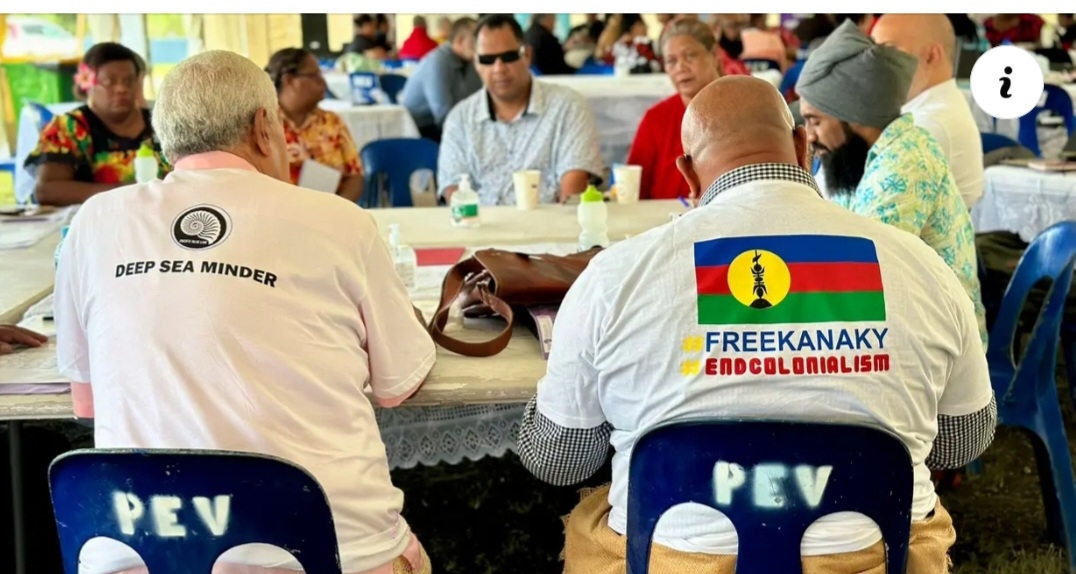
The PIF communiqué only noted, in passing, the struggles for self-determination in West Papua and Kanaky/New Caledonia. However, it said that forum states are participating in a “high-level Forum Troika Plus Mission to New Caledonia” to work towards a “long-lasting resolution to the ongoing political situation”.

Meanwhile, a parallel gathering of Pacific activist groups devoted a full day, in a “Civil Society Village”, to discussing the struggles in West Papua and Kanaky and were unanimous in their support for decolonisation and self-determination.

Lesuma said that in the lead up to next year’s PIF in the Solomon Islands, activists from these groups will be working hard to ensure that the real threats to the region — climate change and advancing the struggle for a truly nuclear-free and independent Pacific — are front and centre of the discussions.

BOUGAINVILLE TO 'RAISE THE FLAG' IN INTERNATIONAL PUSH OF INDEPENDENCE PLANS

5th September 2024

By Benarnews
Establishing ties with the Melanesian Spearhead Group will be the first priority for the Autonomous Government of Bougainville’s newly created “external relations” office, as it prepares for independence from Papua New Guinea.

The province voted 97.7% in favor of independence in a 2019 referendum that is yet to be ratified by PNG’s parliament, but Bougainville’s President Ishmael Toroama told BenarNews it would happen regardless in 2027.

Unlike Indonesia’s Papuan provinces, New Caledonia, French Polynesia, Guam and American Samoa - which were or are part of the U.N. decolonization process - Bougainville’s self-determination is mandated through the PNG constitution.

Under the 2001 Bougainville Peace Agreement – after a brutal civil war triggered by Rio Tinto’s Panguna mine – PNG retains responsibility for foreign affairs but allows for the ABG to engage externally, for trade and with “regional organizations.”

“To raise, to put a flag at the MSG is one step forward into reality,” Toroama told BenarNews in Brisbane. “I think we start with the MSG first, we are looking to become an observer,.” 

“We need countries to support us, we need to talk to those countries (ahead of independence),” said the former Bougainville Revolutionary Army commander who will face elections in 2025 after five-years in office.

The MSG was formalized as a sub-regional grouping in 2007 – comprising Fiji, PNG, Solomon Islands and Vanuatu and pro-independence Kanak and Socialist National Liberation Front (FLNKS) of New Caledonia – primarily to promote economic growth in the Melanesian region. 

An ABG approach has not yet been made to the MSG but in the meantime, Toroama is looking to foster international economic ties. 

In July, the ABG created the External Relations Directorate under the office of the president, with former politician Albert Punghau as acting director and former Bougainville president James Tanis as an “international legate”.

The move was welcomed in a letter from the PNG prime minister’s department as an “important step.”

“Given this, my expectation is that the Directorate will liaise closely with the Department of Foreign Affairs on any foreign relations activities. This will ensure alignment on foreign relation matters with national government policies,” chief secretary of the PNG government Ivan Pomaleu wrote to the ABG on July 22, copying Prime Minister James Marape.

Written advice provided to Pomaleu, seen by BenarNews, states, “Under the BPA, the ABG has every right to establish the Directorate to enable the ABG to better engage in foreign relation activities and it could be argued that this is long overdue.”

Last September, Bougainville’s government called on the U.S., Japan, Australia, New Zealand and China for foreign direct investment, adding “these are the very nations we will establish diplomatic relations with as an independent sovereign nation.”

Toroama says the ABG has respected the peace agreement on the foreign affairs front, by not engaging directly with foreign governments, but it does allow “economically starting to engage with whatever nations that will be available.”

Papua New Guinea, the most populous Pacific island country with an estimated 12 million people, is a focus of intensifying U.S.-China rivalry for influence in the Pacific. The easternmost islands of Bougainville, home to about 350,000 people and ethnically closer to Solomon Islands, is the site of the long-inactive Panguna mine.

One of the most resource-rich areas of PNG, Bougainville has the world’s largest copper reserves, gold and tuna. Toroama sees the resources as the basis for its future economy, where there is currently almost none.

There is little reliable available data on the Bougainville’s mainly agricultural, fisheries and alluvial mining based economy. Restarting the Panguna mine would take many years and cost billions of dollars.

The former BRA officer during the civil war said he is inspired by the vision of his late former commander Francis Ona of creating a Pacific economic powerhouse.

“It’s just testing the waters. What I’m saying here is we have colonial partners, if you cannot come in, then we have the last card, the Chinese card, that I will be playing. So I’m very frank and honest,” Toroama said.

“The (Chinese) corporations, they’ve been to visit Bougainville. They have spoken but not in real terms, into signing an agreement. Not yet.”

Toroama said there’s little interest from the U.S. - despite a visit to meet investors in Washington last year - or Japan. Most engagement is from the Australian government and investors, but he said there are legacy issues to deal with.

“They’re putting money in, but it’s a piecemeal package if you compare Panguna mine and what resources have been taken out. It’s just nothing,” he said. 

“You have dug that hole, you have been benefitting out of the Panguna mine.”

The environmental and social impacts of the giant Rio Tinto Panguna mine and inequitable distribution of revenues sparked the Bougainville ‘crisis’. 

An estimated 10,000-15,000 people died in a decade-long civil war between Bougainville and PNG that ended with a peace agreement in 2001, leading to the referendum in 2019.

Papua New Guinea’s Marape government missed the agreed 2023 deadline for parliament to debate the referendum result and decide on the semi-autonomous region’s independence aspirations. 

While recognizing the different circumstances, Toroama fears “the window of opportunity” for independence is almost closed for West Papua, closing for New Caledonia, and that could also happen to Bougainville. 

“What I’m saying to my fellow Bougainvilleans, if we cannot make this happen within this given timeframe, I think Bougainville will be lost forever,” he said.

“We are not going to compromise the legal basis we are setting. If the national government will not ratify our independence, whether Pacific islands like it or not, Bougainville sovereignty is there.”

Establishing ties with the Melanesian Spearhead Group will be the first priority for the Autonomous Government of Bougainville’s newly created “external relations” office, as it prepares for independence from Papua New Guinea.

The province voted 97.7% in favor of independence in a 2019 referendum that is yet to be ratified by PNG’s parliament, but Bougainville’s President Ishmael Toroama told BenarNews it would happen regardless in 2027.

Unlike Indonesia’s Papuan provinces, New Caledonia, French Polynesia, Guam and American Samoa - which were or are part of the U.N. decolonization process - Bougainville’s self-determination is mandated through the PNG constitution.

Under the 2001 Bougainville Peace Agreement – after a brutal civil war triggered by Rio Tinto’s Panguna mine – PNG retains responsibility for foreign affairs but allows for the ABG to engage externally, for trade and with “regional organizations.”

“To raise, to put a flag at the MSG is one step forward into reality,” Toroama told BenarNews in Brisbane. “I think we start with the MSG first, we are looking to become an observer,.” 

“We need countries to support us, we need to talk to those countries (ahead of independence),” said the former Bougainville Revolutionary Army commander who will face elections in 2025 after five-years in office.

The MSG was formalized as a sub-regional grouping in 2007 – comprising Fiji, PNG, Solomon Islands and Vanuatu and pro-independence Kanak and Socialist National Liberation Front (FLNKS) of New Caledonia – primarily to promote economic growth in the Melanesian region. 

An ABG approach has not yet been made to the MSG but in the meantime, Toroama is looking to foster international economic ties. 

In July, the ABG created the External Relations Directorate under the office of the president, with former politician Albert Punghau as acting director and former Bougainville president James Tanis as an “international legate”.

The move was welcomed in a letter from the PNG prime minister’s department as an “important step.”

“Given this, my expectation is that the Directorate will liaise closely with the Department of Foreign Affairs on any foreign relations activities. This will ensure alignment on foreign relation matters with national government policies,” chief secretary of the PNG government Ivan Pomaleu wrote to the ABG on July 22, copying Prime Minister James Marape.

Written advice provided to Pomaleu, seen by BenarNews, states, “Under the BPA, the ABG has every right to establish the Directorate to enable the ABG to better engage in foreign relation activities and it could be argued that this is long overdue.”

Last September, Bougainville’s government called on the U.S., Japan, Australia, New Zealand and China for foreign direct investment, adding “these are the very nations we will establish diplomatic relations with as an independent sovereign nation.”

Toroama says the ABG has respected the peace agreement on the foreign affairs front, by not engaging directly with foreign governments, but it does allow “economically starting to engage with whatever nations that will be available.”

Papua New Guinea, the most populous Pacific island country with an estimated 12 million people, is a focus of intensifying U.S.-China rivalry for influence in the Pacific. The easternmost islands of Bougainville, home to about 350,000 people and ethnically closer to Solomon Islands, is the site of the long-inactive Panguna mine.

One of the most resource-rich areas of PNG, Bougainville has the world’s largest copper reserves, gold and tuna. Toroama sees the resources as the basis for its future economy, where there is currently almost none.

There is little reliable available data on the Bougainville’s mainly agricultural, fisheries and alluvial mining based economy. Restarting the Panguna mine would take many years and cost billions of dollars.

The former BRA officer during the civil war said he is inspired by the vision of his late former commander Francis Ona of creating a Pacific economic powerhouse.

“It’s just testing the waters. What I’m saying here is we have colonial partners, if you cannot come in, then we have the last card, the Chinese card, that I will be playing. So I’m very frank and honest,” Toroama said.

“The (Chinese) corporations, they’ve been to visit Bougainville. They have spoken but not in real terms, into signing an agreement. Not yet".

Toroama said there’s little interest from the U.S. - despite a visit to meet investors in Washington last year - or Japan. Most engagement is from the Australian government and investors, but he said there are legacy issues to deal with.

“They’re putting money in, but it’s a piecemeal package if you compare Panguna mine and what resources have been taken out. It’s just nothing,” he said. 

“You have dug that hole, you have been benefitting out of the Panguna mine.”

The environmental and social impacts of the giant Rio Tinto Panguna mine and inequitable distribution of revenues sparked the Bougainville ‘crisis’. 

An estimated 10,000-15,000 people died in a decade-long civil war between Bougainville and PNG that ended with a peace agreement in 2001, leading to the referendum in 2019.

Papua New Guinea’s Marape government missed the agreed 2023 deadline for parliament to debate the referendum result and decide on the semi-autonomous region’s independence aspirations. 

While recognizing the different circumstances, Toroama fears “the window of opportunity” for independence is almost closed for West Papua, closing for New Caledonia, and that could also happen to Bougainville. 

“What I’m saying to my fellow Bougainvilleans, if we cannot make this happen within this given timeframe, I think Bougainville will be lost forever,” he said.

“We are not going to compromise the legal basis we are setting. If the national government will not ratify our independence, whether Pacific islands like it or not, Bougainville sovereignty is there.”

At the Pacific Islands Forum leaders meeting in Tonga last month, Marape told BenarNews that Bougainville’s independence is an internal matter to be decided by PNG’s parliament. 

Bougainville’s government wants to achieve independence by 2027 but has faced opposition from PNG’s leaders, who fear it could encourage secessionist movements in other regions of the volatile Pacific island country. 

The two sides are far apart and have just appointed a moderator over whether a parliamentary vote is by simple or two-thirds majority to approve or reject independence.

“That is the point of argument and if that (two-thirds) goes into place, it would be a disaster for Bougainville,” Toroama said.

In Brisbane for diaspora consultations on the draft Bougainville constitution last weekend, Toroama said there’s “still a lot of work to do” and “time is against us” for meeting a tentative December deadline for completion.

Issues still being considered range from the design of the flag and name of the currency to landowner rights and definition of citizenship.

“The whole process for getting the constitution, that it is a platform that we will be using to declare Bougainville independence,” he said.

“Bougainville has been known for unilateral declarations,” he added, referring to two previous independence bids. 
At the Pacific Islands Forum leaders meeting in Tonga last month, Marape told BenarNews that Bougainville’s independence is an internal matter to be decided by PNG’s parliament. 

Bougainville’s government wants to achieve independence by 2027 but has faced opposition from PNG’s leaders, who fear it could encourage secessionist movements in other regions of the volatile Pacific island country. 

The two sides are far apart and have just appointed a moderator over whether a parliamentary vote is by simple or two-thirds majority to approve or reject independence.

“That is the point of argument and if that (two-thirds) goes into place, it would be a disaster for Bougainville,” Toroama said.

In Brisbane for diaspora consultations on the draft Bougainville constitution last weekend, Toroama said there’s “still a lot of work to do” and “time is against us” for meeting a tentative December deadline for completion.

Issues still being considered range from the design of the flag and name of the currency to landowner rights and definition of citizenship.

“The whole process for getting the constitution, that it is a platform that we will be using to declare Bougainville independence,” he said.

“Bougainville has been known for unilateral declarations,” he added, referring to two previous independence bids.